You spotted dark spots on the bathroom grout or the basement wall, grabbed a bottle of white vinegar, and started searching for the right method. That is a reasonable first move — and for minor mold patches in Livonia homes, white vinegar genuinely works. But Southeast Michigan’s freeze-thaw seasons and high spring humidity create mold conditions that go well beyond what a spray bottle can handle. Before you start scrubbing, here is what you need to know about where white vinegar succeeds, where it falls short, and when professional mold remediation is the only option that actually protects your home.
October in Wayne County brings its own mold risk. As temperatures drop and homeowners seal up windows, indoor humidity climbs and any lingering moisture from summer — in crawl spaces, behind walls, under bathroom vanities — turns into active mold growth. If you are finding mold now, the conditions that caused it started weeks ago.
Why Southeast Michigan Basements and Bathrooms Are Prime Mold Zones
Livonia sits on clay-heavy soil that does not drain the way sandy or loamy ground does. When late-season rains or early snowmelt saturate that soil, hydrostatic pressure pushes moisture through foundation cracks and block walls. Inside the home, that moisture hits drywall, insulation, and wood framing — materials that absorb water within 24 to 48 hours and stay damp long enough for mold spores to colonize.
Common mold hotspots in Livonia homes include basement walls and floor joists, bathroom tile grout, the underside of kitchen sink cabinets, window sills with condensation, and HVAC return air plenums. Mold thrives between 65°F and 75°F with relative humidity above 60% — conditions that describe a typical Southeast Michigan fall interior almost exactly. The Greater Detroit area sees a measurable uptick in mold-related water damage restoration claims every spring and again in late fall as homes get sealed up for winter.
Timing matters because mold spreads fast. A small colony that looks like a cosmetic grout issue on Monday can be inside the wall cavity by the following weekend if the moisture source is not addressed. That is why identifying the problem early — and choosing the right treatment — determines how much damage you are actually dealing with. You can read more about mold patterns specific to our region in this Mold Removal in Michigan guide.
How White Vinegar Kills Mold Spores (And Why It Works Better Than Bleach on Porous Surfaces)
White distilled vinegar contains 5–8% acetic acid. That concentration is strong enough to penetrate porous materials — grout, drywall paper, unfinished wood — and break down mold cell walls at the membrane level. The EPA’s guidance on mold and moisture is clear that bleach is not recommended for porous surfaces, and for good reason: bleach kills surface mold but cannot follow mycelium roots into the material. The water in bleach solution actually adds moisture to porous substrates, which can feed regrowth.
Vinegar does not have that problem. It penetrates, it dries relatively quickly, and it does not leave toxic residue behind — a real consideration in small bathrooms where fumes concentrate fast. For families with children or pets in Livonia homes, that matters.
The honest limitation: white vinegar is effective for early-stage, surface-level mold covering less than 10 square feet on non-structural materials. Common household mold species like Aspergillus, Penicillium, and Cladosporium respond well to vinegar treatment when caught early. Stachybotrys (black mold) and mold that has penetrated structural framing, insulation batts, or the back side of drywall panels will not be eliminated by any DIY spray-and-scrub method. If you can smell must but cannot see visible mold, that is a signal the colony has already gone deeper than a spray bottle will reach. You can also explore the specific approach our team takes with mold removal using vinegar in our service area.
Step-by-Step White Vinegar Mold Removal Process for Livonia Homeowners
If your mold patch is less than 10 square feet, surface-level, and on a non-structural material like bathroom tile, a painted vanity, or a window sill, here is the correct process. Follow it precisely — shortcuts reduce effectiveness and can spread spores to adjacent areas.
Materials you need: White distilled vinegar (5% acidity minimum, undiluted), a clean spray bottle, a stiff-bristled brush for grout and tile, a soft cloth or cellulose sponge for drywall or painted surfaces, nitrile gloves, an N95 respirator, safety glasses, and a dehumidifier or fan for drying.
Step 1 — Assess before you spray. Press lightly on the surface around the mold. If drywall is soft, spongy, or crumbles, the material is compromised and needs professional removal — not cleaning. If the surface is solid, proceed. Check for a persistent musty odor in the room even on dry days; that smell indicates hidden mold and is a stop signal for DIY.
Step 2 — Ventilate the space. Open a window and run the bathroom exhaust fan or place a box fan to push air out. Disturbing mold releases spores; you want airflow moving away from you and out of the room, not circulating back through the house.
Step 3 — Spray undiluted white vinegar directly onto the mold. Do not dilute it. Saturate the surface until vinegar is visibly pooling in grout lines or running down a flat surface. The acetic acid concentration is what makes it work — cutting it with water reduces effectiveness below the threshold needed to kill mold roots.
Step 4 — Wait 10 to 15 minutes. Do not rush this step. Vinegar needs time to penetrate the surface and break down the mold cell structure. Use this time to identify whether there are adjacent areas showing early growth.
Step 5 — Scrub with the right tool. For tile grout, use the stiff-bristled brush in short circular motions. For drywall or painted surfaces, use a soft cloth with light pressure — aggressive scrubbing on drywall damages the paper face and creates a new porous entry point for moisture. Bag and seal scrub materials immediately after use.
Step 6 — Wipe clean with a damp cloth and dry thoroughly. Remove all vinegar residue and dead mold matter. Then dry the area completely — a clean towel first, followed by a dehumidifier or fan running for several hours. Moisture left behind is what causes mold to return within days.
Step 7 — Recheck in 24 hours and repeat if needed. Most surface mold is eliminated after one treatment. A second application the following day catches stubborn spots. If mold reappears within two weeks of treatment, the moisture source has not been resolved and professional assessment is necessary.
Pro tip for Livonia homeowners: Treating the mold without addressing the moisture source is like mopping around a running faucet. After treatment, inspect for cracked foundation walls, verify your sump pump is operational, extend downspouts at least four feet from the foundation, and make sure bathroom exhaust fans are venting to the exterior — not into the attic.
When White Vinegar Isn’t Enough — And Professional Mold Testing and Removal Is Required
There is a cost comparison worth being direct about before you decide how to proceed:
| Scenario | DIY Vinegar | Professional Mold Remediation |
|---|---|---|
| Upfront cost | $5–$15 | $2,000–$10,000+ |
| Mold area covered | <10 sq. ft., surface-level | Any size, including structural |
| Hidden mold detection | None | Thermal imaging + air sampling |
| Spore containment | Minimal (open windows only) | HEPA negative-air containment |
| Insurance documentation | None | Full adjuster-ready documentation |
| Structural material removal | Not possible | Included when required |
| Post-remediation verification | None | Air quality testing confirms clearance |
The red flags that require professional mold testing and removal are specific. Stop DIY treatment and contact a mold remediation specialist if you observe any of the following: mold covering more than 10 square feet on any surface; mold visible on drywall or wood framing (not just the painted surface); a persistent musty smell that returns within two weeks of treatment; visible efflorescence or water staining on basement block walls; or household members experiencing respiratory irritation, increased allergy symptoms, or asthma flare-ups when in areas of the home where mold was present.
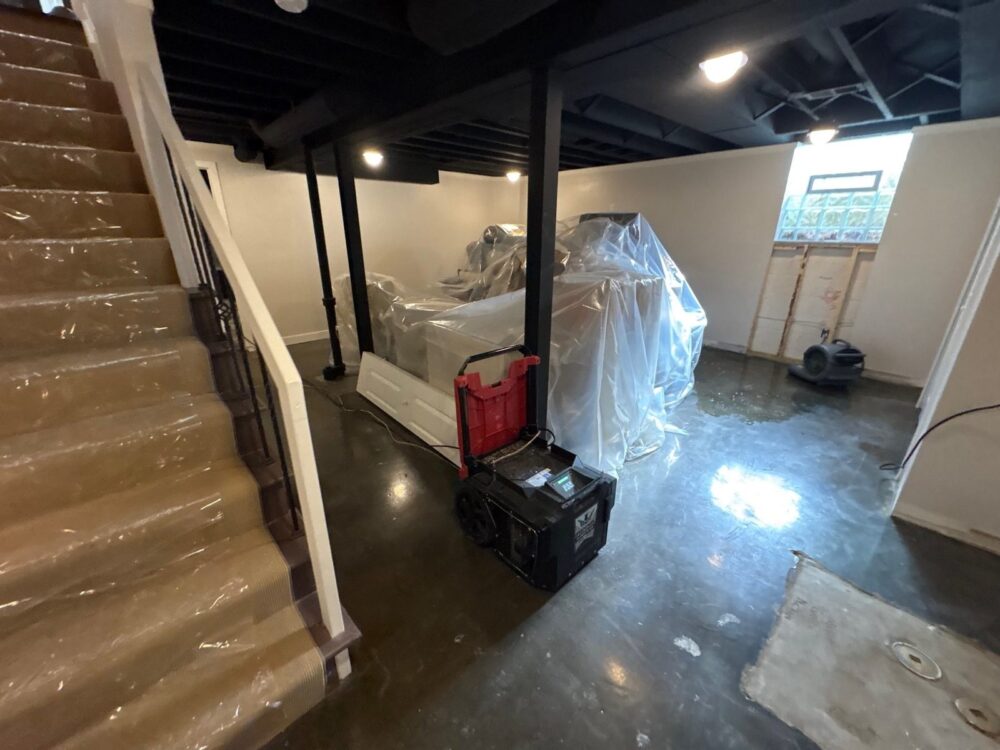
What professional mold remediation actually includes — from an IICRC-certified crew — looks like this: containment of the affected area using polyethylene barriers and negative air pressure with HEPA filtration machines to prevent cross-contamination; removal of mold-infested materials including drywall panels, insulation, and flooring as needed; HEPA vacuuming and antimicrobial treatment of structural surfaces; moisture source correction; and post-remediation air quality testing to verify clearance. That final step — independent verification — is what separates legitimate remediation from surface cleaning with a premium price tag. If a contractor does not offer post-remediation testing, that is a problem. The Indoor Air Quality Association outlines clearance testing standards that any legitimate remediation company should follow.
Professional mold remediation also takes 3 to 7 days depending on scope. DIY vinegar treatment takes 1 to 2 hours. The right choice depends entirely on what you are actually dealing with — not on what you hope is true. Read more about choosing a mold removal company in Metro Detroit before you hire anyone.
What We Actually See in Livonia and Wayne County Basements
Here is something homeowners consistently underestimate: drywall that looks dry and feels firm to the touch can read 25–35% moisture content on a calibrated meter — well above the 16% threshold where mold colonization is active. Our IICRC-certified technicians carry thermal imaging cameras and pin-type moisture meters on every mold assessment. The camera shows temperature differentials behind the drywall face; the meter confirms whether that cold spot is condensation, active moisture migration, or a dried-out area that already hosted growth. In Wayne County basements specifically, we regularly find mold running along the bottom plate — the horizontal framing member sitting on the concrete slab — long before it appears on the visible drywall face. That plate is the first piece of wood that contacts concrete moisture, and it is almost never visible without removing the drywall. By the time homeowners notice mold on the wall surface, the framing behind it has often been compromised for weeks. After remediation, our team can coordinate full reconstruction — drywall, insulation, and finish work — so you are not managing multiple contractors.
Homeowners using vinegar on the visible surface while that hidden growth continues are not solving the problem — they are delaying it. If the area you treated returns within two weeks, the biology inside your wall is ahead of what any spray bottle can reach. That is when you need a mold remediation specialist with the equipment and IICRC certification to locate and remove the source — not just the symptom. Our team serving Livonia and the surrounding Wayne County area handles exactly these situations.
Preventing Mold from Returning in Your Livonia Home
Mold remediation without moisture control is temporary. Whether you treated a small patch yourself or had a full professional remediation completed, the steps below determine whether mold returns by spring.
Control indoor humidity. Keep relative humidity between 30% and 50% using a dehumidifier sized for your basement square footage. A 70-pint unit handles most full-size Michigan basements. Run it continuously from October through May when ground moisture is highest. Run bathroom exhaust fans for at least 20 minutes after every shower — not just while the shower runs — and confirm the duct terminates outside, not into an attic or soffit.
Eliminate exterior moisture pathways. Clean gutters and downspouts before late fall; a clogged gutter in a November rain event in Livonia deposits hundreds of gallons of water directly against your foundation. Extend downspout discharge at least four feet from the house. Inspect foundation grading: soil should slope away from the structure at a minimum 1-inch drop per foot for the first six feet. Repair visible cracks in basement walls with hydraulic cement before winter freeze cycles widen them further.
Address plumbing before winter sets in. October is the right time to inspect supply lines under kitchen and bathroom sinks, around water heaters, and at washing machine hoses. A slow drip under a cabinet creates exactly the dark, warm, moist environment where mold colonies establish over 30 to 60 days — often without any visible sign until the cabinet floor buckles. If you had water damage earlier this year and it was not professionally dried with industrial dehumidifiers and moisture verification, there is a reasonable chance active mold growth is already present in adjacent materials. That warrants a professional mold assessment, not a vinegar treatment. You can find more about whether your Michigan homeowners insurance covers mold before deciding next steps on a larger loss.
Improve air circulation in problem areas. Stagnant air in corners, behind furniture placed against exterior walls, and inside closed closets on exterior-facing walls creates micro-environments where humidity concentrates. Move furniture 2 to 3 inches away from exterior walls, use ceiling fans to keep air moving through basement spaces, and open interior closet doors periodically to let air circulate.
Mold concerns in Livonia or anywhere in Wayne County? If the vinegar is not holding or the mold is larger than a square foot, call now — 24/7 emergency response, on-site within 60 minutes. (888) 838-7170. We serve Oakland, Wayne, Macomb, and St. Clair counties. IICRC Mold Remediation certified. MII certified. BBB A+ rated. We work with all major insurance carriers — Allstate, State Farm, Liberty Mutual, Auto-Owners, AAA, Travelers — and bill them directly. 16+ years restoring Southeast Michigan homes.
