

24/7 Emergency Response · Oakland County & the Blue Water Area
Roofing & Roof Storm DamageAcross Michigan
A failed roof is two problems: the roof, and the water that came through it. Most homeowners end up with a roofer for one and a restoration company for the other, and a claim caught in between. We handle both ends of it.
What you get
- Emergency tarping and board-up, 24/7
- Roof and interior damage on one claim
- Written workmanship warranty
Roofing & Storm Damage Repair · Metro Detroit & the Blue Water Area
Roof Leaking? We Fix Both Ends.Roofing & Roof Storm Damage In Troy, MI, Oakland County & Beyond
A failed roof is two problems: the roof, and the water that came through it. Most homeowners end up with a roofer for one and a restoration company for the other, and a claim caught in between. We handle the roof and the ceiling under it — one licensed Michigan builder, one claim.
- Emergency tarping and board-up, day or night
- The roof and the interior damage on one claim
- Written workmanship warranty, local and accountable
 Trusted across Metro Detroit
24/7 Emergency Tarping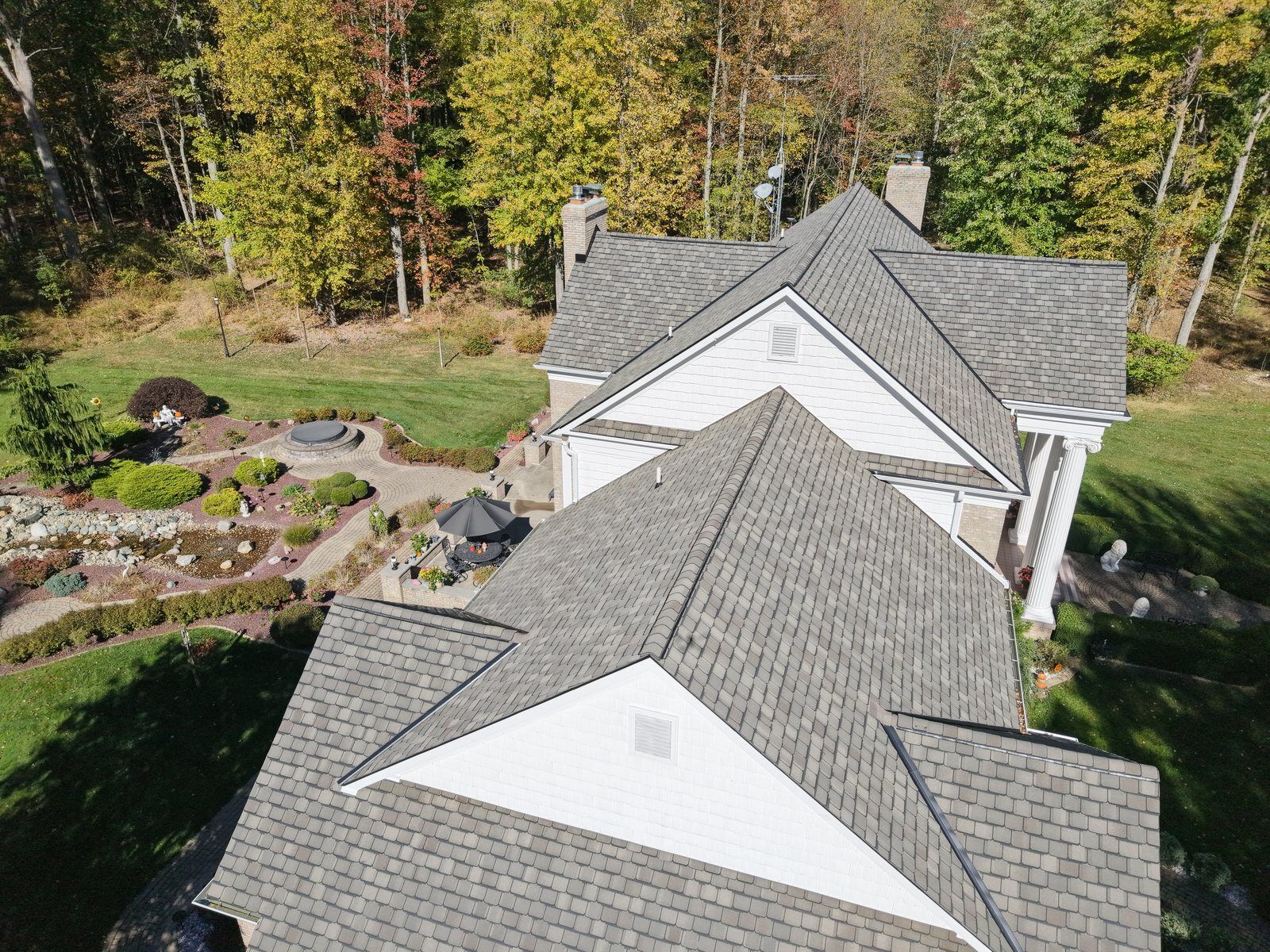
Roof Leaking? Do These Six Things First
- 1Contain the water before you investigate itBuckets, towels, and anything you can move out of the way. Where water is pooling in a ceiling and the drywall is bulging, that is holding weight — it will come down, and it is better that it comes down into a bucket on your terms.
- 2Do not go on the roofEspecially not in the weather that caused the problem, and especially not on a wet or damaged deck. More people are hurt inspecting storm-damaged roofs than by the storms. Anything that needs to happen up there can wait for someone with fall protection.
- 3Cut power to any room taking waterOnly if the panel is dry and you can reach it safely. Water tracking along a ceiling finds light fixtures and junction boxes first, which is exactly where you do not want it.
- 4Photograph everything, inside and outThe ceiling stain, the water line, anything on the floor, and whatever you can see of the roof from the ground. Wind and hail claims are settled on what can be shown, and the evidence on a roof degrades with every day of weather after the event.
- 5Do not sign anything a door-knocker puts in front of youAfter a hailstorm, crews appear. Some are legitimate. An “authorization to inspect” that quietly assigns your claim or commits you to a contract is not, and Michigan law does not require you to use anyone your insurer suggests either. Take the time to read it.
- 6Call us — a person answersEmergency tarping is 24/7. Getting the opening covered stops the interior damage growing while the permanent repair is scoped and approved, and it is the step your policy expects you to take.
Tell Us What Happened
Active leak, storm damage, or a roof that has simply reached the end — tell us which and we will tell you what it actually needs. Prefer to type it? Send the details and we respond the same day.
The Roof Is Half The Claim. The Ceiling Under It Is The Other Half.
Roofing and restoration are different trades, and almost nobody does both. So a roof fails, water comes through, and you end up managing a roofer for the outside and a restoration company for the inside — two scopes, two invoices, and a carrier being asked to settle one event from two disconnected documents.
The gap between them is where things go wrong. The roofer is not scoping the wet insulation in your attic or the ceiling that has to come down. The restoration company is not certifying that the roof is sealed. Each is waiting on the other, and the interior keeps getting worse while they do.
We handle both. The roofing itself is performed by Reasonable Roofing & Contracting, our sister company — we would rather tell you that plainly than pretend otherwise — and the water damage, drying and interior rebuild are ours. One licensed Michigan builder, one scope, one company accountable for a building that is dry at both ends.
From The First Leak To A Finished Roof
A roof claim has a right order to it, and most of the disputes we are called into started with someone doing step four before step two.
1Stop the water first
Emergency tarping and board-up, 24/7, before anything else is decided. Everything downstream — scoping, drying, rebuilding — depends on the building not taking on more water while it happens.
2Inspect and document properly
A full inspection of the roof surface, flashings, vents and the attic underneath, photographed and measured. Wind and hail damage is frequently invisible from the ground, which is also why it is frequently missed on a first adjuster visit.
3Build the scope your carrier works in
A line-item estimate covering the roof and the interior damage together, so the claim is settled as one event rather than two partial ones. We meet your adjuster on site where that helps.
4Dry and open up what the water reached
Wet insulation out, affected ceilings and cavities opened and dried with logged daily readings. This runs while the roof work is scheduled rather than after it, because the building does not need to wait.
5Replace or repair the roof
Tear-off, deck inspection and repair, ice and water barrier at the eaves as Michigan code requires, underlayment, and the roofing system you chose — installed by Reasonable Roofing & Contracting to manufacturer specification so the material warranty stands.
6Rebuild the interior and hand it back
Ceilings, insulation, drywall, paint and trim restored to pre-loss condition by the same licensed builder, with the roof and the interior closed out on the same file and backed by a written workmanship warranty.
Roof Claims: What Carriers Pay For, And What They Argue About
Storm damage to a roof is a covered peril on a standard policy. What gets argued is whether the damage is storm damage or age, and how the roof is valued — and both of those are decided by documentation.
You also choose your own contractor by right in Michigan, whatever your carrier suggests — the Department of Insurance and Financial Services states it directly.Michigan DIFS consumer guidance. DIFS Consumer Services: 877-999-6442.
Straight Answers About Cost and Coverage
On a covered storm loss your deductible is generally all you pay out of pocket — though on wind and hail that deductible may be a percentage of your dwelling coverage rather than a flat figure. We tell you what that means in dollars before you file, not after.
Not every roof problem is a claim, and we will say so. A roof that has simply reached the end of its life is a replacement you plan and pay for, and filing a claim on it wastes your time and your claims history. Those jobs are quoted in writing like any other contract work.
What drives the number is the roof system, the complexity of the roof, how much deck has to be replaced once the old material is off, and whether the interior needs work too. Deck condition is the honest unknown on every tear-off, so we tell you up front how it will be handled rather than presenting it as a surprise on the final invoice.
For adjusters, agents & property managers: roof losses documented the way they need to be defended — full surface, flashing and attic inspection with measurements, test squares and photographs, tarping records, and line-item scopes covering the roof and the interior damage on one file. Call (888) 838-7170 or use our contact page and reference your claim number.
What Our Customers Say
4.9188 Google Reviews
“We woke up on a Monday morning to a totally flooded basement, malfunctioned hot water tank — not only did he calm me down, he had a team onsite within the hour.”
Kathy · Google Review
“The only restoration company that picked up the phone at around 11:30pm when we found our basement flooded. Casey and Harold did great job. Impressed!”
Agnes · Google Review
“Dri-Force did an outstanding job restoring my basement post-flood. Excellent communication. Excellent planning. Quick. Clean. Responsive to everything we asked.”
Jack · Google Review
Roofs We Have Finished
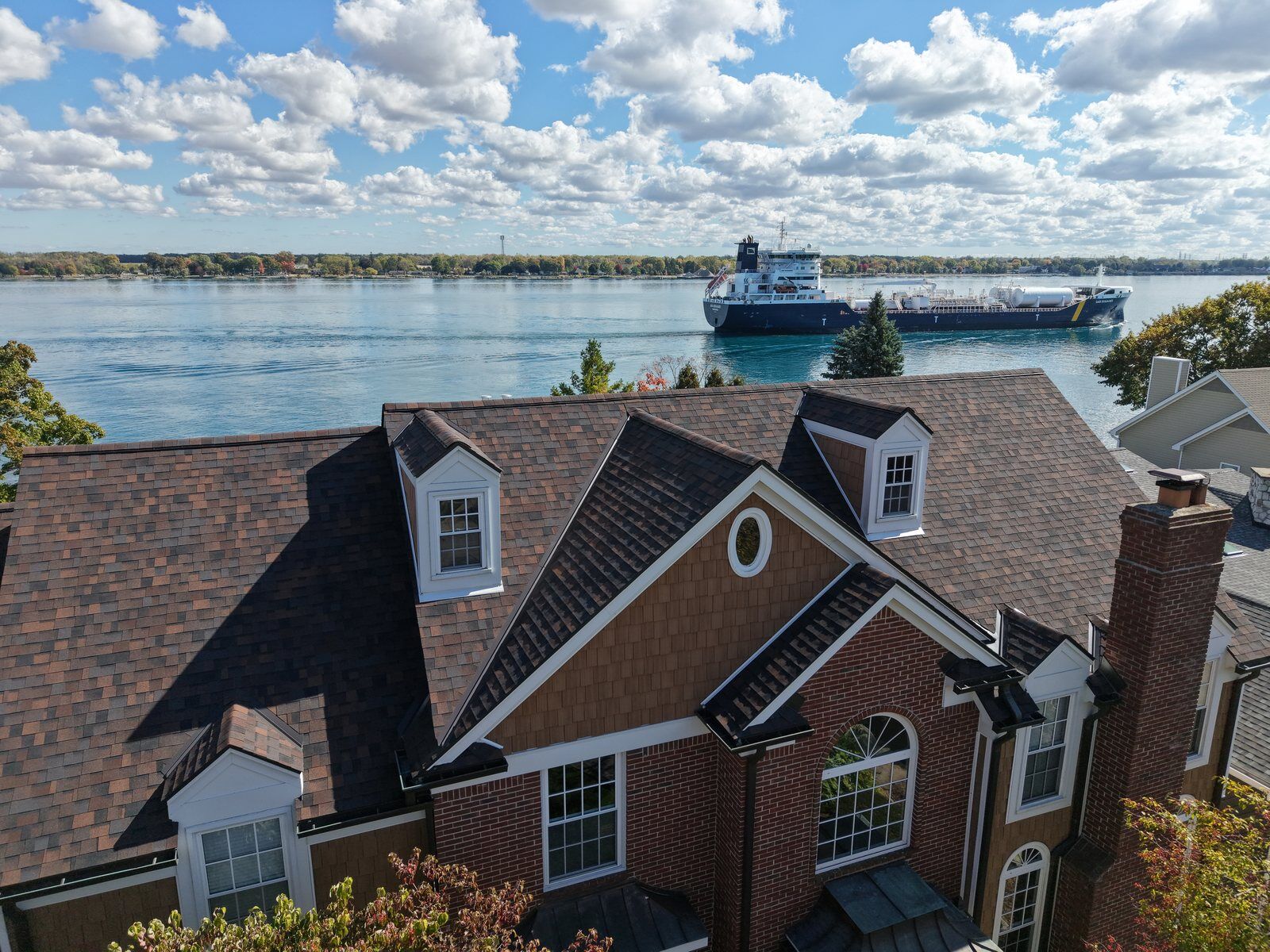
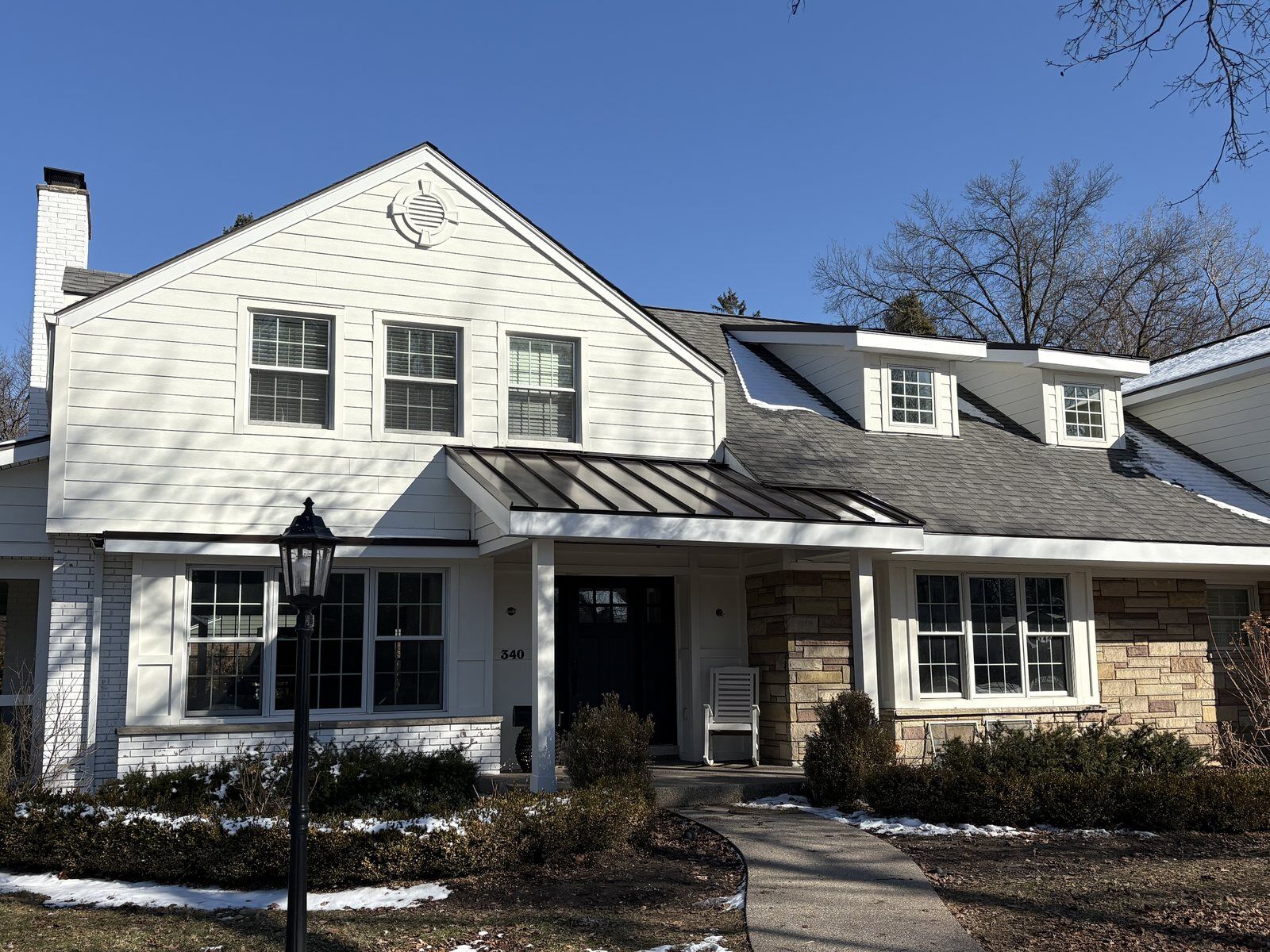
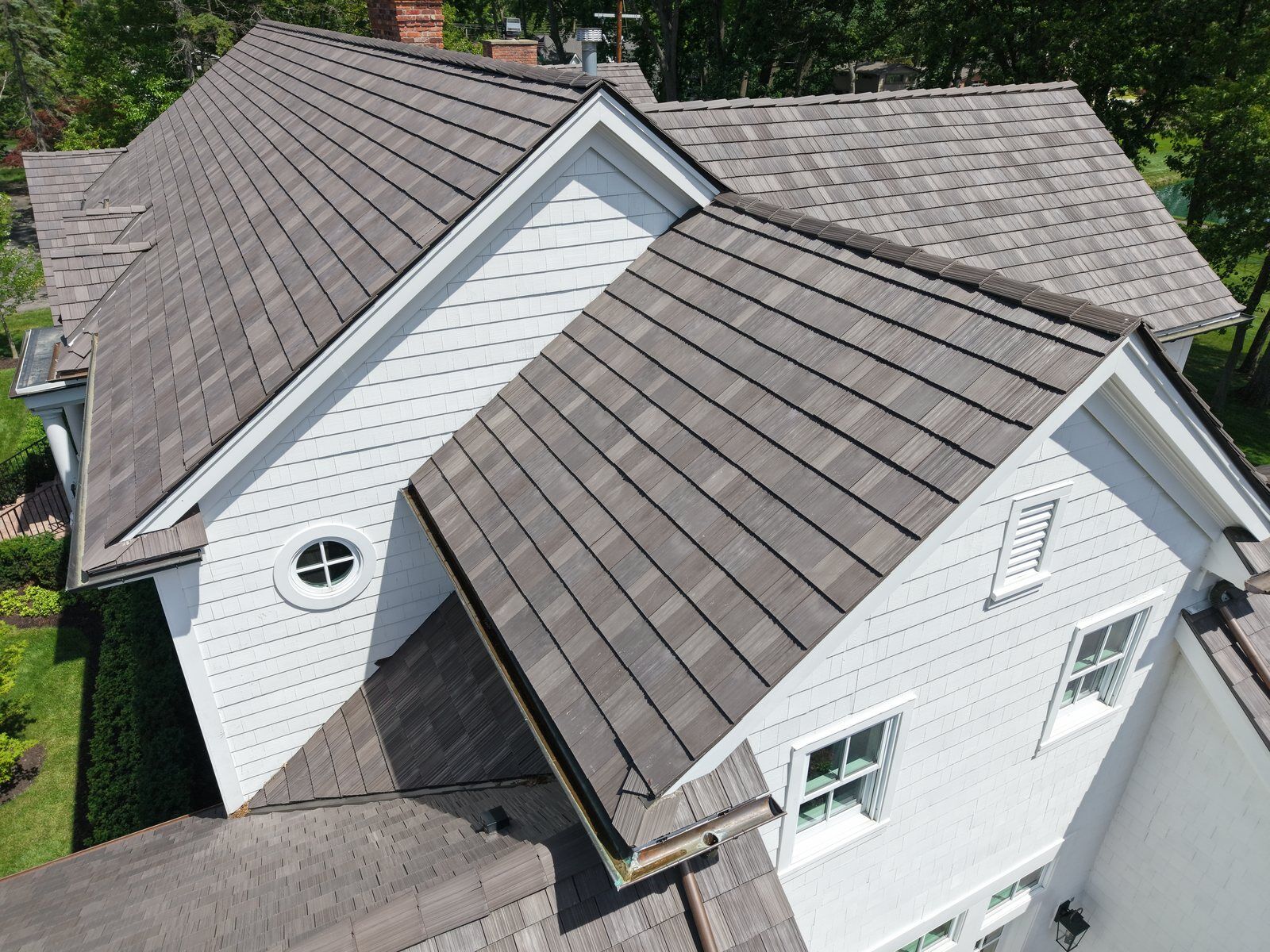
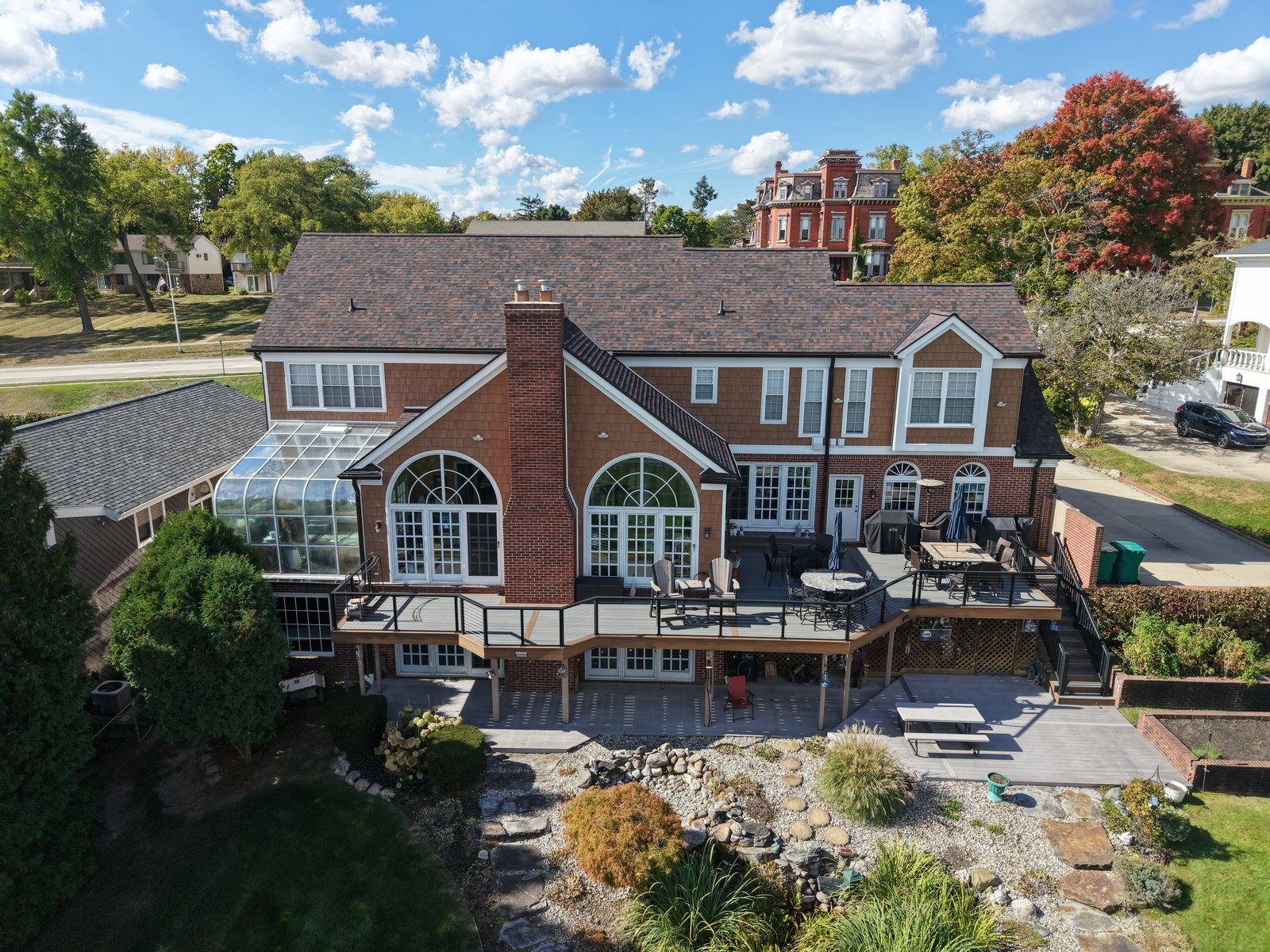
Completed roofing across Metro Detroit and the Blue Water Area, installed by Reasonable Roofing & Contracting.

Six Things That Fail On A Michigan Roof
Most roofs do not fail across the whole surface. They fail at a detail, and the leak shows up somewhere else entirely.
- Wind-lifted shingles that resealed crookedWind lifts a shingle, breaks the factory seal and sets it back down slightly out of position. From the ground it looks fine. The seal is gone, and the next storm drives water under it. This is the most commonly missed wind damage there is.
- Hail bruising that has not leaked yetHail does not usually puncture a shingle; it bruises the mat and knocks granules loose. The exposed asphalt then degrades under UV, and the leak arrives a year or two later — often after the claim window has closed. Granules in the gutters after a storm are the tell.
- Flashing at walls, chimneys and valleysMost roofs leak at a transition rather than in the field. Step flashing, chimney counterflashing and valley metal are where water is being redirected, and where failed sealant or a lazy original installation shows up first.
- Pipe boots and vent penetrationsThe rubber collar around a plumbing vent has a shorter service life than the roof it sits on — it hardens, splits and lets water straight into the attic. It is a small, cheap part and a genuinely common source of ceiling stains.
- Ice dams at the eavesAttic heat melts roof snow, it refreezes at the cold overhang, and the ridge of ice backs water up under the shingles. The cause is heat loss, not the roof. Michigan code already requires an ice barrier membrane at the eaves — if a contractor offers it as an upgrade here, it is not. See our winter damage guide.
- Inadequate attic ventilationAn under-ventilated attic cooks the shingles from underneath, shortening the life of the roof, and drives the ice dam cycle in winter. It is invisible from outside and it is the reason some roofs fail early for no apparent reason.
Everything Else Worth Knowing About Your Roof
How To Tell If You Actually Have Storm Damage
The honest answer is that you often cannot tell from the ground, and that is precisely why this area attracts people who will tell you that you can.
What you can check safely: granules accumulating in gutters and at downspout outlets after a storm; shingle debris in the yard; dents on soft metal like gutters, downspouts, vents and any aluminum trim, which take hail impressions readily and are a good proxy for what hit the roof; and any new ceiling stain, however small.
What needs someone on the roof: whether shingles have lifted and resealed out of position, and whether hail has bruised the mat. Both are genuine covered damage and both are close to invisible from the ground, which is why a documented inspection after a significant storm is worth doing even when nothing is leaking.
One caution worth more than the rest: claims have deadlines. Hail damage that does not leak for two years is often uninsurable by the time it does, because the event is outside the reporting window. Inspect after the storm, not after the leak.
Shingles, Metal Or Synthetic Slate
Architectural asphalt shingles are what most Michigan homes have and what most will have again. They are cost-effective, every crew knows how to install them, repairs are straightforward, and a good one has a long service life. Their weakness is wind uplift at the edges and hail bruising.
Standing seam metal lasts substantially longer, sheds snow well, and handles wind better than anything else in common use. It costs considerably more up front, it is less forgiving of a poor installation, and hail can dent it cosmetically without affecting performance — which some people mind and some do not.
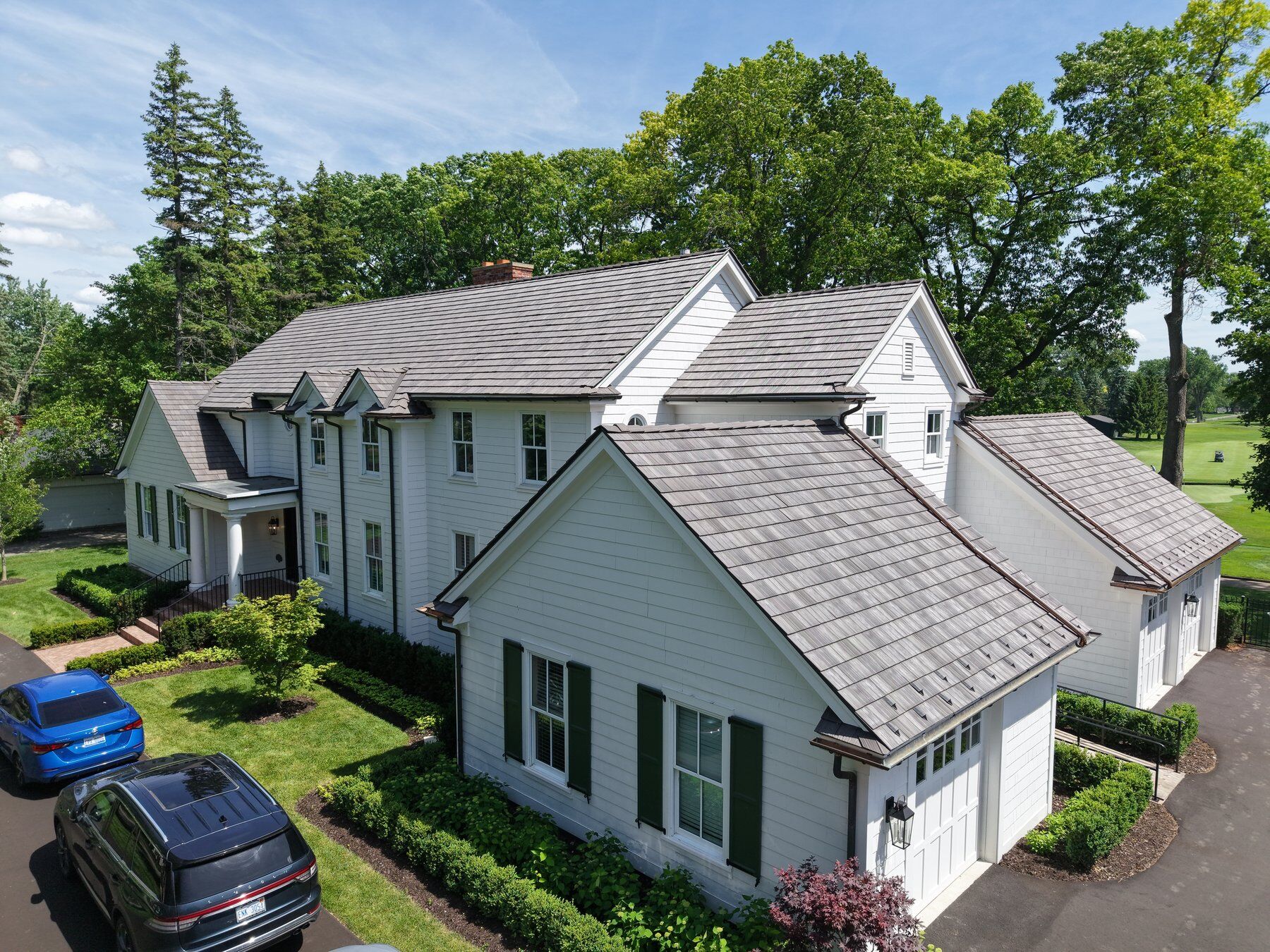
Synthetic slate and shake give the look of slate or cedar at a fraction of the weight, which matters because real slate needs framing most houses do not have. It is a premium product and it looks it — several of the roofs in the gallery above are synthetic slate.
The recommendation depends on how long you plan to be in the house, what the neighborhood supports, and what the framing will carry. Anyone who recommends the same system to everyone is selling rather than advising.
Ventilation, Ice Dams And Why Your Roof Died Early
A roof that failed noticeably earlier than it should have was usually cooked from underneath. An attic without adequate intake and exhaust ventilation runs hot, and the heat degrades the asphalt from the back where nobody looks.
The same deficiency causes ice dams in winter. Heat escaping into the attic warms the roof deck, snow melts, the water runs down to the cold overhang and refreezes, and the ridge of ice that builds up holds meltwater on the roof until it backs up under the shingles. The National Roofing Contractors Association is explicit that this is a heat-loss problem rather than a roofing problem.
Which means the fix is mostly not on the roof: air-seal the ceiling first, then insulate properly, then ventilate so any remaining heat is flushed out. Replacing shingles over an unventilated attic buys you another roof with the same lifespan. We cover the interior side of this in depth on our winter damage guide.
Repair Or Replace?
A repair is usually the right answer when the damage is localized, the roof otherwise has meaningful life left, and matching material is available. A single failed pipe boot or a section of lifted shingles is a repair, not a reason to replace a roof, and any contractor who tells you otherwise on a roof with years left in it is worth a second opinion.
Replacement becomes the honest answer when damage is spread across multiple slopes, when the roof is near the end of its service life anyway, when there are already two layers up there, or when the deck underneath has deteriorated. Patching a roof that is about to need replacing means paying twice.
Matching is the practical constraint people underestimate. Shingle lines change and colors weather, so a repair on a fifteen-year-old roof will be visible even when it is executed perfectly. That is a cosmetic decision rather than a performance one, but you should get to make it knowingly.
Roofing, Answered
Related Services & Nearby Communities
A roof failure rarely stops at the roof. The same certified crews handle the water that came through it — in every community we serve, day or night.
What comes through a roof becomes an interior loss. We also handle storm damage of every kind, water damage, emergency tree removal when a tree is the reason the roof opened, and rebuild and property repairs. Crews dispatch 24/7 from our Troy office for Oakland, Macomb and Wayne counties and our Port Huron office for St. Clair County and the Blue Water Area.
Water Coming Through? Call Before It Spreads
A person will answer, and emergency tarping runs 24/7. Getting the opening covered is what keeps an interior repair to one room. If your roof has simply reached the end of its life rather than failed in a storm, say so — that is planned work with a written quote, not a claim.