Severity Is DecidedBefore You Hear About It.
By the time a loss reaches your desk, most of its final cost is already determined. Pre-loss planning, a 60-minute arrival commitment, and documentation built to hold up long after the file closes.
Call 888-838-7170Contact us60 minarrivalPre-lossplanningIICRCS500 / S5201 yearworkmanship
Most of the cost is committed before anyone opens a claim.
Risk managers are not buying restoration. They are buying a shorter interval between the event and a competent response, and a record that survives review.
A loss does not become expensive when it is large. It becomes expensive when it is slow.
The severity of a water or fire event is not fixed at the moment it happens. It accumulates — through migration into assemblies, through absorption into materials that were salvageable an hour earlier, and through the microbial window that opens when damp materials stay damp.
Which means the variables that decide final cost are settled long before the file reaches you: who was called, how quickly they arrived, and whether what they did in the first hours was recorded in a form anyone can rely on later. Those are program decisions, and they are made in advance or not at all.
The first 72 hours.
The reason arrival time is the metric worth writing into a response program, rather than price per square foot.
Ten questions for any restorer on your approved list.
We would rather be selected on these than on a rate sheet. Ask us all ten — and ask everyone else on the list the same ten.
- Is the firm itself certified, or just some technicians?An IICRC Certified Firm is a different status from having certified staff. Ask which one, then check the IICRC Global Locator yourself.
- What is the committed arrival time, in writing?Not “rapid response” — a number. Ours is 60 minutes across Metro Detroit, day or night.
- Who answers the phone at 3am?A person with dispatch authority, or an answering service taking a message? The difference is hours.
- Are they licensed to rebuild, or only to dry?If not, there is a re-bid gap between mitigation and reconstruction where the job stalls. DriForce holds Michigan Builder License #2102202262.
- Is there a written workmanship warranty?Of the restorers we track in this market, most do not publish one. Ours is one year on reconstruction we perform.
- Which published standards do they work to?IICRC S500 for water and S520 for mold are the references. A firm that cannot name them is not working to them.
- How is the affected area determined?Measured and mapped, or estimated by eye? This single answer explains most scope disputes later.
- What documentation is produced, and when?Filed as the work happens, or assembled afterwards from memory? Ask to see a sample package before you need one.
- Can they run several of your sites at once?Weather events do not arrive one building at a time. Ask what happens when three sites call in the same night.
- Is anything on file before an event?Sites, access, escalation contacts and documentation requirements held in advance turn the first call into a dispatch instead of an interview.
Independently checkable.
Everything a vendor tells you about itself should be confirmable without taking its word. Here is ours, and where to check it.
- IICRC Certified FirmWater restoration, applied structural drying, microbial remediation, fire and smoke, odor control and trauma certifications held on staff. Listed publicly in the IICRC Global Locator under our legal entity, Absolute Water Removal, LLC dba DriForce Property Restoration — verify it before you call, not after.
- Michigan Builder License #2102202262Mitigation and reconstruction run on one license, under one contract. You are not handed to a separate general contractor when the drying finishes.
- One-year workmanship warrantyOn reconstruction we perform, separate from any manufacturer warranty on materials. Ask any other restorer you are considering to put theirs in writing.
- Documentation on requestW-9, certificate of insurance and current certifications supplied before work starts, so vendor onboarding is not the thing holding up mitigation.
What risk managers ask us first.
Why does arrival time matter so much to severity?
Because the damage curve is steepest at the start. Water migrates into assemblies, materials absorb, and under published guidance mold can begin to grow on damp materials within roughly 24 to 48 hours. Arrival time is the one variable on that curve anybody actually controls, which is why we commit to 60 minutes.
What does a pre-loss arrangement with DriForce involve?
Knowing your sites, your access and escalation contacts, and your documentation requirements before anything happens, so the first call is a dispatch rather than an intake interview. It costs nothing to have in place.
How do you document a loss for later scrutiny?
Measured affected areas, logged drying goals and readings, photo index and Xactimate line items, filed as the work happens. The test of documentation is whether it still answers questions a year later, not whether it looked thorough on day one.
Do you carry a workmanship warranty?
Yes — one year on reconstruction we perform, separate from manufacturer warranties on materials. It is worth asking every restorer on your approved list for theirs in writing.
Are you licensed for reconstruction, not just mitigation?
Yes. Michigan Builder License #2102202262. Mitigation and rebuild run under one contract, which removes the gap where a loss usually stalls.
Can you handle several sites at once during a weather event?
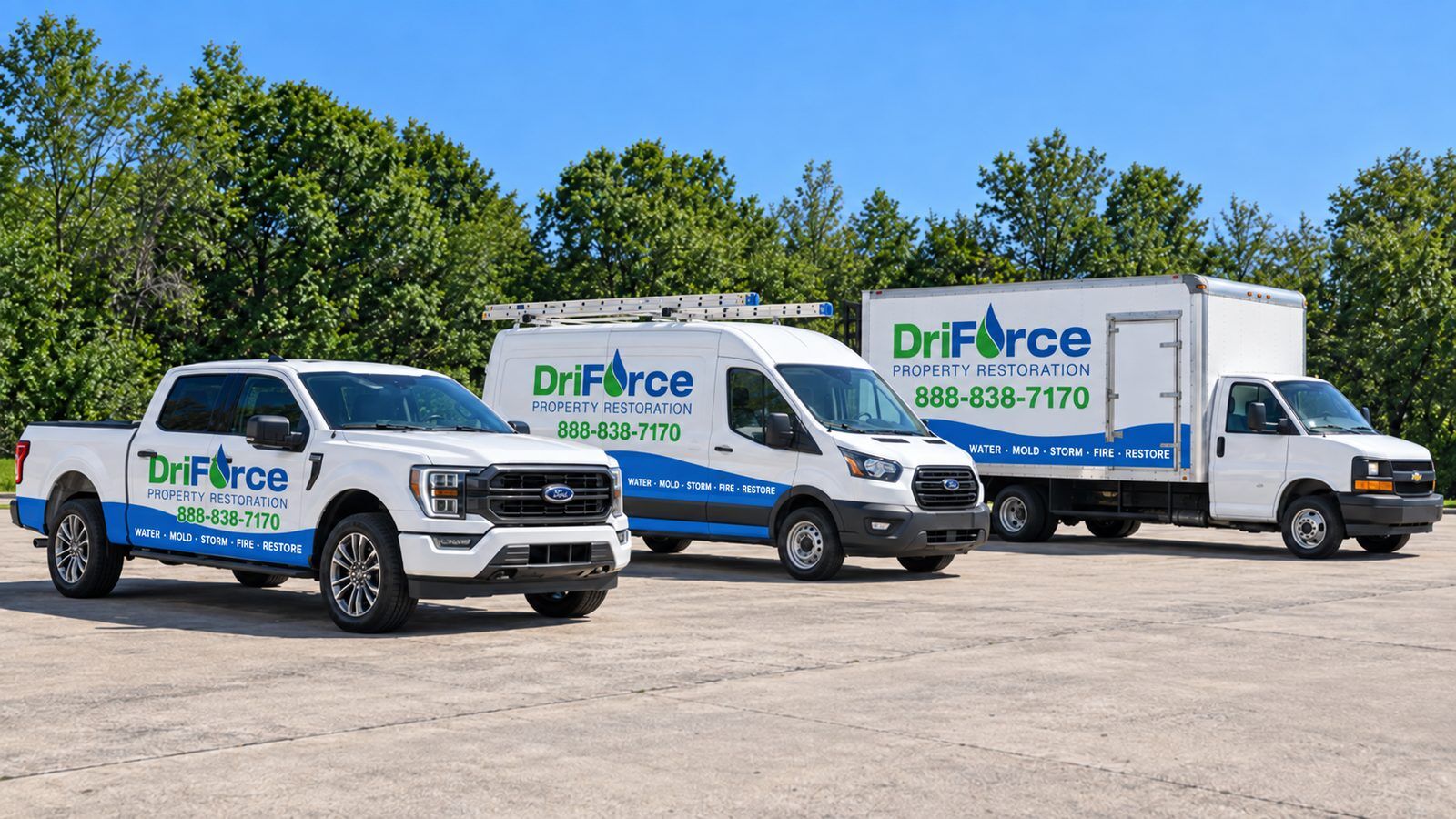
Yes, and that is the case worth planning for. Crews dispatch from Troy and Port Huron, and multi-building events are run as one incident — see large loss restoration.
What standards do you work to?
The IICRC S500 standard for professional water damage restoration and S520 for professional mold remediation. DriForce is an IICRC Certified Firm, listed publicly in the IICRC Global Locator.
What do you need from us on the first call?
The address and what happened. That is enough to mobilize. Policy and claim details can follow while crews are already moving.
The cheapest hour of any loss is the one before it happens.
Getting your sites, contacts and documentation requirements on file costs nothing and removes the intake interview from the worst moment.
Send the details
A person answers 24/7. Prefer to type it? Send what happened and we respond the same day.

DriForce handles water damage, fire and smoke damage, mold remediation, storm damage, hazardous materials cleanup, frozen and burst pipes, contents and document recovery and reconstruction — the full scope under one licensed builder. For multi-building or industrial events see large loss restoration, and for the complete commercial picture see commercial restoration. Crews dispatch 24/7 from our Troy office across Oakland, Macomb and Wayne counties and our Port Huron office across St. Clair County and the Blue Water Area.