Large Loss & Complex Recovery · Metro Detroit & the Blue Water Area
Large Loss? We Mobilize Now.Large Loss Restoration Industrial, Multifamily & Commercial Recovery In Michigan
When a loss is bigger than a standard crew and a standard trailer of equipment, the job stops being about drying and starts being about logistics, sequencing and documentation. We mobilize from two Michigan offices, scale the crew to the building, and carry it through reconstruction under one licensed builder.
- Scaled crews and commercial-grade equipment
- Documented to the standard a carrier will defend
- Mitigation through reconstruction on one file
 Trusted across Metro Detroit
60-Min Response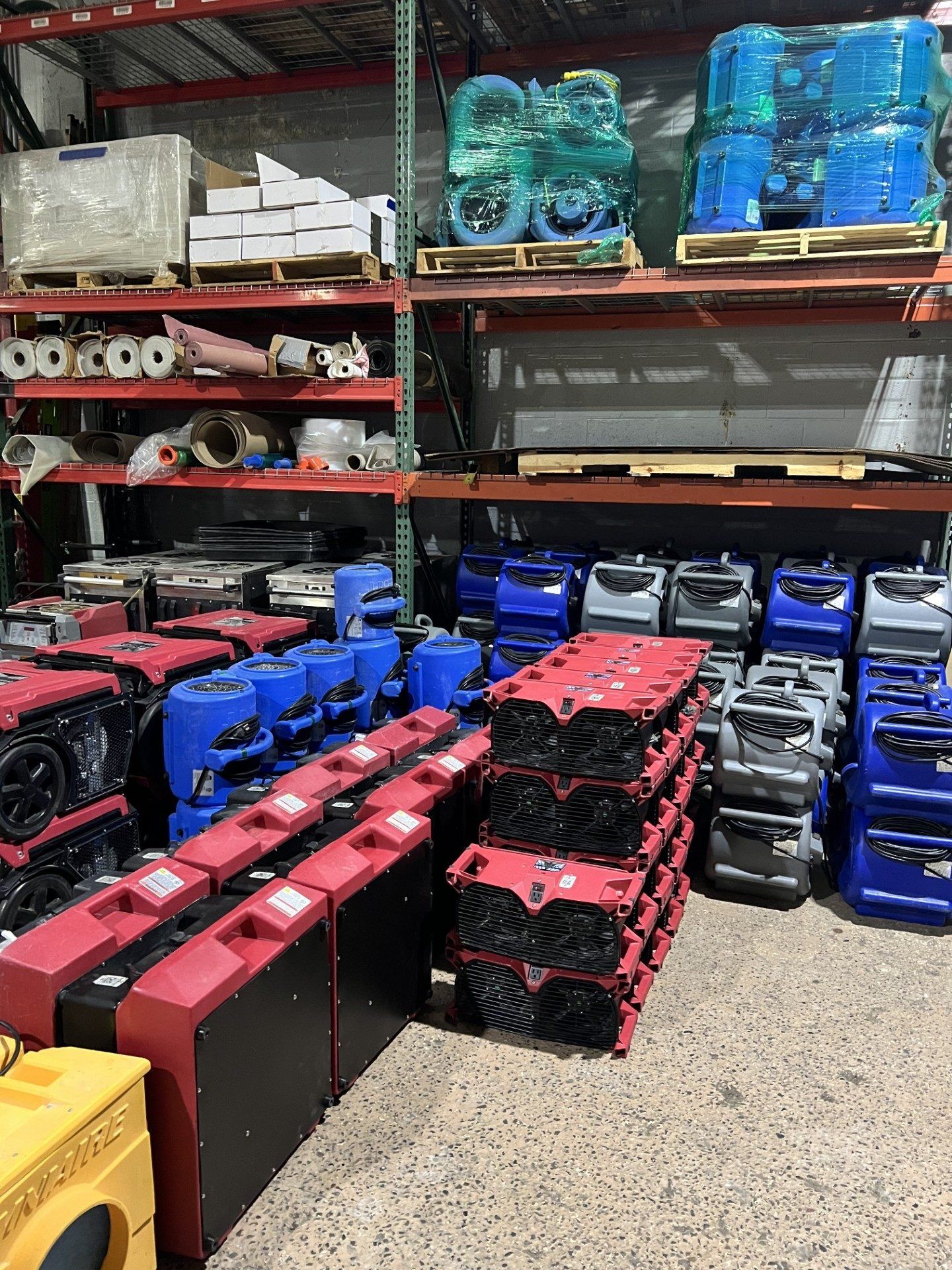
Six Things We Need To Know To Mobilize Correctly
- 1What kind of building, and is anyone in itOccupancy changes everything before the equipment does. A production floor, a multi-tenant building with residents still inside, a school mid-term and an empty warehouse are four different mobilizations, and the answer decides crew size, shift pattern and whether containment goes up before anything else.
- 2How much of it is affected, roughlyFloors, units, square footage — a rough number beats an exact one that takes an hour to get. We are sizing equipment and crew from this, and it is far easier to send more than to discover on arrival that the trailer is half what the building needs.
- 3Is the source stoppedA sprinkler discharge that is still running, a roof still open, a line still under pressure. Nothing downstream matters until it stops, and if it has not stopped, that becomes the first thing our crew does rather than the first thing you have to arrange.
- 4Do you have power, and do you need to keep operatingLarge losses frequently take power with them, and drying equipment needs a great deal of it. Tell us if the panel is down, and tell us if any part of the building has to keep trading — both change what leaves the yard.
- 5Who can authorize work, and who is the single point of contactThe most common delay on a large commercial loss is not equipment, it is waiting for someone with signing authority. Name that person on the first call. If your carrier or broker should be looped in immediately, say so and we will.
- 6Call us — a person answersCrews stage from Troy and Port Huron. Tell us what you have and we will tell you honestly what we can put on site and when — including if the right answer is that this needs more than one contractor.
Send Us The Scale
Square footage or unit count, how many floors, and whether the power is up — that is enough for us to size crews and equipment before anyone arrives. A real person answers 24/7, and on a loss this size the call is better than the form if you can make it.

A Large Loss Is Not A Bigger Version Of A Small One
Below a certain size, restoration is a craft problem: find the water, dry the materials, repair what came out. Above it, the craft is assumed and the job becomes logistics — how many machines, how much power to run them, which areas come back first, who authorizes what, and whether the documentation will survive a claim this size being scrutinized line by line.
That is where most losses go wrong, and it is rarely the drying. It is a crew sized for the wrong building, equipment that arrives in three waves instead of one, no temporary power so half the machines cannot run, work sequenced around the contractor’s convenience rather than which space gets you operating, and a scope written by someone who was not there when the building was wet.
We size the response to the building rather than to the truck: scaled crews mobilized from two Michigan offices, commercial-grade extraction and desiccant drying, temporary power where the panel is down, and one licensed Michigan builder carrying the file from the first hour through the finished reconstruction. There is no handoff, because there is nobody to hand off to.
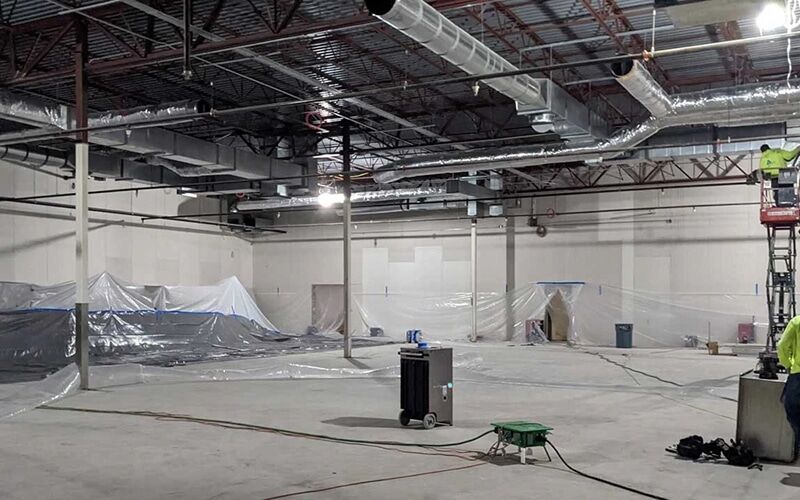
How A Large Loss Actually Runs
The difference between six weeks and six months is almost never the drying. It is how the first 48 hours are organized and how well the file is documented.
1Assess and size the response
A walk of the whole affected area, not a sample — because a loss that presents on one floor has usually reached two. Affected-area measurements, moisture mapping and an equipment count come out of this visit, and they decide what mobilizes rather than a guess made on the phone.
2Stabilize, secure and stop the source
Water off, openings tarped or boarded, electrical hazards isolated, and the site made safe for a crew to work a building that has just been damaged. Nothing productive happens until this is finished.
3Contain, so the rest of the building can keep working
Sealed containment and air control around the affected area, protected access routes, and signage and notifications where tenants, staff or the public are involved. This is what makes partial operation possible instead of a full closure.
4Mobilize equipment and power together
Extraction, air movement and dehumidification sized to the volume of air rather than the floor area — plus temporary power where the building cannot supply it. Equipment that arrives without the power to run it is the most common false start on a large loss.
5Dry to a documented standard, with daily readings
Logged daily moisture readings against a defined drying goal, so the building is signed off on evidence rather than on a schedule. On a claim this size, that log is the document that settles arguments.
6Rebuild in the order that gets you operating
Reconstruction by a licensed Michigan builder, permitted and built to current code, sequenced against the priority you set on day one — revenue-critical space finished ahead of space that only needs to look finished.
Large Claims Are Won On The File, Not The Phone Call
The bigger the loss, the further the decision-maker sits from the building. Adjusters, consultants and reviewers who will never walk your site decide this claim from documents — so the documents are the job.
If your building is sprinklered, the usual winterizing advice is backwards: a standard policy generally requires you to maintain heat and keep the water supply on, so shutting it off to protect the pipes can forfeit the coverage you were protecting. See our frozen and burst pipes page for the detail.Michigan DIFS consumer guidance. DIFS Consumer Services: 877-999-6442.
Straight Answers For Owners, Managers And Adjusters
We bill your carrier directly on commercial and large-loss claims, and document the loss in the line-item format adjusters and consultants work in, so the file does not sit waiting on information nobody collected at the time.
What actually drives the number is the volume of air to be dried, how much material has to be removed rather than restored, how much of the work has to happen outside operating hours, and whether temporary power is required. Square footage on its own is a poor predictor — a high-bay warehouse and an office floor of the same size are not the same job.
And we will tell you when a loss needs more than us. Some events genuinely require a national CAT contractor, and saying so is worth more to us than taking a job we would be stretched by. Where the work is ours, you get a documented, line-item scope in writing before it begins, and the assessment and the scope come with no obligation.
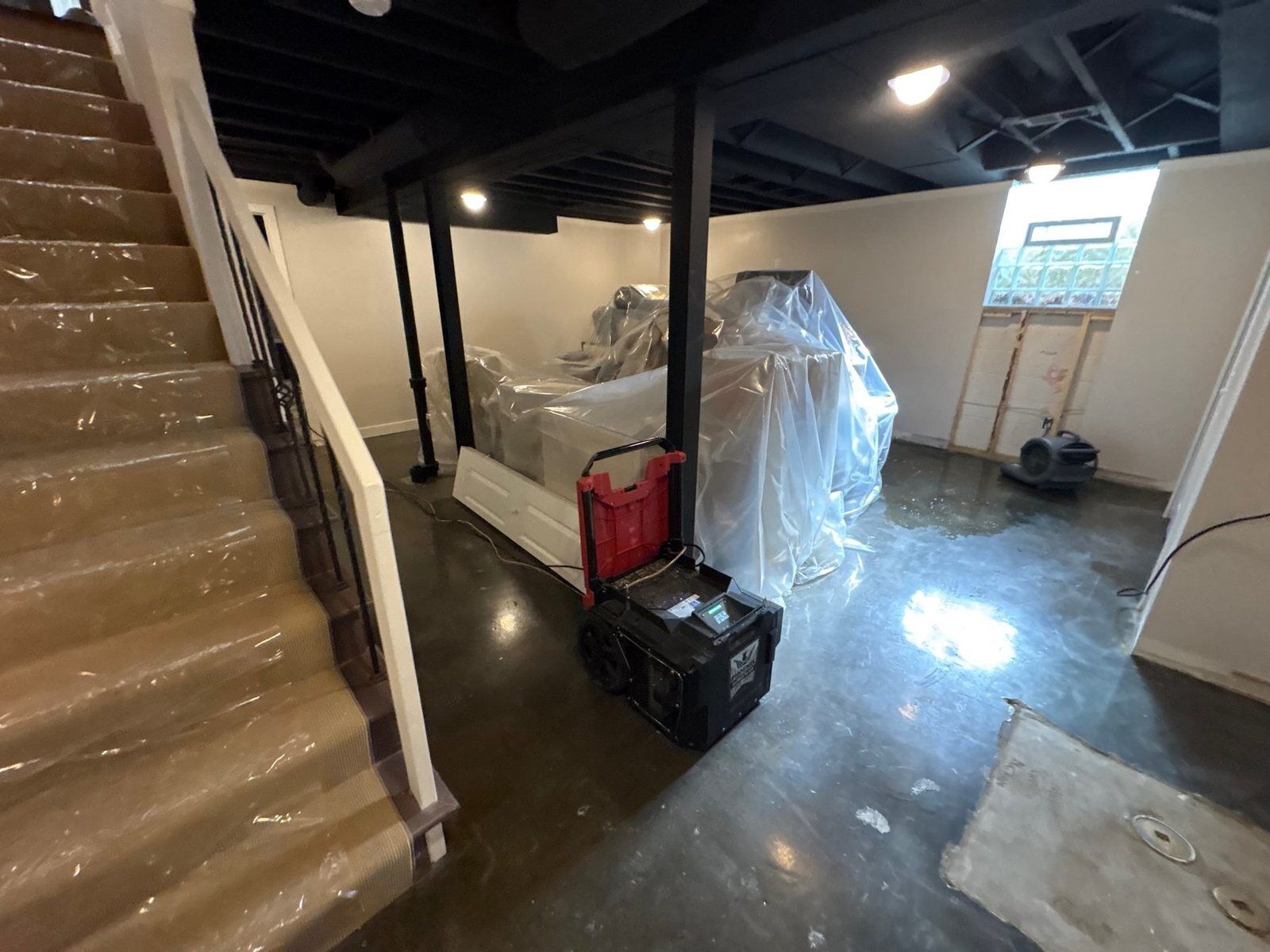
Large losses documented the way they need to be defended — affected-area measurements, moisture mapping with logged daily readings against a defined drying goal, equipment and stock inventories, containment and access records, photographic documentation from the first hour, and line-item scopes in carrier-ready format with mitigation and reconstruction on one file. Call (888) 838-7170 or use our contact page and reference your claim number.
What Our Customers Say
4.8173 Google Reviews
“We woke up on a Monday morning to a totally flooded basement, malfunctioned hot water tank — not only did he calm me down, he had a team onsite within the hour.”
Kathy · Google Review
“The only restoration company that picked up the phone at around 11:30pm when we found our basement flooded. Casey and Harold did great job. Impressed!”
Agnes · Google Review
“Dri-Force did an outstanding job restoring my basement post-flood. Excellent communication. Excellent planning. Quick. Clean. Responsive to everything we asked.”
Jack · Google Review
Large Losses We Can Show You
Photographed by our own crews. If you are qualifying contractors for a loss of this size, these are the jobs to ask us about.
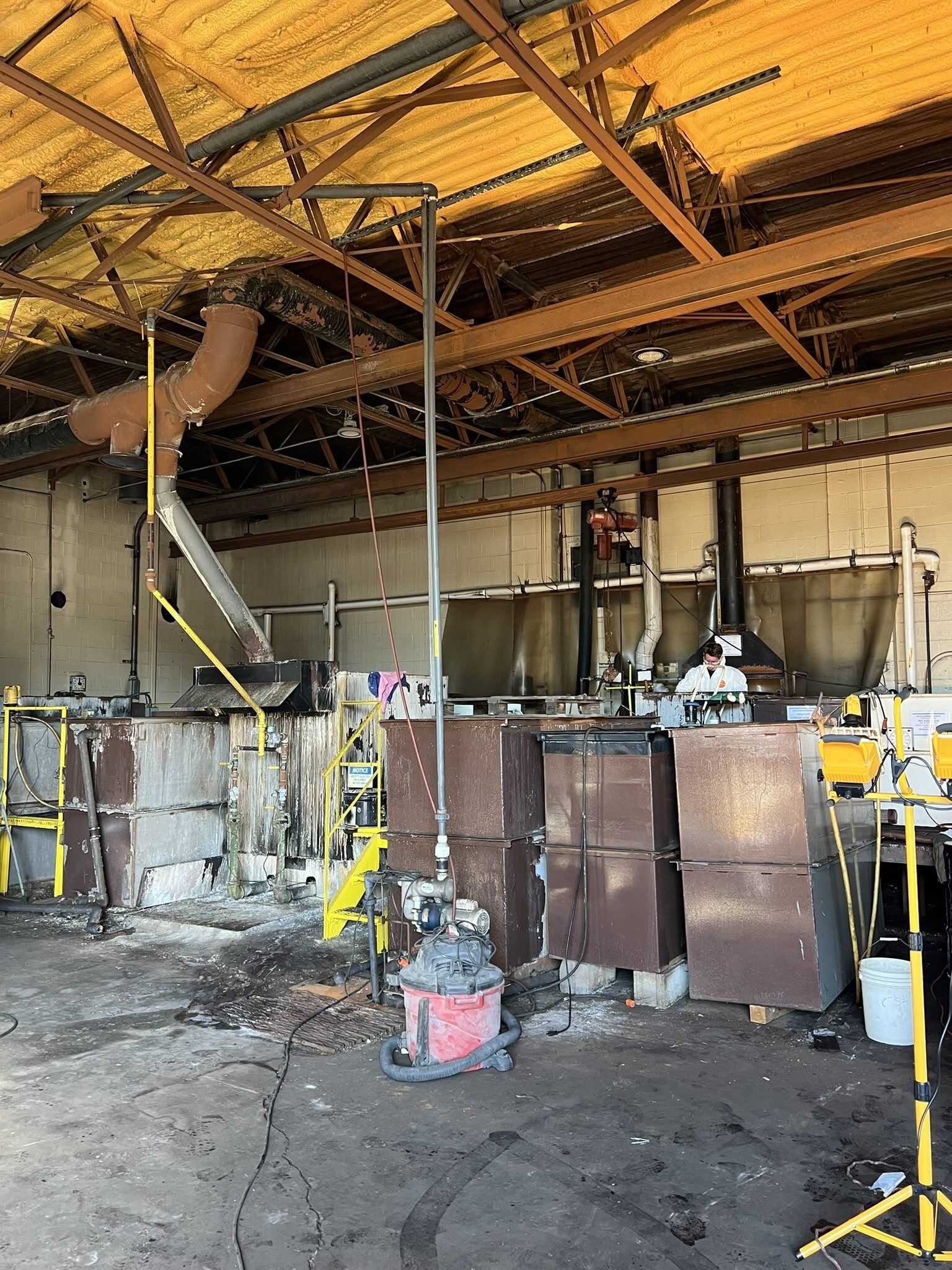
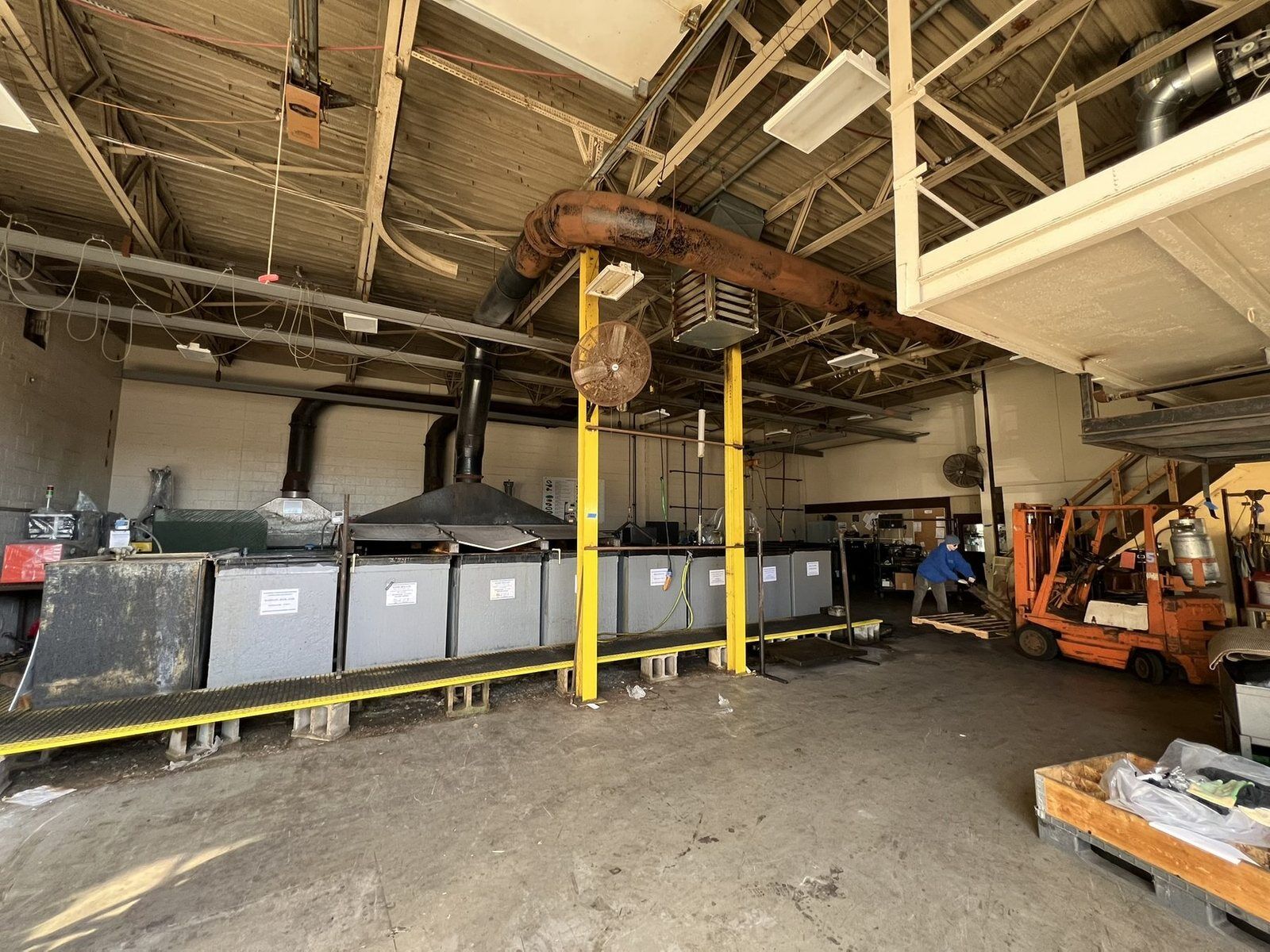
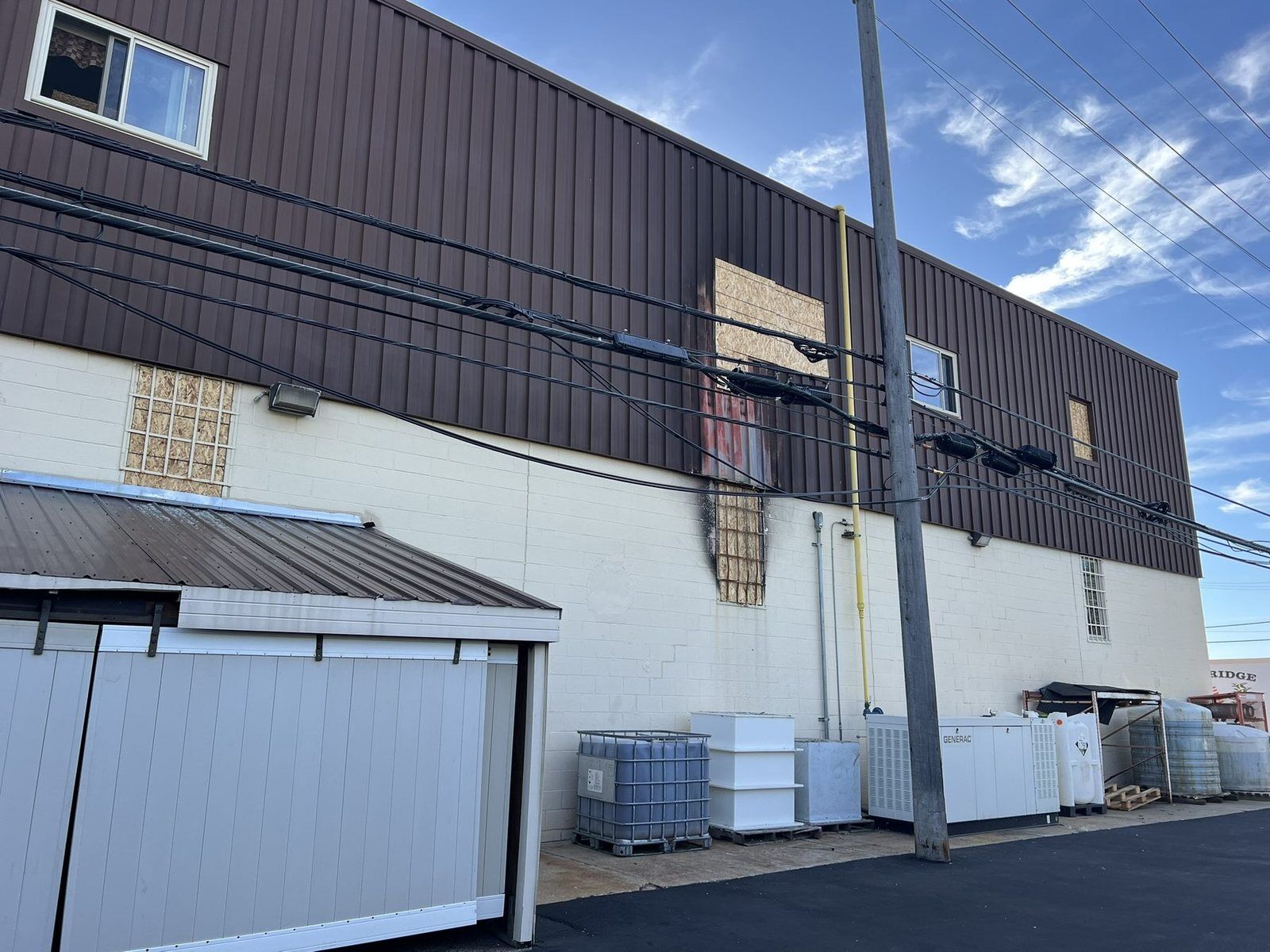
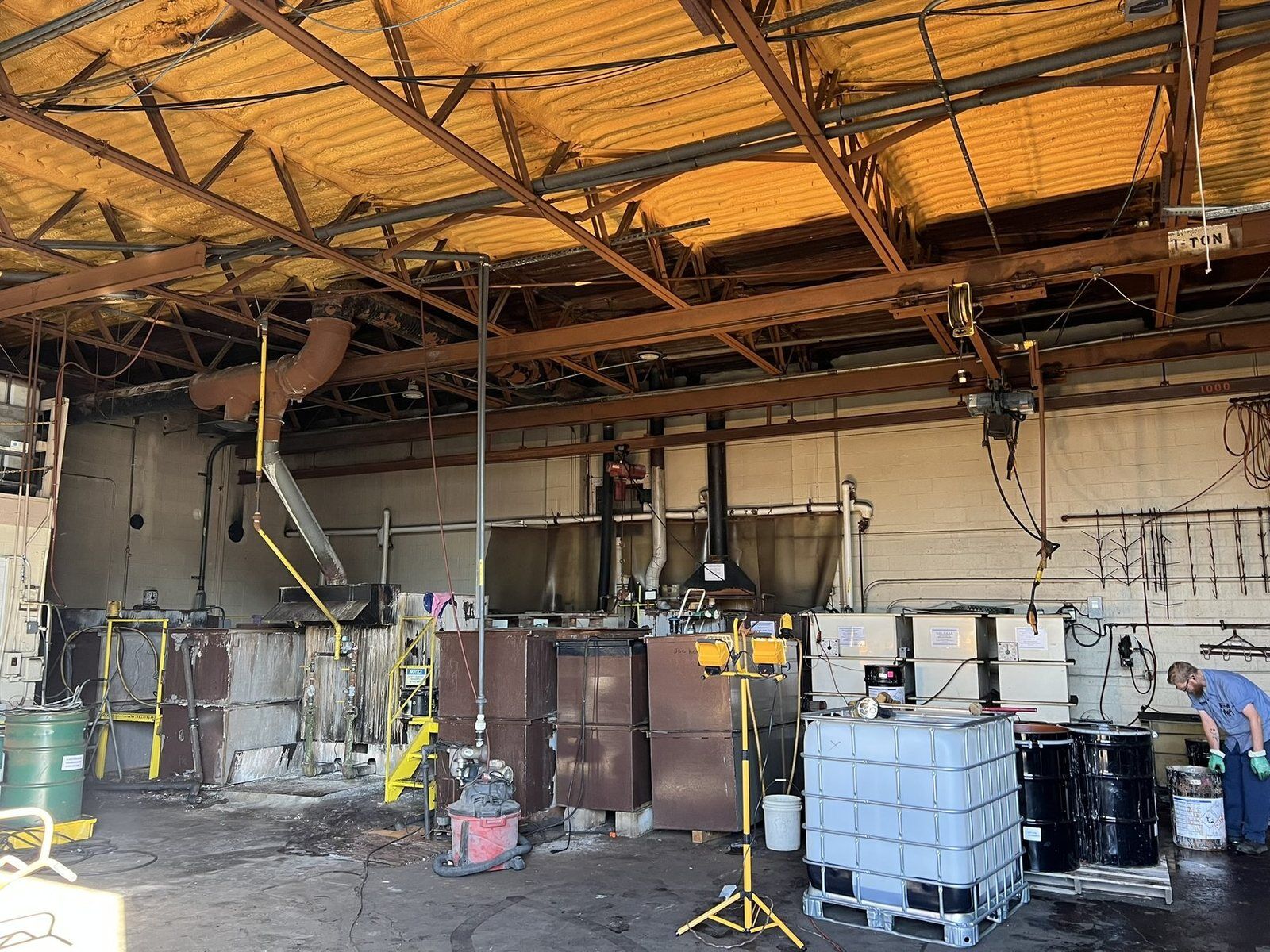
Fire Loss At A Michigan Manufacturing Facility
This is the shape of loss that defeats a residential-scale operation. A high-bay plant holds several times the air of an office with the same footprint, the surfaces that matter are thirty feet up, and the asset most at risk is the production line rather than the building around it.
The whole job was a sequencing problem. Clean from the roof structure downward so nothing falls onto finished surfaces; protect machinery in place, because removing it costs more than the cleaning; and work the envelope on the same scope so the building is closed while the interior is still in progress. Get that order wrong and sections get done twice.
Scope of work
- Emergency response and site safety
- Structural steel and roof deck cleaning
- Overhead ductwork and process line cleaning
- Machinery protected and wrapped in place
- Production equipment decontamination
- Soot and odor treatment throughout
- Exterior envelope cleaning
- Carrier-ready documentation from day one
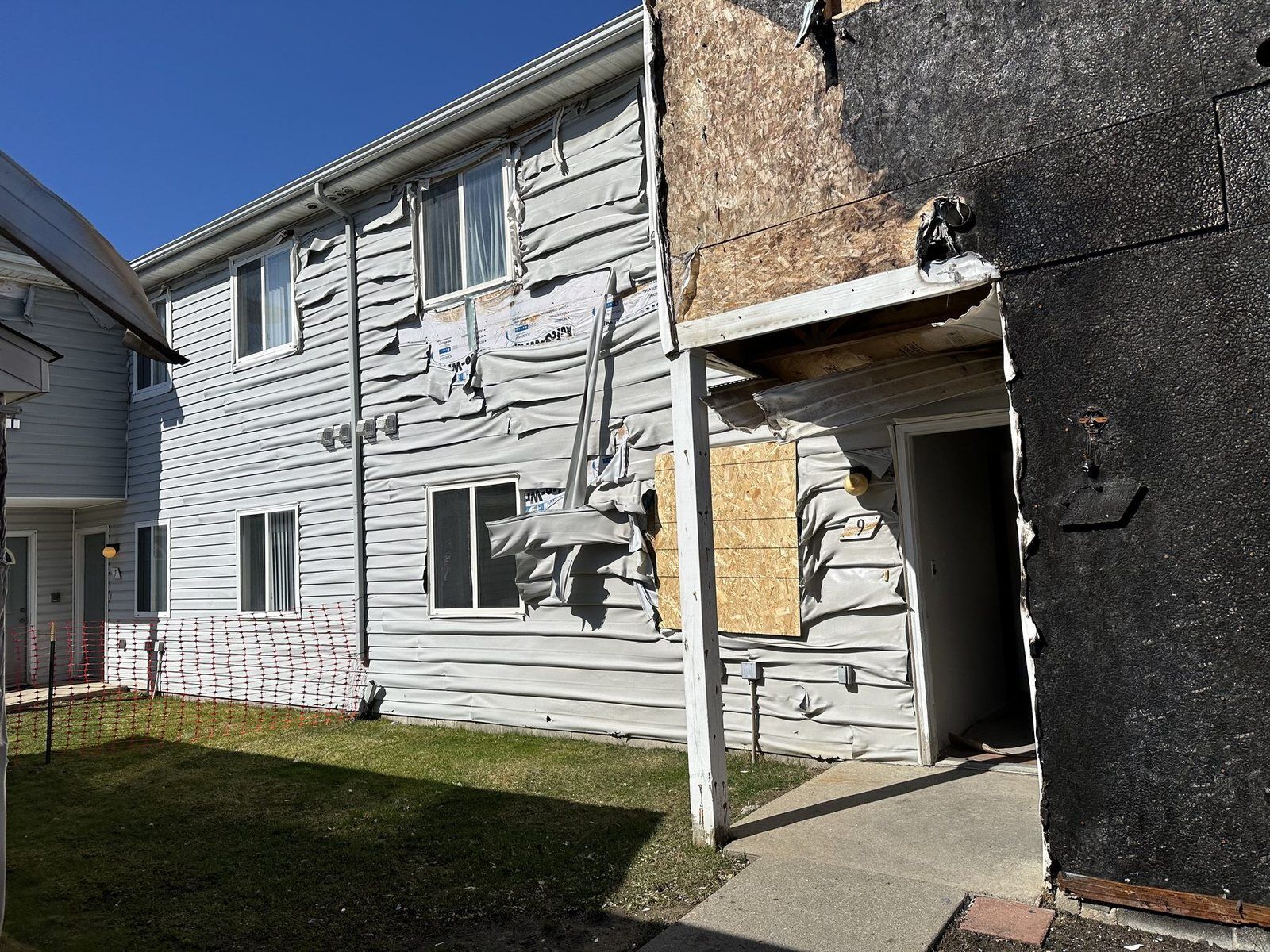
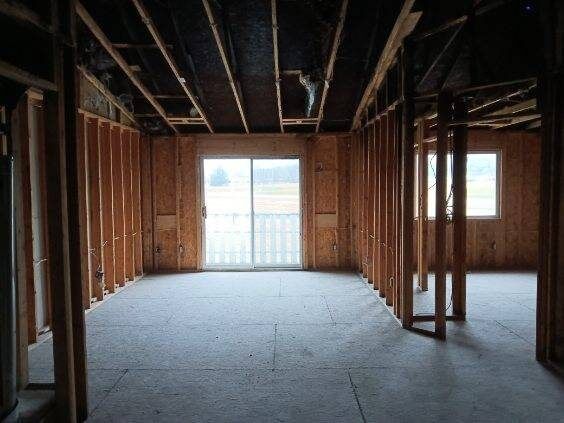
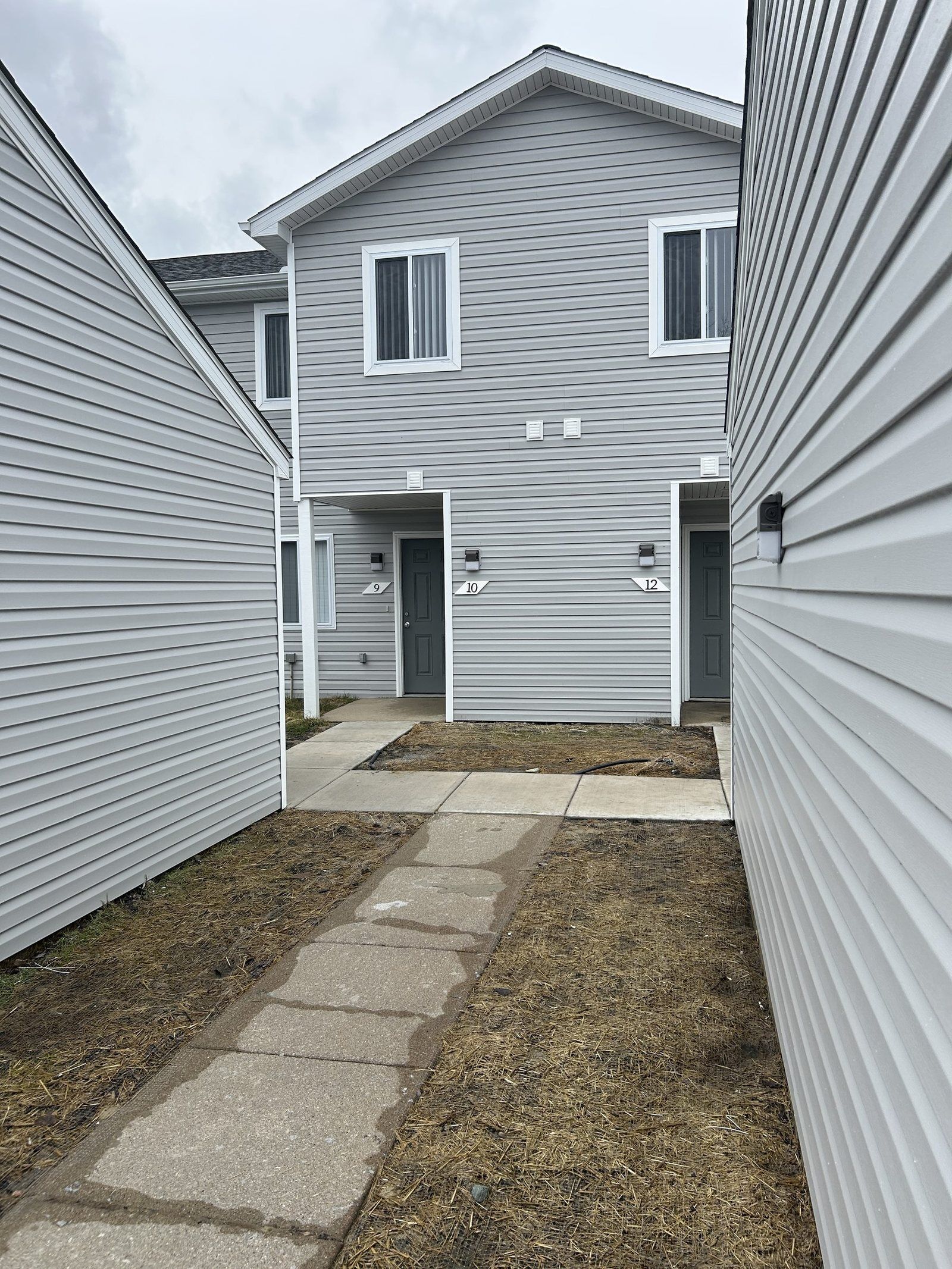
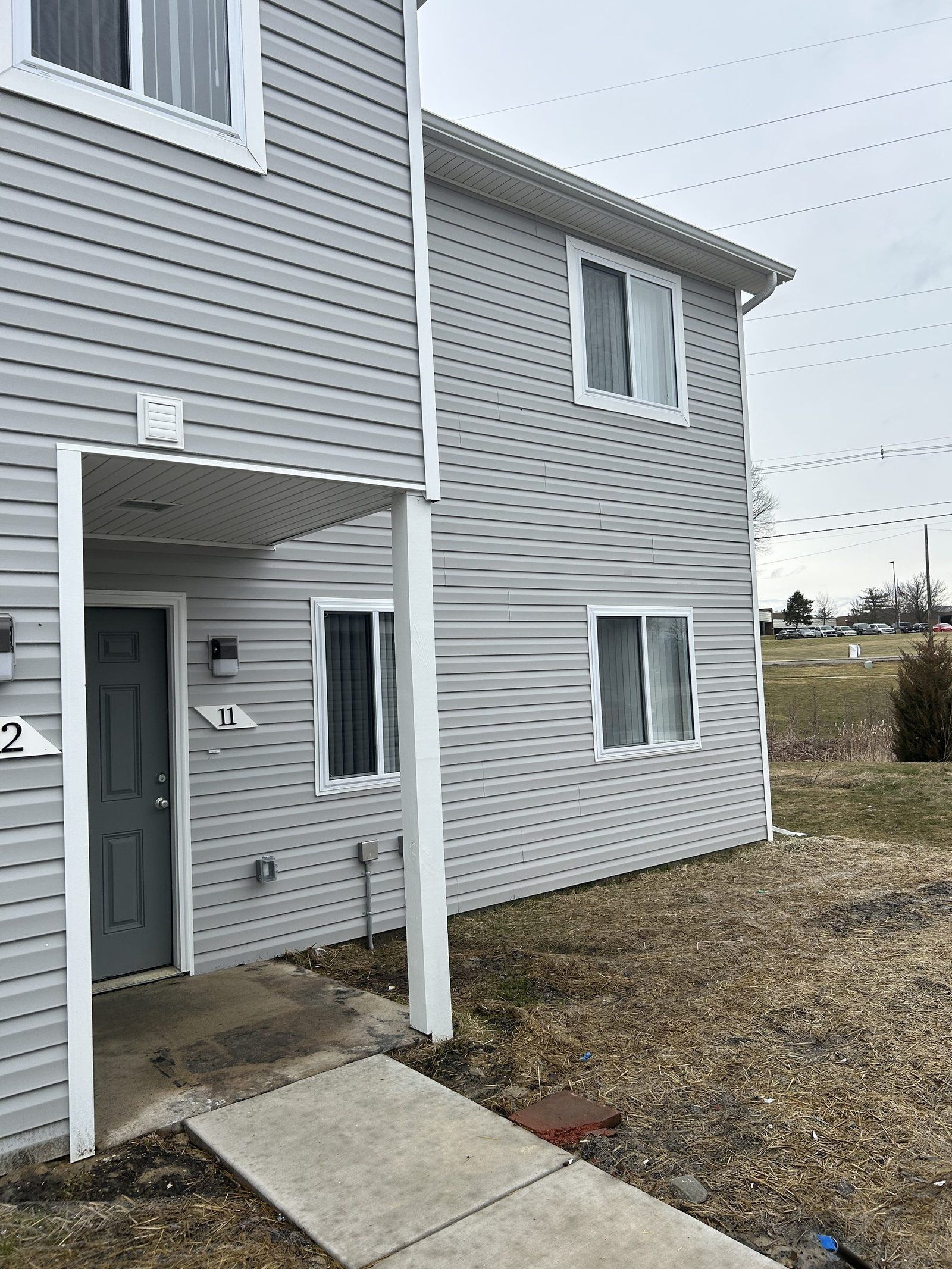
Oakbrooke — Multi-Unit Residential Fire Loss
Multifamily is where a modest fire becomes a large loss on paper. One unit burns, several more are unusable, and the arithmetic that matters is not the damaged area — it is doors that cannot be occupied multiplied by weeks.
So the work was ordered around turnover rather than around trades: units taken back to sound framing and returned to habitable in sequence, with the exterior envelope rebuilt from the sheathing out so the building was closed in while interiors were still open. The last two photographs are the same building as the first two.
Scope of work
- Emergency board-up and site securing
- Contents handling and inventory
- Selective demolition to sound framing
- Structural repair and framing
- Insulation, drywall and interior finishes
- Siding and exterior envelope rebuilt
- Kitchens, trim and unit turnover
- One licensed Michigan builder throughout
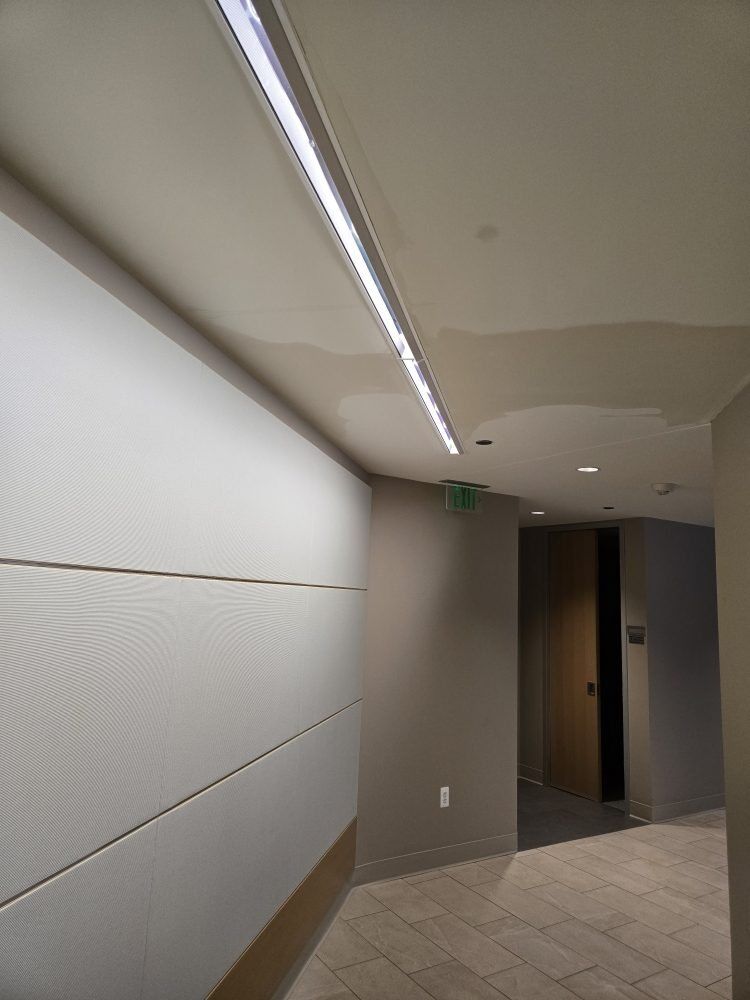
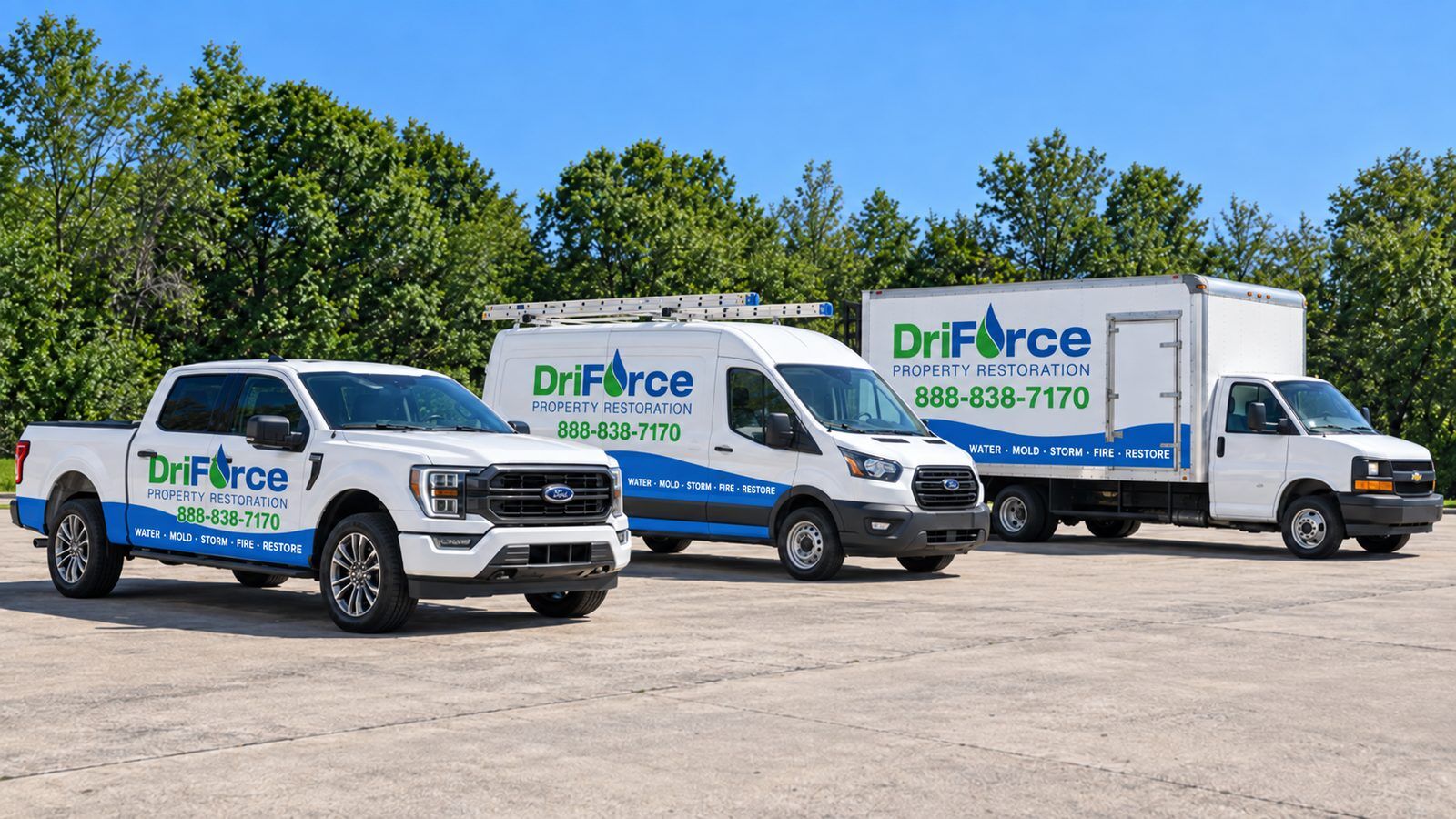
The Equipment Is Ours, And It Is Already Here
Capacity on a large loss is decided before the phone rings. Contractors who rent their fleet are bidding against everyone else in the state for the same machines the morning after a storm. This is our warehouse.
Six Things That Make A Loss A Large Loss
It is not a dollar figure. It is the point at which a standard crew and a standard trailer of equipment stop being the right answer.
- More than one floor, or more than one unitWater travels down and sideways. The moment a loss involves multiple levels or multiple tenancies it stops being one job and becomes several running in parallel, each with its own access, authorization and occupant.
- The building cannot operateA production line stopped, a floor closed, tenants who cannot occupy. When downtime is costing more than the restoration, the whole sequence of work should change to reflect that — and frequently does not.
- The volume of air is the problem, not the floor areaA warehouse or a gymnasium with a thirty-foot ceiling holds many times the air of an office with the same footprint. Drying is sized on volume, and this is where residential-scale equipment quietly fails to keep up.
- Power is gone, or cannot carry the loadLarge drying deployments draw serious current. If the panel is damaged or the service cannot support the equipment, temporary power becomes part of the job rather than an afterthought.
- Structural or life-safety systems are involvedCompromised framing, a damaged sprinkler system, affected egress or fire protection. These govern everything else — and a sprinkler system found to contain ice is treated as impaired whether or not it has leaked.
- The claim will be scrutinized line by lineLarge claims get read closely, by people who did not visit the building. Affected-area measurements, moisture logs, photographic records and a line-item scope are not paperwork on a loss this size; they are the difference between a claim that settles and one that stalls.
Everything Else Worth Knowing About A Large Loss
The First 48 Hours Decide The Next Six Weeks
On a large loss almost every outcome that matters is set in the first two days, and almost none of it is about drying.
Hour one to four: stop the source, make the site safe, and get someone walking the whole affected area rather than the part that is obvious. A loss that presents on one floor has usually reached two, and a mobilization sized on the visible damage arrives short.
Hour four to twelve: containment up, equipment and power on site together, and the documentation started — measurements, moisture mapping, photographs. This is the evidence the claim will be settled on and it cannot be recreated once the building is dry.
Day two: the priority conversation. Which areas get you operating, in what order, and who signs. Losses that stall almost always stalled here — not because the work was hard, but because nobody with authority had set the sequence.
Why Air Volume Matters More Than Square Footage
Residential drying is sized on floor area because residential ceilings are all roughly the same height. Commercial and industrial buildings break that assumption completely.
A warehouse with a thirty-foot ceiling holds several times the air of an office with an identical footprint, and dehumidification works on the air, not the floor. This is the single most common way a large loss is under-equipped: a crew sizes on square footage, brings what would be correct for a house of the same area, and the readings barely move.
It is also why desiccant dehumidification matters at this scale. Refrigerant units lose effectiveness as temperature drops and are rated only to around 45°F; desiccant units work well below that, which in an unheated Michigan building in winter is the difference between drying and waiting.
Temporary Power: The Most Common False Start
Large drying deployments draw real current, and large losses frequently take the electrical service with them. Equipment that arrives without the power to run it is the most common way a mobilization looks impressive on day one and accomplishes nothing by day three.
Tell us on the first call whether the panel is down or whether the service is likely to carry a substantial equipment load. It changes what leaves the yard, and arranging it up front costs a phone call where arranging it later costs days.
The same applies to heat. Drying a cold building without supplemental heat is slow and sometimes impossible, and in a Michigan winter an unheated building has its own problem — the plumbing.
When A Loss Needs More Than One Contractor
We would rather say this plainly than have you find out in week two. Some events are genuinely beyond a regional contractor: a wide-area catastrophe where every crew in the state is committed, a loss requiring hundreds of personnel across multiple sites, or specialist work like large-scale document or electronics recovery at volume.
What we will do on a loss like that is tell you at the assessment, not after we have equipment on site. And there is a middle case worth knowing about: many large losses need one contractor to own the building and specialists to own particular scopes, which works well as long as somebody is clearly accountable for the whole.
Where we are strongest is the loss that is too big for a residential-scale operation and too local to interest a national CAT contractor — the multifamily building, the plant floor, the school, the medical office, the multi-floor commercial property. That is most of what happens in Michigan.
Large Loss Restoration, Answered
Qualify Us Before You Need Us
Pre-qualification on a loss this size usually happens under time pressure. Everything below can be verified independently, in about a minute, without asking us for anything.
- Applied Structural Drying Technician (ASD)
- Applied Microbial Remediation Technician (AMRT)
- Water Damage Restoration Technician (WRT)
- Fire & Smoke Damage Restoration Technician (FSRT)
- Odor Control Technician (OCT)
- Trauma & Crime Scene Technician (TCST)
- Health & Safety Technician (HST)
We also hold the IICRC Mold Removal Specialist designation. All of it is listed publicly in the IICRC Global Locator under our legal entity, Absolute Water Removal, LLC dba DriForce Property Restoration — look us up before you call, not after.
dba DriForce Property Restoration
Related Services & Nearby Communities
A large loss is rarely one kind of damage. The same certified crews handle every cause below — in every community we serve, day or night.
Large losses arrive by every route. We handle water damage, fire and smoke damage, storm damage, frozen and burst pipes, hazardous materials, contents and document recovery and reconstruction. Below the scale of this page, the same crews handle everyday commercial restoration — offices, retail, warehouse and medical space across Metro Detroit. Crews dispatch 24/7 from our Troy office for Oakland, Macomb and Wayne counties and our Port Huron office for St. Clair County and the Blue Water Area.
Large Loss? Tell Us What You Have.
A person will answer. Building type, roughly what is affected, and whether you need to stay operational — those three answers size the response, and getting them at hour one is what keeps a large loss from becoming a long one. If the honest answer is that this needs more than us, we will tell you that too.