You found black spots behind the drywall — or maybe your basement just smells like it’s been underwater since August. Either way, you are not looking for information. You are looking for the right person to call in the next ten minutes before this gets worse. This guide gives you exactly that: how to identify a qualified mold remediation specialist, what to ask before you hire, and what a legitimate remediation looks like from hour one through final air-quality clearance.
DriForce Property Restoration has handled mold remediation services across Troy, Oakland County, and Southeast Michigan for 16+ years. Our IICRC-certified crews respond 24/7 and arrive on site within 60 minutes for emergency calls in Oakland, Wayne, Macomb, and St. Clair counties. If you are already looking at active mold growth, call (888) 838-7170 now — then come back and read the rest of this.
For a broader overview of what professional mold work looks like in this state, our Mold Removal in Michigan guide walks through the full process step by step. This post focuses specifically on how to evaluate and hire the right specialist before the problem doubles in scope.
Why You Need a Certified Mold Remediation Specialist — Not Just a Handyman
Mold is not a cleaning problem. It is a containment problem. When you disturb an active mold colony without negative pressure equipment and HEPA filtration running, you aerosolize spores and push them into adjacent rooms, your HVAC system, and your clothing. A handyman with bleach and a shop vac does not stop mold — he relocates it.
Insurance carriers understand this distinction. Remediation work performed by an unlicensed or uncertified contractor is frequently rejected during the claims review process, leaving you to cover costs out of pocket on work that may also need to be redone. The certifications that actually matter in Michigan are IICRC (specifically the Applied Microbial Remediation Technician credential, or AMRT), MII (Mold Inspection Institute), and EPA Lead-Safe certification where older construction materials are involved.
Beyond the financial exposure, improper mold handling creates real health liability. Mycotoxin-producing species like Stachybotrys chartarum (black mold) and Aspergillus require specific personal protective equipment and disposal protocols outlined by the EPA’s mold and moisture guidance. A certified specialist follows those protocols. A handyman does not.
How Mold Flourishes in Troy Basements During Fall and Winter Months
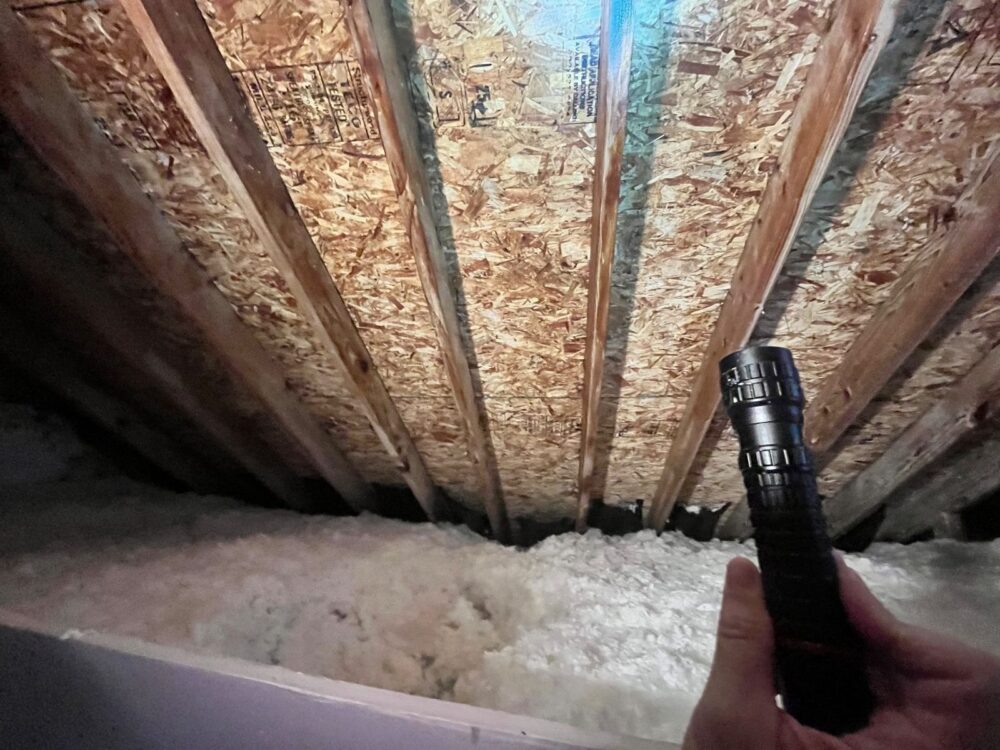
Southeast Michigan’s climate is particularly unforgiving when it comes to moisture intrusion. Troy sits in Oakland County, where seasonal groundwater levels rise significantly after heavy October rains and early freeze-thaw cycles. That water finds its way through foundation cracks — especially in homes built between the 1970s and 1990s, which commonly have poured concrete or block foundations with minimal vapor barriers.
Right now, in mid-October, this cycle is already underway. Gutters clogged with fall leaves are redirecting water toward foundation walls instead of away from them. Overnight temperatures drop below freezing, then climb back above during the day — expanding and contracting any existing hairline cracks. That moisture seeps behind finished drywall where no one looks until the smell becomes undeniable.
The timeline is faster than most homeowners expect. According to IICRC S520 protocols, mold can begin colonizing drywall within 24 to 48 hours of sustained moisture exposure. Wood studs show structural compromise within 72 hours in the right conditions. By the time you see visible growth on the surface, there is almost always more growth behind it. The Indoor Air Quality Association consistently identifies hidden wall cavity contamination as the most underestimated factor in residential mold cases.
What we see repeatedly in the field: moisture meters pressed against drywall that looks completely dry to the eye will read 25–40% moisture content in Troy basements after a wet fall. That reading behind a finished wall is where mold starts — not on the surface, and not where a visual inspection alone would catch it. Thermal imaging cameras are the only reliable way to map the full extent of moisture intrusion before remediation begins.
The 5 Critical Questions to Ask Before Hiring a Mold Remediation Specialist
You are making a decision under stress with real financial and health consequences. These five questions will separate a legitimate mold remediation company from one that will take your money and leave your problem half-solved.
1. “Can you provide your IICRC certification and proof of liability insurance?”
This is non-negotiable. An IICRC-certified mold remediation specialist has completed formal training in containment, removal protocols, and post-remediation verification. Liability insurance protects you if remediation is performed incorrectly and the problem recurs or causes additional damage. Ask for both documents before anyone touches your property. In Michigan, you can also verify a contractor’s builder’s license through the state licensing board — a step worth taking for any work that involves structural materials.
2. “What is your containment strategy — and will you use negative pressure?”
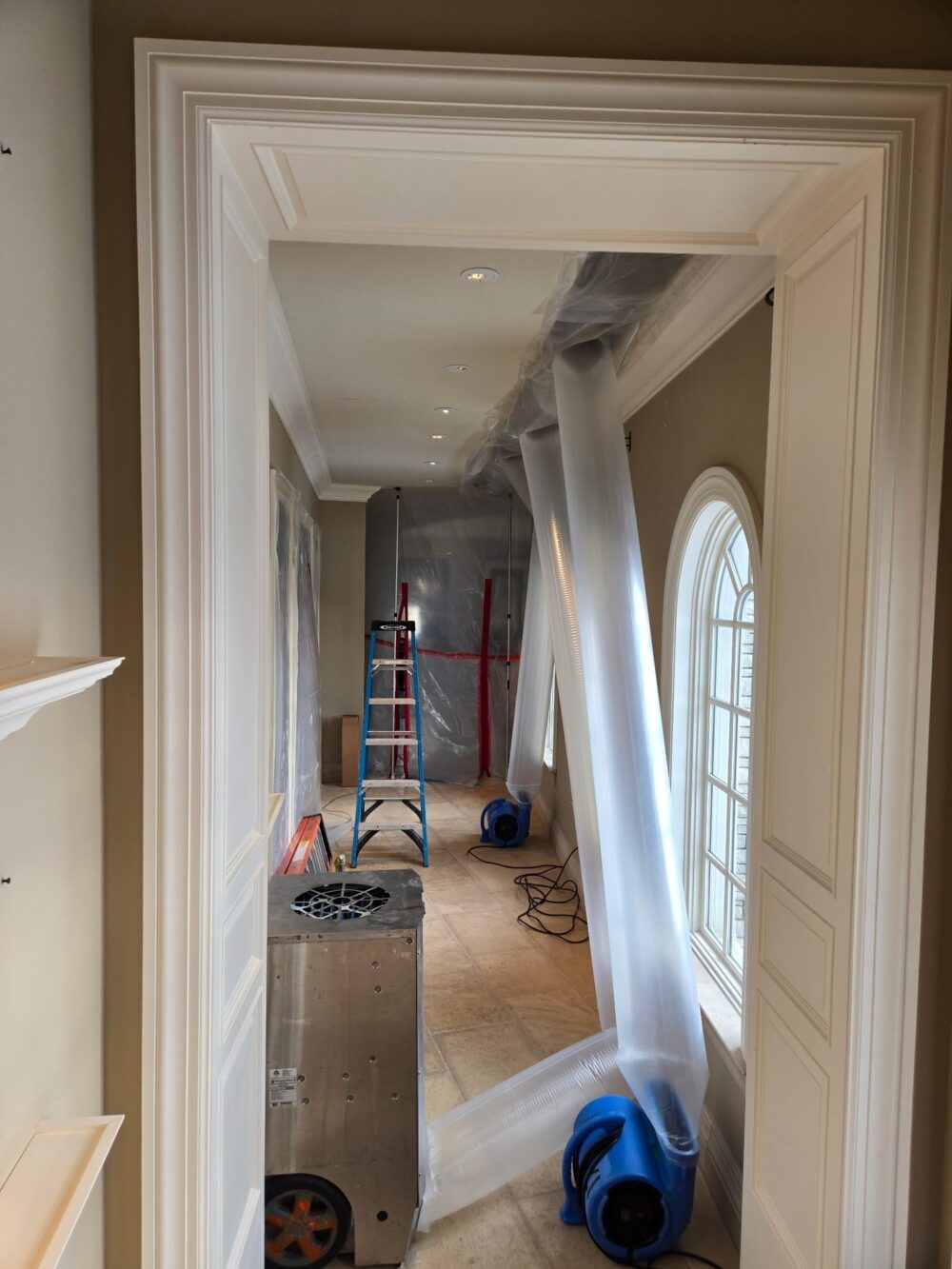
Legitimate remediation requires physical containment barriers (typically 6-mil poly sheeting) and negative air pressure machines that exhaust contaminated air outside the structure through HEPA filtration. This prevents spore migration to unaffected areas of your home. If a contractor gives you a quote that does not mention containment or negative pressure, they are describing cosmetic cleaning — not remediation. Skipping this step is how mold ends up in your living room after someone treated your basement.
3. “Do you handle only removal, or do you also fix the moisture source?”
This question separates one-dimensional operators from full-service specialists. Mold is a symptom. The moisture source is the disease. A contractor who removes the mold but leaves a leaking foundation crack, a failed sump pump, or a slow roof leak intact is scheduling your next remediation call for you — typically within six to twelve months. Ask explicitly whether moisture source repair is included in the scope or quoted separately, and make sure it is addressed before the project closes.
4. “Will you conduct post-remediation testing and provide documentation for my insurance claim?”
Post-remediation air quality verification is how you prove the work was done correctly — to yourself, to your family, and to your insurance carrier. Not every company includes this step. It matters because insurance adjusters require documentation that links the mold to an insured loss event and confirms the remediation met industry standards. Without it, your claim can be denied or disputed even if the physical work was solid. Make sure the scope of work explicitly includes a post-remediation clearance report.
5. “How quickly can you begin containment in an emergency?”
Every hour matters. A specialist who cannot begin containment within the same day on an active loss is allowing the affected area to expand. For Troy homeowners, working with a local specialist based in Southeast Michigan eliminates the travel delays that come with contractors dispatched from across the metro. Response time is not a customer service metric — it is a containment metric.
Mold Remediation vs. Mold Removal: Why the Terminology Matters to Your Wallet
“Mold removal” and “mold remediation” are not the same thing, and the difference has real cost implications. Removal typically refers to surface cleaning — wiping down visible mold with a biocide or antimicrobial solution. It addresses what you can see. Remediation is the full protocol: containment, HEPA filtration, physical removal of contaminated materials, antifungal treatment of surrounding surfaces, moisture source correction, and post-remediation air quality testing. That is what the EPA and IICRC require.
Quotes that come in dramatically lower than others are almost always describing removal, not remediation. A surface-cleaning job on a basement mold problem typically runs $500 to $2,000. A legitimate remediation of the same space — done to IICRC S520 standard — runs $2,000 to $8,000 or more depending on scope. The lower number sounds better until the mold returns in four months and your insurance carrier flags the repeated claim.
When you are evaluating quotes, ask specifically: “Is this scope built to IICRC S520 protocol?” If the contractor does not know what S520 is, you have your answer. For more context on how choosing a mold removal company in Metro Detroit should work, our comparison guide breaks down exactly what a legitimate scope looks like versus what corners get cut.
What Happens During Professional Mold Remediation in Your Troy Home
Understanding the process helps you hold your contractor accountable and set accurate expectations for your household during the work.
Phase 1: Assessment and Containment (Hours 1–4)
Our IICRC-certified technicians begin with moisture mapping using thermal imaging cameras and calibrated moisture meters. This identifies the full extent of water intrusion — including areas that appear dry but are actively feeding mold growth behind finished surfaces. Once the affected area is mapped, physical containment goes up: 6-mil poly sheeting sealed at every penetration, with zipper-access doors. Negative air pressure machines with HEPA filtration are activated immediately, drawing contaminated air out of the containment zone before any demolition begins.
Phase 2: Removal and Treatment (Hours 4–12)
Contaminated materials — drywall, insulation, flooring, and in some cases framing lumber — are removed and double-bagged in sealed poly for disposal. HEPA air scrubbers run continuously throughout this phase. Exposed structural surfaces receive antifungal treatment to address any remaining surface colonization. Industrial dehumidifiers begin pulling residual moisture from the structure immediately after removal is complete.
Phase 3: Restoration and Verification (Days 2–7)
Once the structure reaches target moisture levels, the moisture source is addressed — whether that means sealing foundation cracks, installing or servicing a sump pump, or coordinating with our water damage restoration team for broader structural drying. Replacement materials are installed, and post-remediation air quality sampling is conducted by a third party or our MII-certified inspector. That clearance report becomes part of the insurance claim documentation package.
Red Flags in Mold Remediation Quotes
A low quote is not a deal. It is often a warning. These are the red flags that indicate a contractor is cutting corners that will cost you significantly more in the long run.
No mention of containment or negative pressure. If the estimate does not reference these, the contractor is planning to work in open air — spreading spores as they go.
“Estimate based on visual inspection only.” Mold lives behind walls. A quote built on visual inspection alone is a quote for surface cleaning, not remediation.
Fixed pricing that does not account for hidden mold. Legitimate remediation scopes include provisions for what moisture meters and thermal imaging reveal behind finished surfaces. Flat-rate quotes ignore this reality.
No post-remediation testing included. Without a clearance report, you have no way to verify the work was effective — and neither does your insurance carrier.
Reluctance to provide references or project documentation. A contractor with a track record of successful remediations has documentation. Ask for it.
“We handle the mold — the water issue is your problem.” Any specialist who separates mold treatment from moisture source repair is setting you up for a repeat loss.
Pressure to start immediately without a written scope of work. Urgency is real in mold situations. But a legitimate contractor can produce a written protocol before demolition begins. Verbal agreements on remediation projects leave you with no recourse.
Why Mold Returns — And How to Prevent the Repeat Problem
Roughly 80% of repeat mold cases we encounter in Troy and across Oakland County share the same root cause: the original contractor treated the visible mold but never addressed the moisture source. The pattern is consistent — remediation is completed, the homeowner gets a few months of relief, then the smell returns, usually after the next heavy rain or the first real cold snap forces condensation behind the walls again.
In Southeast Michigan, indoor humidity above 55% is sufficient for mold regrowth even without an active leak. After remediation, humidity monitoring and mechanical ventilation are not optional — they are part of the prevention protocol. Bathrooms and kitchens need exhaust fans that vent directly outdoors, not into attic spaces. Sump pumps should be tested every spring before the groundwater rises. Foundation walls in Troy’s older housing stock should be inspected annually for new settling cracks, particularly after the freeze-thaw cycles that hit hard in October and March.
There is also an insurance dimension to this. Multiple claims for the same underlying issue raise flags with carriers — and can result in claim denial or policy non-renewal. Addressing the moisture source comprehensively the first time is not just a maintenance decision; it is a claims-management decision. Our post-remediation reconstruction services are specifically designed to close this loop — replacing damaged materials and correcting the conditions that caused the loss, under one contractor and one project timeline.
How Insurance Covers Mold Remediation — And What Troy Homeowners Often Miss
Standard Michigan homeowners policies cover mold remediation when the mold resulted from a sudden, covered water event — a burst pipe, a roof leak from a storm, an appliance failure. What they exclude is mold that developed gradually from deferred maintenance, a slow drip behind a cabinet that went unnoticed for months, or chronic basement dampness. The distinction matters enormously for your claim.
The documentation chain is what determines whether a claim succeeds. Your specialist needs to provide photos taken at discovery, moisture readings from the initial assessment, a written remediation protocol, materials removed and their condition, and a post-remediation clearance report. Carriers including State Farm, Allstate, Liberty Mutual, and Auto-Owners all require this package in some form. If your contractor cannot produce it, the adjuster has grounds to question the legitimacy of the scope and the cost.
One thing Troy homeowners consistently underestimate: calling your specialist before your adjuster walks the loss is strategically important. Your specialist’s documentation establishes the chain of evidence that connects the mold to the covered event. An adjuster who walks a partially cleaned loss — before proper documentation is captured — may dispute both the cause and the scope. For a detailed breakdown of how Michigan policies treat mold claims, see our resource on mold insurance coverage in Michigan. DriForce handles adjuster coordination and direct insurance billing on every project — we do not leave homeowners to navigate that process alone.
The True Cost of Mold Remediation in Troy
Costs vary significantly based on scope, access, and what moisture mapping reveals behind finished surfaces. The table below reflects realistic ranges for Southeast Michigan projects completed to IICRC S520 standard.
| Scope | Typical Cost Range |
|---|---|
| Small area (<50 sq ft) | $2,000 – $3,500 |
| Medium area (50–150 sq ft) | $3,500 – $7,000 |
| Large or multi-room | $7,000 – $15,000+ |
These figures include containment setup, material removal, antifungal treatment, dehumidification, and post-remediation air quality testing. They do not include water damage repair or structural reconstruction, which are quoted separately based on what the moisture assessment reveals.
Factors that push costs higher include mold in HVAC systems or ductwork (which requires separate treatment and clearance), hidden wall cavity contamination discovered during demolition, foundation crack sealing, and the presence of asbestos-containing materials in pre-1980 construction — which requires licensed abatement before remediation can proceed.
The financial case for acting now rather than waiting is straightforward. A $3,500 remediation on a contained basement problem becomes a $12,000+ project if the mold reaches the floor joists and subfloor above. If you are already looking at a scope that exceeds $3,000, filing an insurance claim — with proper documentation — is almost always worth the conversation.
How DriForce Stops Mold Before It Becomes Your Problem
DriForce Property Restoration handles mold remediation as an integrated service — not as a standalone cleaning job. Our approach combines IICRC-certified mold remediation (including our MII Mold Inspection Institute credential) with in-house water damage restoration, so the moisture source and the mold growth are addressed by the same team under the same project scope. That matters because it eliminates the coordination gap where mold returns six months later because two separate contractors never quite solved the same problem together.
On a recent mold project, our thermal imaging revealed moisture reading at 38% behind drywall that showed zero visible surface mold — in a section of basement the homeowner had assumed was unaffected. That hidden colony would have been untreated and growing under a new finished wall if we had scoped the job based on visual inspection alone. This is the standard we apply on every assessment: map the moisture first, scope the work second.
Our containment protocol uses full negative pressure setups with HEPA-filtered exhaust, structural drying mats, and industrial dehumidifiers rated at 200+ pints per day for larger affected areas. Post-remediation air quality clearance is included and documented for insurance submission. For contents affected by mold exposure, our contents restoration team can assess, clean, and document salvageable personal property as part of the same project.
When to Call a Mold Remediation Specialist vs. Handling It Yourself
The EPA’s general guidance draws the line at 10 square feet of visible surface mold for DIY intervention. Below that threshold, in a well-ventilated non-HVAC area, a homeowner with proper PPE (N95 minimum, gloves, eye protection) can attempt surface treatment. Above 10 square feet, or in any situation involving the scenarios below, you need a certified specialist:
- Visible mold larger than a 3×3 foot area
- Any mold in HVAC systems, air handlers, or ductwork
- Mold growth on structural framing, joists, or subfloor
- Mold following a sewage backup or contaminated water event (biohazard protocols apply — see our biohazard cleanup services for contaminated-water losses)
- Any occupant with respiratory conditions, asthma, or immune compromise
- Mold in a property you plan to sell (disclosure requirements apply)
- Any situation where you are unsure of the moisture source
If there is any doubt, call. The cost of a professional assessment is a fraction of the cost of a DIY attempt that spreads spores to two additional rooms.
Our crews live and work right here in Southeast Michigan — we know what fall moisture does to Oakland County basements, and we will be at your door within 60 minutes of your call. If you are looking at mold right now, reach out: (888) 838-7170, available 24/7. We serve Oakland, Wayne, Macomb, and St. Clair counties, and we handle direct billing to all major insurance carriers so you are not chasing paperwork in the middle of a loss.
