

24/7 Frozen & Burst Pipe Response · Metro Detroit & the Blue Water Area
Pipe Burst? We’re On Our Way.Frozen & Burst Pipe Repair In Troy, MI, Oakland County & Beyond
Shut the water off at the main, then call. A frozen pipe usually ruptures hours before anything leaks — the flooding starts when the ice thaws. If your taps have stopped running, there may already be a break waiting behind the wall, and the next warm hour is the one that matters.
- On-site within 60 minutes, 24/7
- We work with your insurance directly
- Low-temperature drying equipment for unheated buildings
 Trusted across Metro Detroit
60-Min Response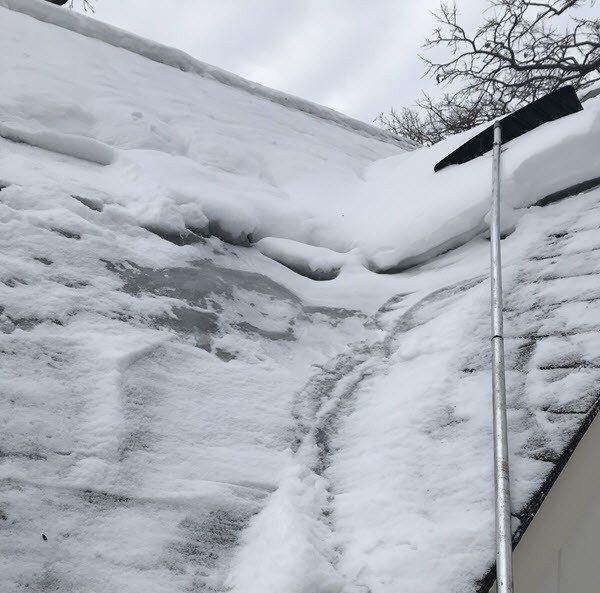
Pipe Burst Or Frozen? Do These Six Things Right Now
- 1Shut the water off at the mainThis is the one step that changes the outcome. The main shutoff is usually where the supply line enters the house — basement front wall, near the water meter, or in the garage on a slab home. Turn it clockwise until it stops.
- 2Open a faucet and leave it openOpening a tap relieves the pressure trapped between an ice plug and a closed faucet — and that pressure, not the ice itself, is what splits pipes. If a dripping faucet stops running, leave it open. A pipe has probably frozen and still needs the relief.
- 3Cut power to any area with standing waterOnly if the panel is dry and you can reach it without stepping in water. If you cannot, leave it and tell us when you call. Never use an electrical appliance while standing in water.
- 4Do not thaw with a flame — everNo blowtorch, no propane or kerosene heater, no charcoal. A hair dryer, a heating pad or a space heater kept clear of anything flammable. Work from the faucet back toward the frozen section, or you trap meltwater behind the plug.
- 5Photograph everything before you move itEvery affected room, the water line on the walls, the pipe itself, and the thermostat reading. Your claim is decided on this record, and it is easier to take the photos now than to reconstruct them later.
- 6Call us — a person answersA crew leaves Troy or Port Huron while you are still on the phone, on-site within 60 minutes with extraction and low-temperature drying equipment already loaded.
Tell Us What Happened
A real person answers 24/7 — and if a pipe has frozen but not yet let go, the hours before it thaws are the ones worth using. Prefer to type it? Send the details and we respond the same day, usually within the hour.

The Flood Does Not Start When The Pipe Breaks. It Starts When It Thaws.
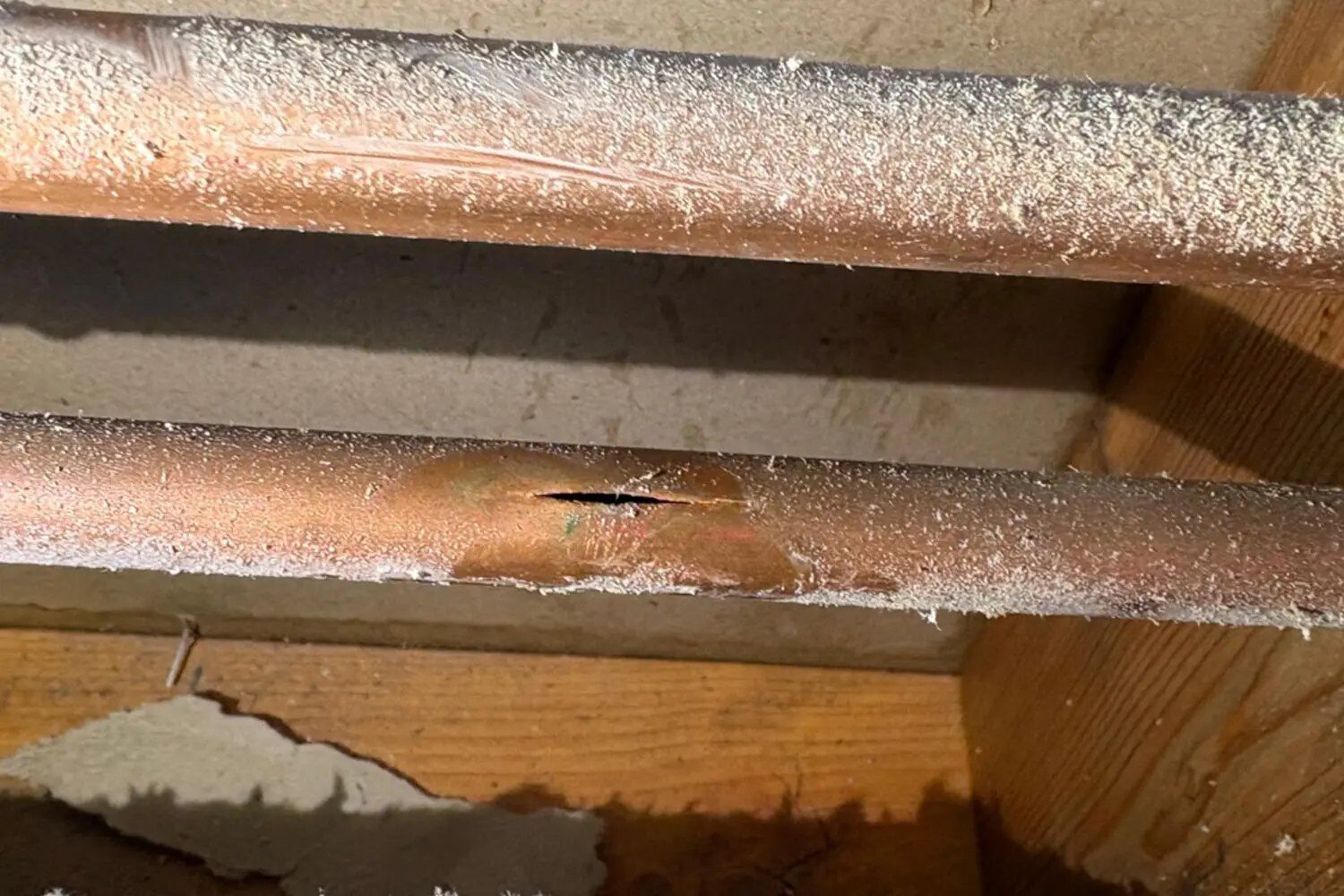
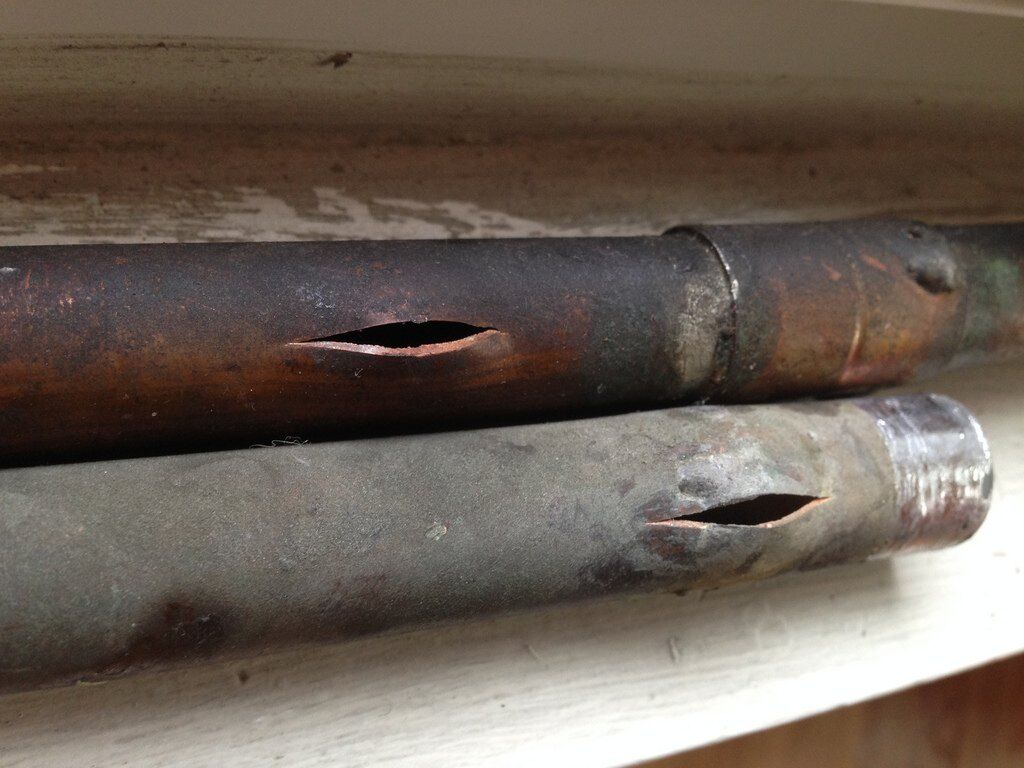
This is the part almost nobody tells you, and it is the difference between a dry-out and a gut job. A pipe freezes, an ice plug forms, and pressure builds between that plug and a closed faucet until the pipe splits — often somewhere with barely any ice in it, sometimes inside the heated part of the house. But nothing pours out yet, because the ice is still holding.
Then the temperature comes up, the plug melts, and a pipe that has been open for hours starts running into a wall cavity at full house pressure.
Which is why “no water at the tap” is not a plumbing inconvenience — it is a warning. If your taps stopped running during a cold snap, there may already be a break behind the drywall waiting on the thaw. The hours before that happens are the cheapest hours of the entire loss, and most people spend them waiting to see what happens.
What Drying A Freeze Loss Actually Involves
A burst pipe in January is not a summer water loss in colder weather. The building is cold, the plumbing is still compromised, and half the water is inside wall cavities rather than on the floor.
1Heat first, then plumbing, then drying
In a freeze loss the order is not optional. A cold building gets warmed before pipes are repaired, and the plumbing is repressurized to find the breaks you have not found yet — a second and third split is common, and they surface under pressure. Only then does drying begin, because a dry-out cannot be signed off while the system is still leaking.
2Extraction before evaporation
Water that is pumped out does not have to be evaporated. It is the fastest, least invasive part of the job and the one most often rushed. The IICRC’s own words: water removal takes seconds or minutes, where evaporating the same quantity takes hours or days.
3Equipment rated for a cold building
This is where freeze losses differ from every other water loss. A conventional refrigerant dehumidifier is rated down to 45°F — in an unheated house in January it is not rated to run at all. LGR units work to 33°F, and desiccants to well below freezing. Bringing the wrong machine to a cold structure looks like drying and is not.
4Open the cavities that hold water
Saturated fiberglass and cellulose insulation is removed, not dried — the EPA’s guidance for clean water is already discard and replace, and freeze water is rarely clean. Wallboard may be dried in place only where it has not swelled and the seams are intact.
5Documented daily until it hits the dry standard
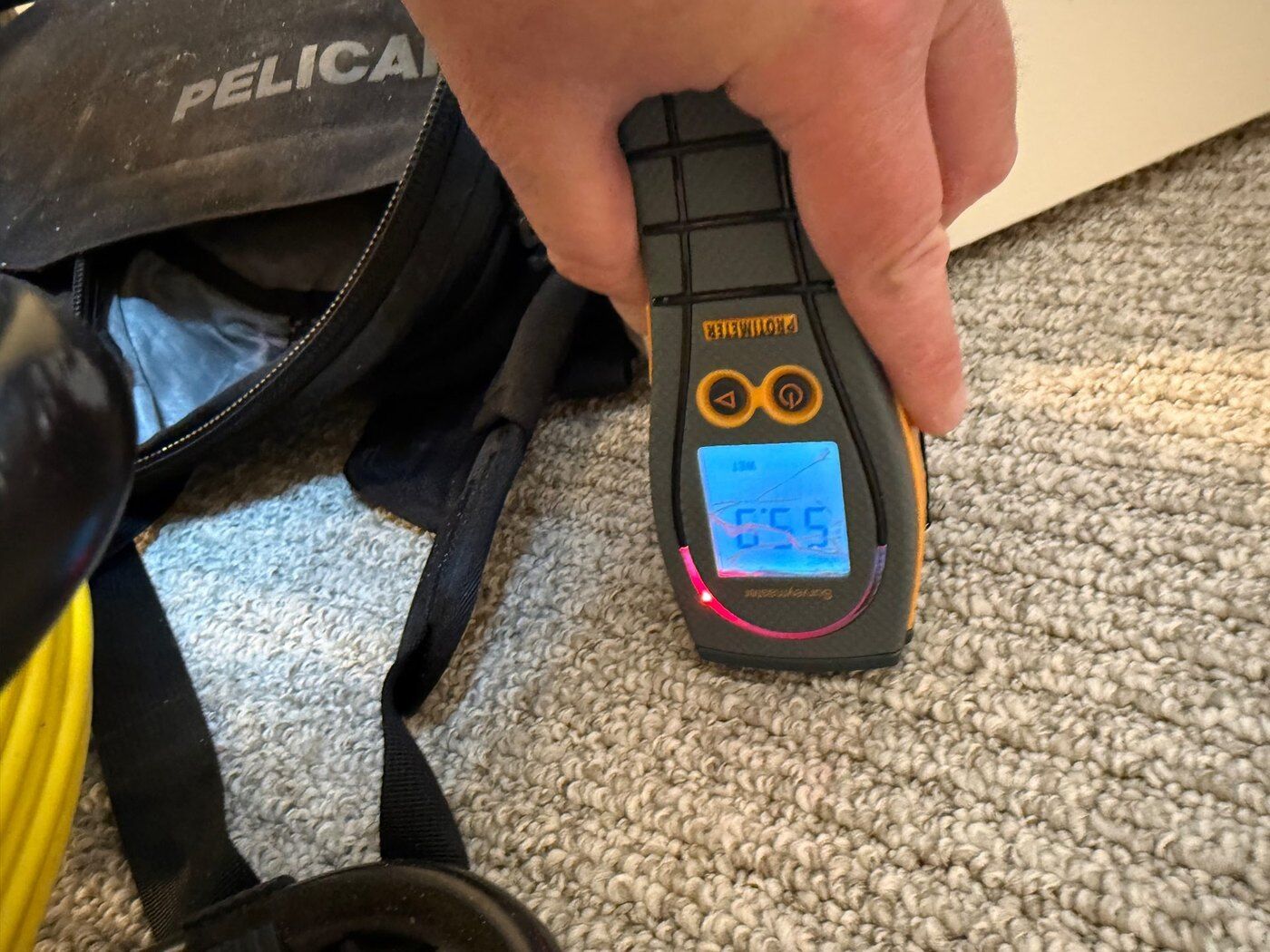
We record a reference reading from unaffected material on the same job — the dry standard — and take moisture readings every day until the affected material matches it. Equipment comes out when the numbers say so, not when the calendar does. There is no three-day rule in any published standard.
6Repairs and the claim, by the same team
Drywall, insulation, paint, flooring and trim, put back by the licensed builder who dried it, with the documentation your adjuster needs already assembled.
Frozen Pipe Insurance Claims: What Is Covered, And What Gets Denied
A sudden burst is one of the most reliably covered losses in a homeowners policy. What gets argued about is not the water — it is whether the house was being heated, and when the leak actually started.
DIFS also warns homeowners to be careful with the word “flood” when reporting a loss — it has a specialized meaning that points at an exclusion. Tell your carrier you have water damage and ask what coverage applies.Michigan DIFS, Winter Storms and Disaster Preparedness consumer guidance. DIFS Consumer Services: 877-999-6442.
Straight Answers About Cost and Coverage
In most covered claims your deductible is all you pay out of pocket. A burst supply line is a sudden, accidental water loss — a core covered peril on a standard homeowners policy — and we settle the covered work directly with your carrier.
Michigan homeowners choose their own restoration contractor. Your carrier may suggest a vendor; the decision is yours by right, and the state says so plainly. Choose whoever you trust to be in your home.
What actually drives the number: how long the water ran before anyone found it, how far it traveled through cavities and floors, and how much saturated insulation and wallboard has to come out rather than be dried in place. A frozen pipe found the same morning and one found after a weekend away are not the same job. We put a documented, line-item scope in writing before work begins — the same scope your adjuster approves against. The inspection and the scope come with no obligation.
For adjusters, agents & property managers: freeze losses documented the way they need to be defended — time-stamped photo sets, thermostat and interior temperature records, daily moisture logs and line-item scopes in carrier-ready format. Call (888) 838-7170 or use our contact page and reference your claim number.
Plumber First, Or Restoration First?
You need both, and they do genuinely different jobs. Here is the honest division of labor — including the part where our invoice is the one your insurance is more likely to pay.
- Finding and thawing the frozen section
- Repairing or replacing the failed pipe and fittings
- Repressurizing the system to find any other breaks
- Certifying the plumbing is sound before drying is signed off
- Extraction, and drying the structure and cavities
- Removing saturated insulation, wallboard and flooring
- Documenting the loss for your claim from the first hour
- Putting the building back — drywall through finish carpentry
If either of us ever asks you to sign your insurance check over, or wants full payment up front, that is a red flag — and it is one Michigan DIFS names by name.
What Our Customers Say
4.8173 Google Reviews
“We woke up on a Monday morning to a totally flooded basement, malfunctioned hot water tank — not only did he calm me down, he had a team onsite within the hour.”
Kathy · Google Review
“The only restoration company that picked up the phone at around 11:30pm when we found our basement flooded. Casey and Harold did great job. Impressed!”
Agnes · Google Review
“Dri-Force did an outstanding job restoring my basement post-flood. Excellent communication. Excellent planning. Quick. Clean. Responsive to everything we asked.”
Jack · Google Review
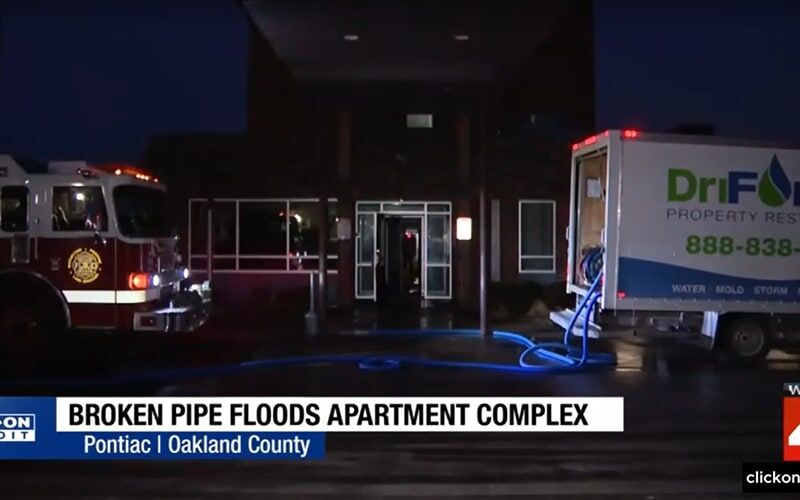
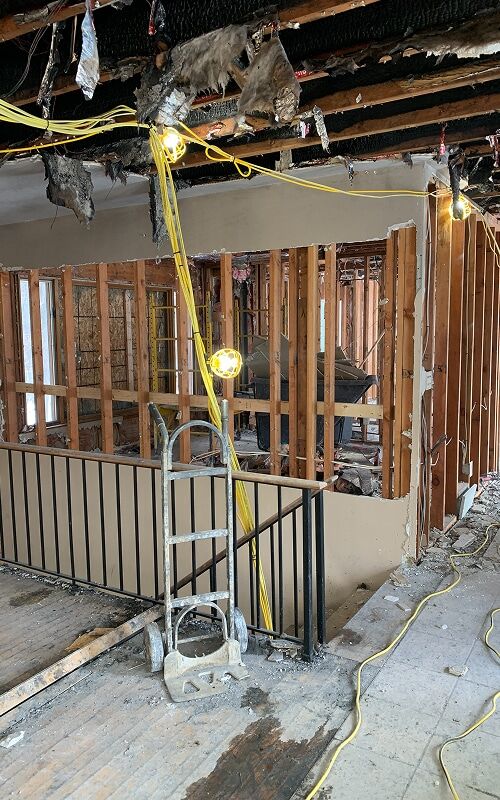
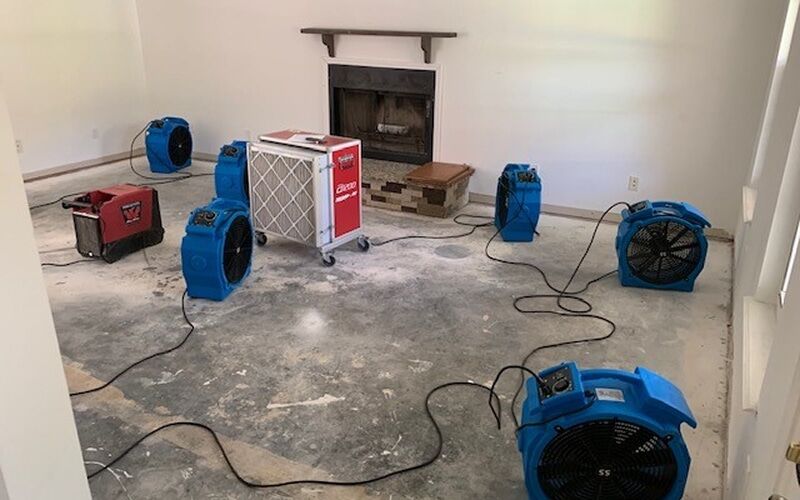
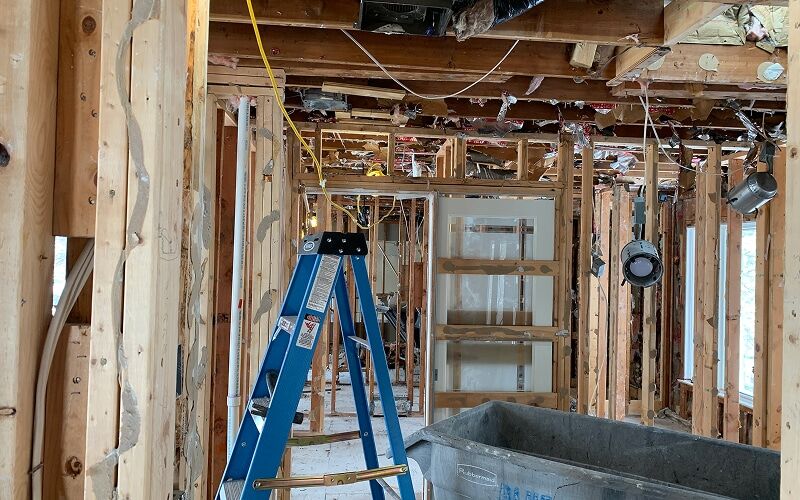
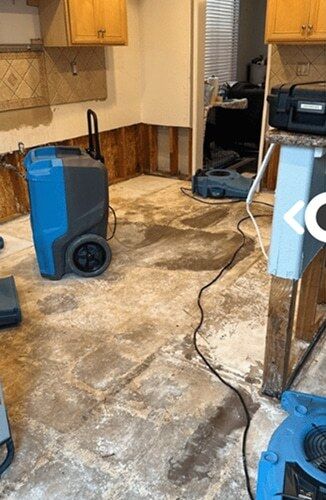
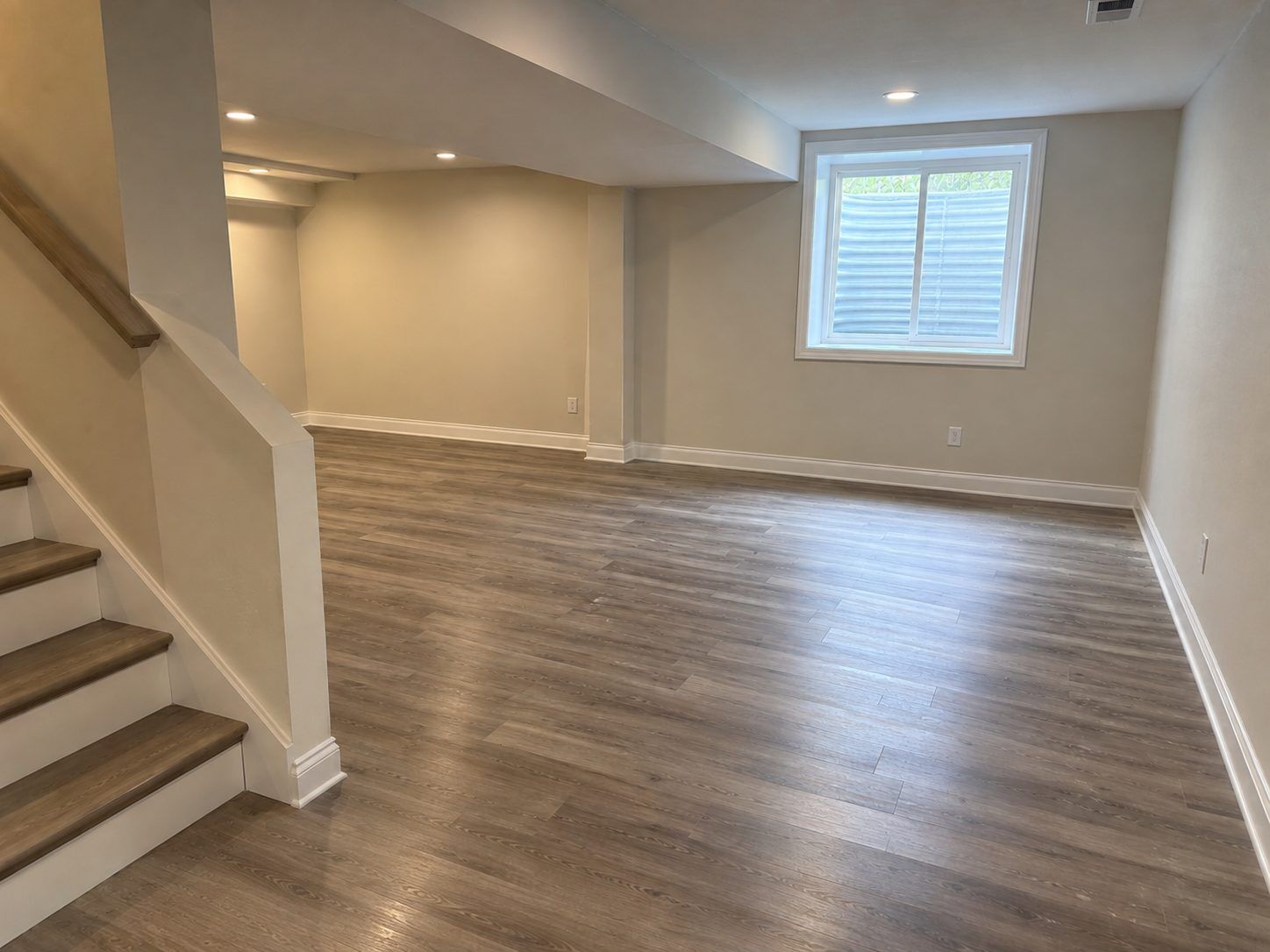
This Is What The Work Actually Looks Like
Recent freeze and winter losses across Metro Detroit and the Blue Water Area.
Six Places A Pipe Freezes In A Michigan House
Detroit’s normal January low is 19.2°F, and we average 45 nights a year at or below 20°F. Nearly every freeze loss we attend starts in one of these six places.
- The garage and anything behind itAn attached garage is an unheated room sharing a wall with the house. Supply lines in that wall, and hose bibs fed through it, are first to go — and a garage door left open on a cold night is one of the most common causes we see.
- Kitchen and bath cabinets on exterior wallsThe cabinet is the problem: it shuts warm room air out of the one place the pipe needs it. Opening those doors during a cold snap is genuinely effective, and costs nothing.
- Crawlspaces and unheated basementsUninsulated runs in a vented crawlspace are effectively outdoors. Wind matters more than temperature here — moving air through a rim joist strips heat from bare pipe several times faster than still air at the same temperature.
- Attic runs above the insulationA pipe sitting on top of attic insulation is outside the building’s thermal envelope. The research that established the 20°F risk threshold measured attics averaging barely 3°F warmer than the outdoor air.
- Outside hose bibs — including frost-free onesA frost-free sillcock still bursts if a hose was left connected, because the hose stops it draining. The break is inside the wall, behind the shutoff, and nothing leaks until the next time you turn that tap on — which is often spring.
- Cantilevers, bays and anything overhangingFloor sections that hang past the foundation — a bay window, a bumped-out breakfast nook — have cold air on three sides and usually less insulation than anyone thinks.
Everything Else Worth Knowing Before Winter
Thawing A Frozen Pipe Without Causing A Fire Or A Flood
If a tap has slowed to a trickle, you have a frozen section and possibly a break you cannot see yet. Leave that faucet open — it is relieving the pressure that would otherwise split the pipe, and it gives meltwater somewhere to go.
Warm the pipe with an electric heating pad, a hair dryer, warm towels or a space heater kept well clear of anything that burns. Work from the faucet back toward the frozen section; heating the far side first traps meltwater behind the ice with nowhere to escape. Never use a blowtorch, a propane or kerosene heater or a charcoal stove — that is how a water loss becomes a fire loss. Never use an electrical appliance while standing in water. And if the pipe is PEX, be aware that heat can compromise it without leaving a mark; the manufacturers say thawed PEX may need replacing even when it looks fine.
If you cannot find the frozen section, cannot reach it, or the pipe is in a wall or slab, stop and call a plumber. And watch what happens as it thaws — that is when a break that already exists starts to show itself.
Preventing It: What Actually Works, And What Is Just Repeated Online
Let a tap drip during a hard freeze — but understand why, because the reason is usually explained wrong. It is not that moving water resists freezing. It is that an open faucet relieves pressure, and pressure is what bursts pipes. A pipe can freeze solid and still not burst if one end is open. The drip can be very slight. Where a fixture has both hot and cold lines, let both contribute, because both can freeze. At one drip per second you are using roughly 3,000 gallons a year — against an average water damage claim of over $15,000.
Hold a steady temperature, day and night. Setting back the thermostat overnight during a cold snap saves a little on heat and risks a great deal. Michigan DIFS recommends at least 65°F; much of the insurance industry says 55°F. If you are leaving for more than a day, the higher number is cheap insurance.
Open cabinet doors, close the garage, disconnect the hoses. Cabinets on exterior walls shut warm air away from the pipes that need it. A disconnected hose lets a frost-free sillcock actually drain — with the hose attached it cannot, which is why so many of them split. If a screw-on vacuum breaker is fitted, it has to be loosened to let the faucet drain.
Know where your main shutoff is before you need it — and test it. Valves that have not been turned in fifteen years seize. Finding that out at two in the morning, in the dark, with water coming through a ceiling, is the worst possible time.
Heat cable, if you use it, has rules. Use a product certified to the pipe-heating standard, plug it into a GFCI outlet, run it directly against the pipe and never on top of insulation, never overlap it, and inspect it every autumn for cracks or charring. Replace uncertified cable more than three years old.
Two things you will read that are wrong: putting automotive antifreeze in plumbing is both dangerous and against code, and running hot water down a drain does nothing to prevent a freeze — a drain is not pressurized, so there is no pressure to relieve.
Ice Dams: The Damage Is Interior, And So Is The Cause
An ice dam forms when the upper roof is above freezing while the eave is below it. Snow melts, runs down, refreezes at the cold overhang, and the ridge of ice that builds up holds meltwater on the roof until it backs up under the shingles. The water then finds the ceiling, the wall cavity and the insulation.
The cause is almost never the roof. The National Roofing Contractors Association — the roofing industry’s own body — puts it plainly: ice dams are primarily caused by heat leaking through inadequately built thermal and air barriers. Warm air escaping into the attic warms the deck; snow melts; the eave refreezes it. Michigan’s residential code requires only R-38 in the attic — and as little as R-30 where it crosses the wall plate, which is exactly where dams form — while the Department of Energy recommends R-60 for our climate zone.
If water is coming through the ceiling right now, do not open it up. Cutting the ceiling lets warm air reach the roof sheathing and speeds up the melt feeding the dam. Catch the water, and if you must drain a bulging spot make the smallest hole that will do it. The ceiling comes open after the event, not during it.
On removal: every manufacturer and trade body prohibits the obvious methods. Hammers, chisels, axes and picks damage shingles — and shingles get brittle below about 40°F, so cold-weather chipping breaks them. Pressure washing strips granules and shortens the roof’s life. Chemical de-icers and ice-melt tablets can damage roofing, siding and planting, and may void the shingle warranty. That leaves controlled low-pressure heat, and a roof rake used from the ground on the first three to four feet above the fascia — with real care around overhead power lines and falling snow.
One Michigan-specific point worth knowing: the state’s residential code already answers the ice barrier question with a yes. An eave ice barrier is a code requirement here, not an upsell.
Commercial, Multi-Unit And Vacant Buildings
Commercial freeze losses are not simply bigger versions of residential ones. After one major freeze event, a state insurance department’s own data showed residential claims averaging around $11,500 while commercial claims averaged close to $75,000 — and those figures exclude business interruption entirely.
The reasons are structural. Buildings sit empty over holidays with the heat turned down. Nobody walks the back of house for days. And fire sprinkler systems run water through unheated attics, concealed spaces and loading docks — one insurer’s study of burst pipe claims found that over half involved sprinkler piping, and that those claims ran a third more expensive than the rest.
If your building is sprinklered, the usual winterizing advice is exactly backwards. The standard policy requires you to continue the water supply and maintain heat in a sprinklered building — shutting the water off to protect it can forfeit your coverage. Fire code requires wet sprinkler piping to be kept at a minimum of 40°F, and a system found to contain ice is treated as impaired: as far as the code is concerned, the building has lost its fire protection, whether or not anything has leaked.
Vacant commercial buildings carry a separate trap. Once a building has been vacant beyond the period named in the policy, water damage and sprinkler leakage are commonly excluded outright, and other losses are paid at a reduced percentage. If you own or manage a property that is sitting empty this winter, that is worth reading before the cold arrives rather than after.
We work with property managers, facility directors and carriers across Metro Detroit and the Blue Water Area, and we will put a freeze response plan in place before the season rather than meeting you for the first time at 3am in January.
Frozen & Burst Pipes, Answered
Related Services & Nearby Communities
A frozen pipe is rarely the only thing that broke. The same certified crews handle every related loss below — and respond to every community we serve, day or night.
Winter water finds more than one way in. We also handle water damage of every cause, mold remediation when a leak has run a while, rebuild and property repairs, and insurance and payment options. Crews dispatch 24/7 from our Troy office for Oakland, Macomb and Wayne counties and our Port Huron office for St. Clair County and the Blue Water Area.
If A Pipe Has Frozen, Call Before It Thaws
A person will answer, and a crew will be on the way within the hour with extraction and low-temperature drying equipment already on the truck. If the water is off and nothing has let go yet, that is the best possible time to call us — not the worst.