24/7 Emergency Response · Oakland County & the Blue Water Area
Commercial RestorationAcross Michigan
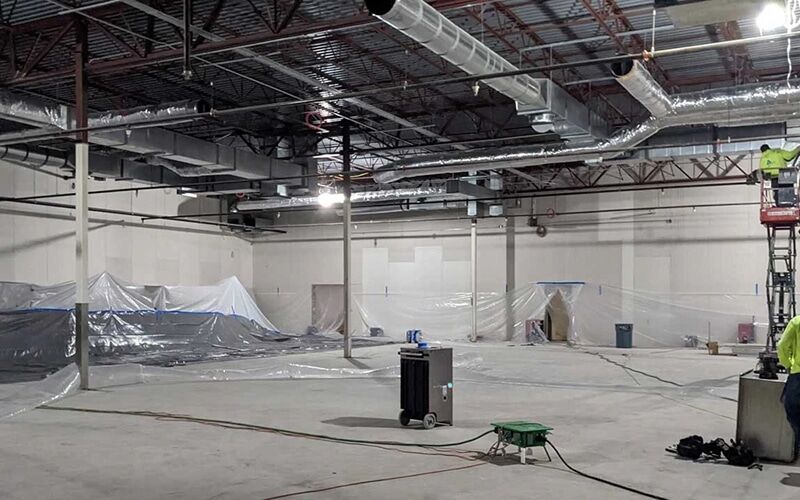
Every hour a commercial property is offline has a number attached to it. We respond 24/7 with commercial-scale crews and equipment, work around your operating hours, and document the loss to the standard your carrier expects.
What you get
- 24/7 dispatch from two offices
- Commercial-scale crews and equipment
- After-hours and phased work
Commercial Restoration · Metro Detroit & the Blue Water Area
Building Down? We Move Now.Commercial Restoration Offices, Retail, Warehouse, Medical & Multifamily Across Metro Detroit
Every hour a commercial property is offline has a number attached to it. We respond 24/7 with commercial-scale equipment, work around your operating hours where the building can stay open, and document the loss to the standard your carrier and your ownership group expect.
- After-hours and phased work so you can stay open
- Commercial-scale extraction, desiccant drying and temporary power
- One licensed builder, mitigation through rebuild
- Documented for your carrier and your ownership group
 Trusted across Metro Detroit
24/7 Dispatch
What Has Happened To Your Building?
Go straight to the service you need — or call and describe it and we will work it out. All six are handled by the same crews at commercial scale.
Tell Us About Your Property
Tell us the building type, roughly what is affected, and whether you need to stay operational — those three answers determine how we mobilize. A real person answers 24/7. Prefer to type it? Send the details and we respond the same day.

The Building Is The Smaller Problem. The Downtime Is The Bigger One.
A commercial loss is measured in operating days, not square feet. A retail floor closed through a weekend, a restaurant that cannot open, tenants who cannot occupy, a production line stopped — the restoration invoice is frequently the smallest number in the whole event.
Which changes how the work should be run. Not simply faster, but sequenced differently: containment that isolates the damaged area so the rest of the building keeps trading, work scheduled around your hours rather than ours, and the areas that get you operational again prioritized ahead of the ones that only need to look finished.
We staff and equip for that. Commercial-grade extraction, desiccant drying and temporary power, larger crews mobilized from two offices, and one licensed Michigan builder carrying the job from the first hour through the finished rebuild — so there is no handoff to a general contractor halfway through your downtime.
Above a certain size the job stops being a scheduling problem and becomes a logistics one — a plant, a hospital wing, a whole apartment community, a loss that needs temporary power and a staged mobilization before any drying starts. That work is its own discipline, and we run it: see large loss restoration for how those projects are mobilized, sequenced and documented.
From Emergency Call To Back In Business
The order is chosen around your operations, not around our convenience. What gets you trading again comes first.
1Dispatch and make safe
A live person answers and crews stage from Troy or Port Huron. First on site is stabilization: stop the source, make the area safe, and identify what has to be isolated to keep the rest of the building usable.
2Contain, so the rest of the building keeps working
Sealed containment and air control around the damaged area, access routes protected, and signage and notifications handled where tenants or the public are involved. This is what makes staying open possible.
3Document before anything is moved
Photographs, moisture mapping, affected-area measurements and an inventory of damaged equipment and stock, recorded to the standard a commercial carrier and an ownership group both expect to see.
4Extract, dry and monitor
Commercial-grade extraction, desiccant or LGR drying sized to the space, temporary power where needed, and logged daily readings against a documented drying goal rather than a guess.
5Prioritize what gets you operational
The sequence is agreed with you: which areas come back first, what can be worked overnight, and what can wait. Revenue-critical space is finished ahead of space that only needs to look finished.
6Rebuild to code, and to occupancy
Reconstruction by a licensed Michigan builder, built to current code with permits and inspections managed — including the accessibility and fire requirements that apply to commercial occupancy and do not apply to a house.
Commercial Claims Are Not Bigger Homeowners Claims
The coverage structure is genuinely different, and the differences are the ones that cost money if nobody raises them until the end.
Straight Answers For Owners And Managers
We bill your carrier directly on commercial and large-loss claims, and document the loss in the line-item format adjusters work in, so the file does not sit waiting for information nobody collected.
What actually drives the number is the volume of air to be dried, how much has to be removed rather than restored, and how much of the work has to happen outside operating hours. After-hours and phased work costs more per hour and is frequently still the cheapest option once downtime is counted — we will show you both versions and let you decide.
We will also tell you what not to spend on. Where an area can be restored rather than replaced, or where a phase can wait without affecting occupancy, saying so is worth more to us than the line item. You get a documented scope in writing before work begins, and the assessment and the scope come with no obligation.
For adjusters, brokers, facility directors and ownership groups: commercial losses documented the way they need to be defended — affected-area measurements, moisture mapping with logged daily readings, equipment and stock inventories, containment and access records, and line-item scopes in carrier-ready format. Call (888) 838-7170 or use our contact page and reference your claim number.
What Our Customers Say
4.9181 Google Reviews
“We woke up on a Monday morning to a totally flooded basement, malfunctioned hot water tank — not only did he calm me down, he had a team onsite within the hour.”
Kathy · Google Review
“The only restoration company that picked up the phone at around 11:30pm when we found our basement flooded. Casey and Harold did great job. Impressed!”
Agnes · Google Review
“Dri-Force did an outstanding job restoring my basement post-flood. Excellent communication. Excellent planning. Quick. Clean. Responsive to everything we asked.”
Jack · Google Review
Work We Can Show You
Three commercial and institutional losses, photographed by our own crews. If you are comparing vendors, these are the jobs to ask us about.
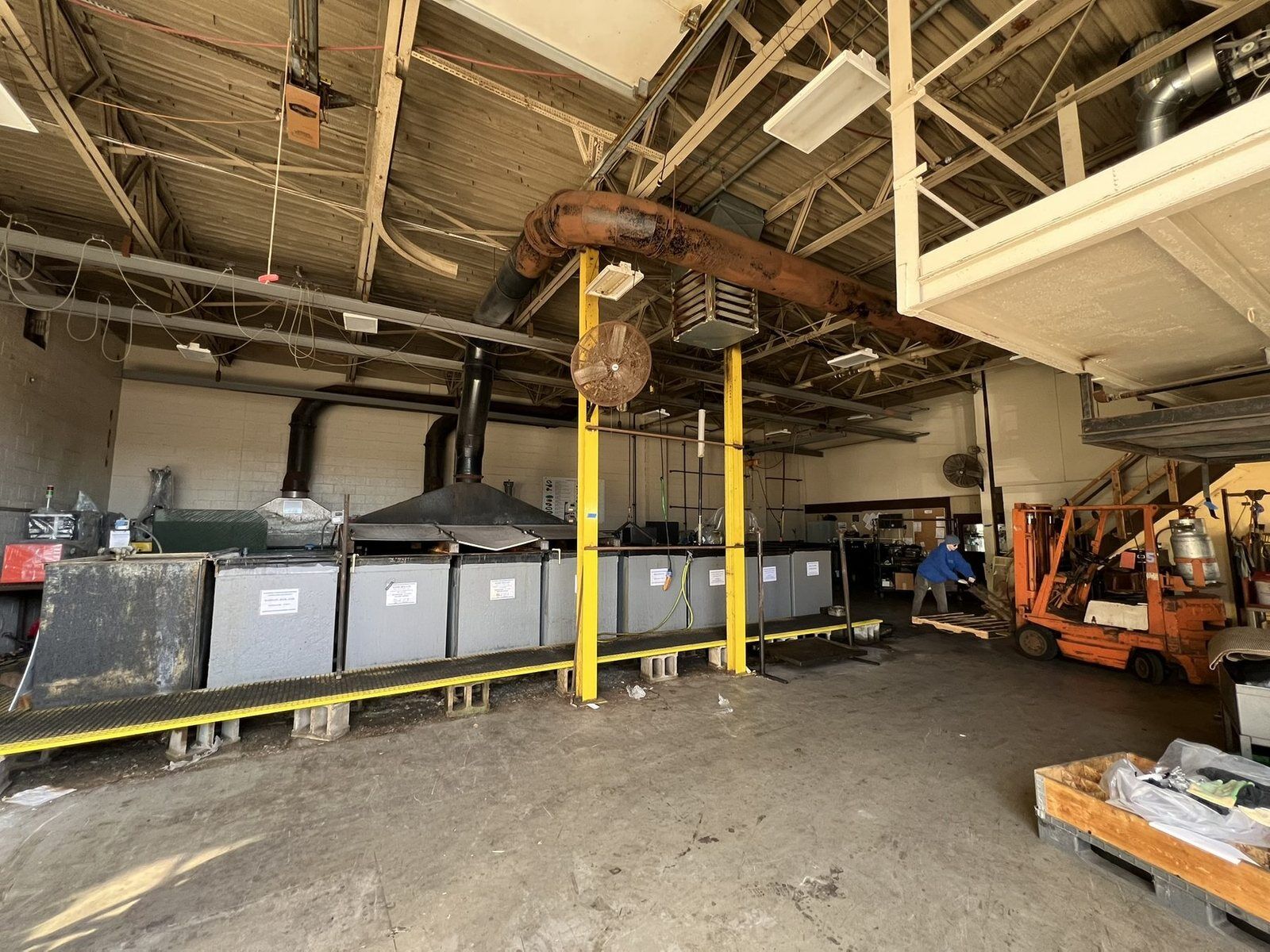
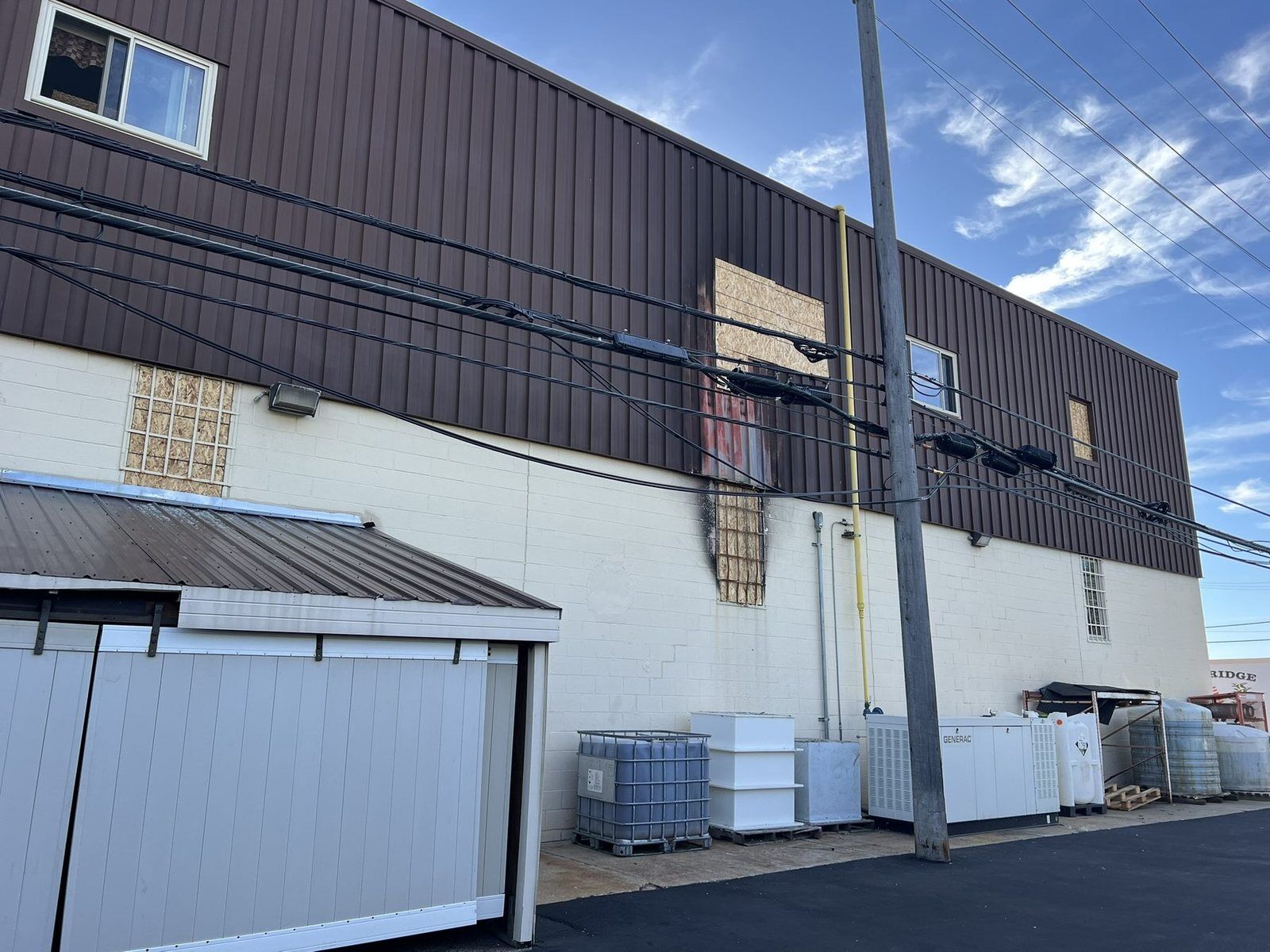
Fire Loss At A Michigan Manufacturing Facility
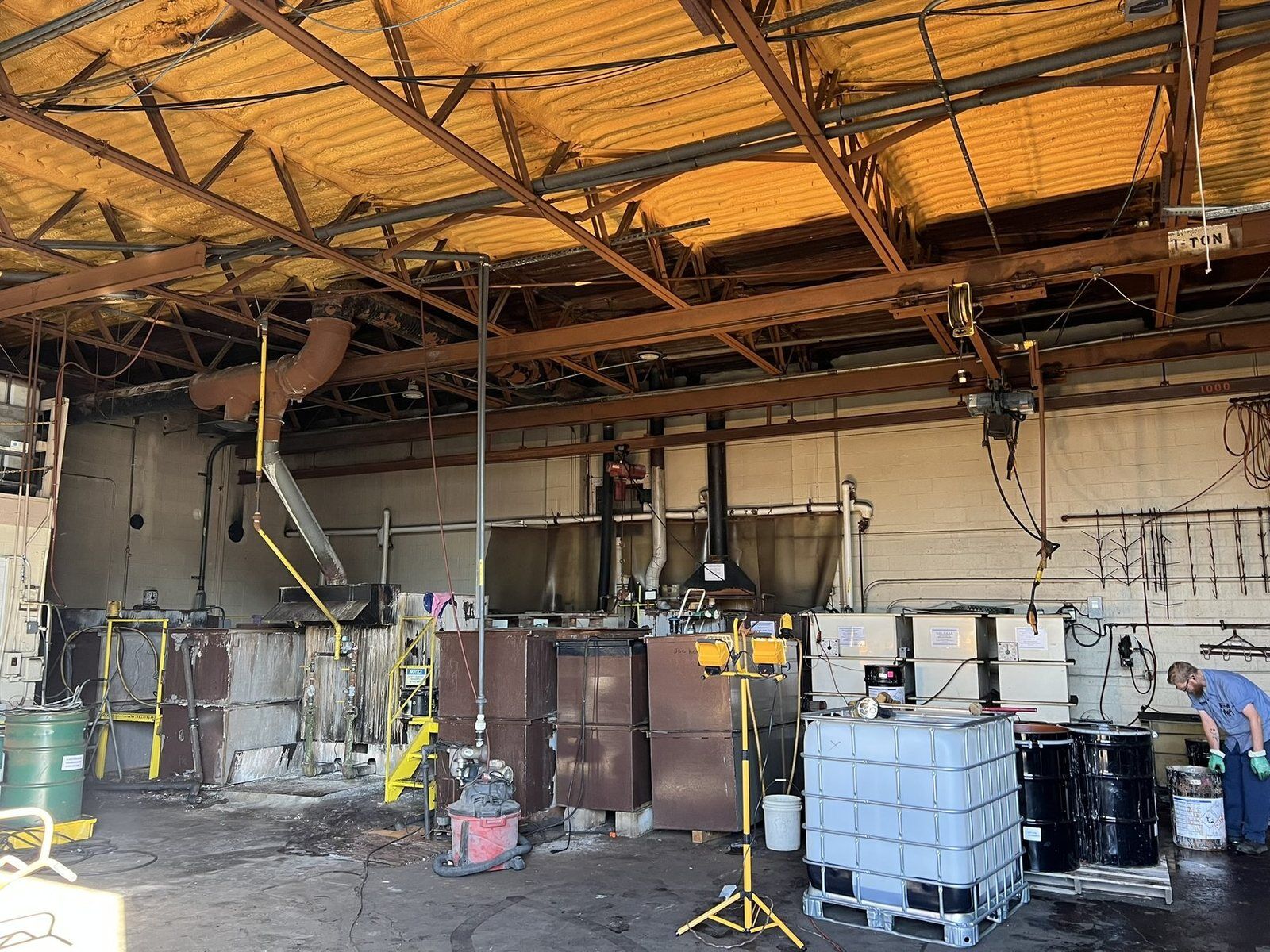
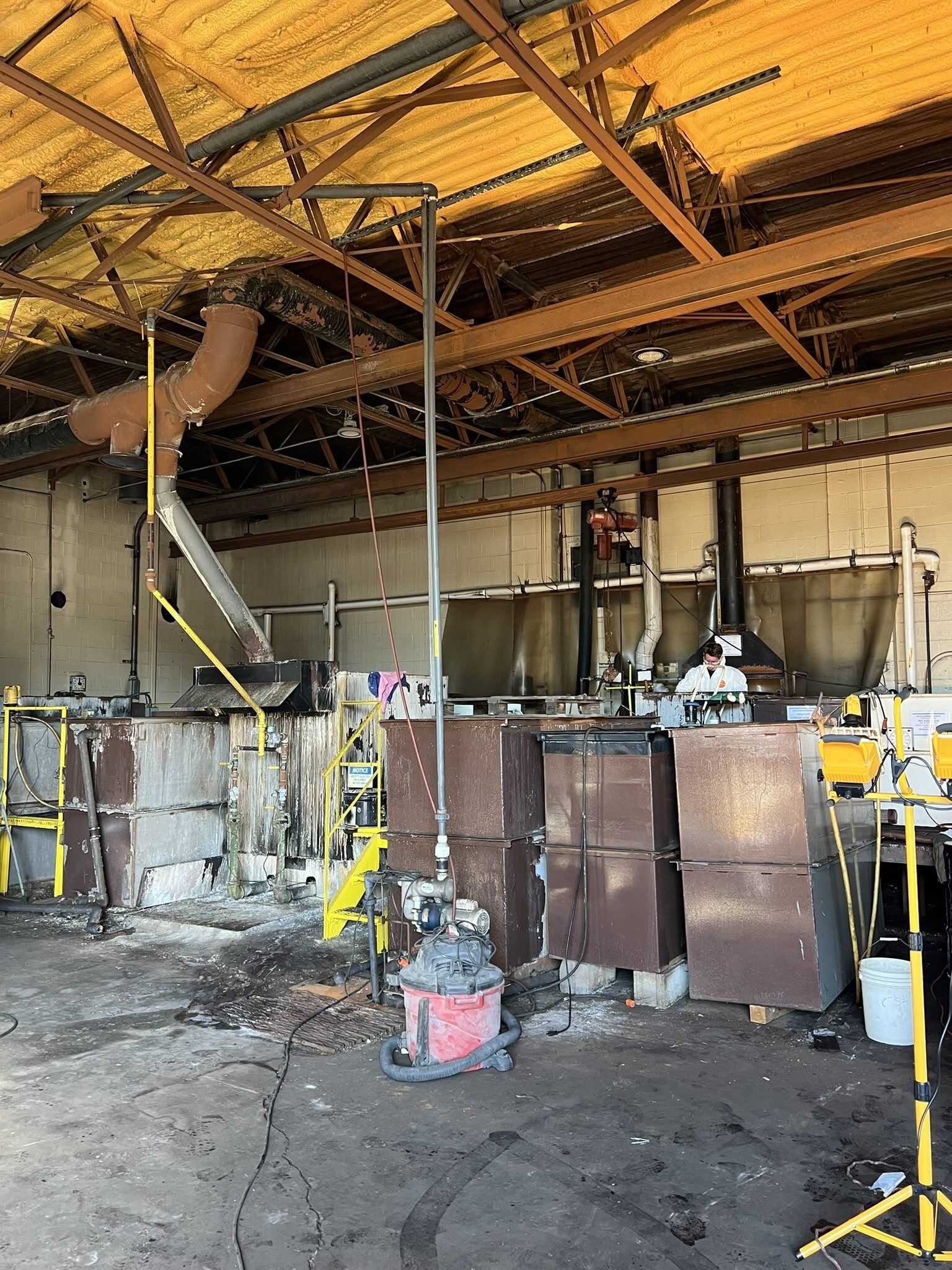
Fire in a working plant is not a cleaning job with a bigger floor area. Smoke and soot reach the structural deck, the overhead ductwork, the process lines and every surface of the production equipment — and the equipment is usually worth more than the building around it.
The work ran from the roof structure down: steel, deck and overhead services cleaned first so nothing fell onto surfaces already finished, machinery protected in place rather than removed, and process equipment decontaminated surface by surface. The exterior envelope was addressed in the same scope.
Scope of work
- Emergency response and site safety
- Structural steel and roof deck cleaning
- Overhead ductwork and process line cleaning
- Machinery protected and wrapped in place
- Production equipment surface decontamination
- Soot and odor treatment throughout
- Exterior envelope cleaning
- Carrier-ready documentation from day one
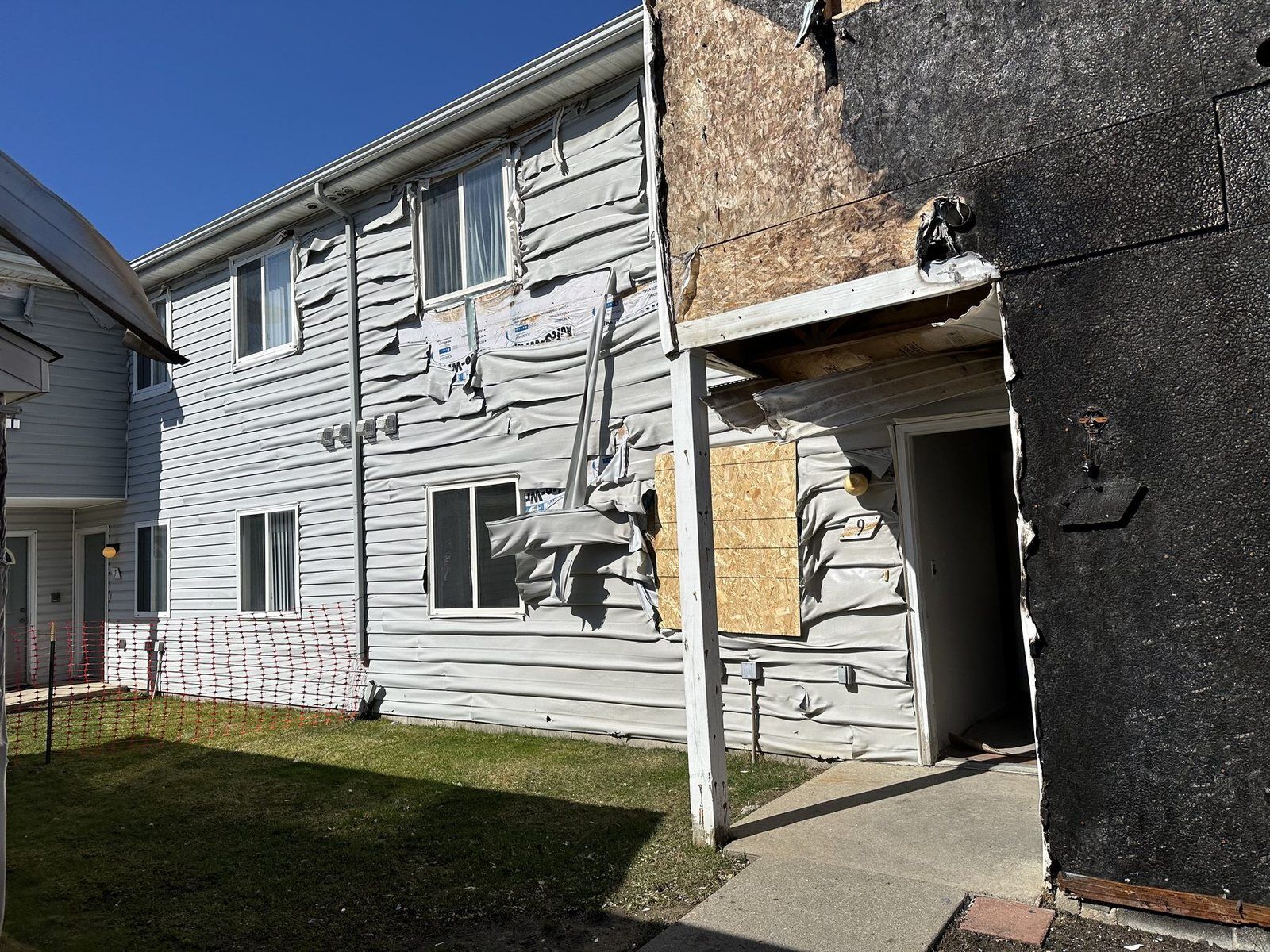
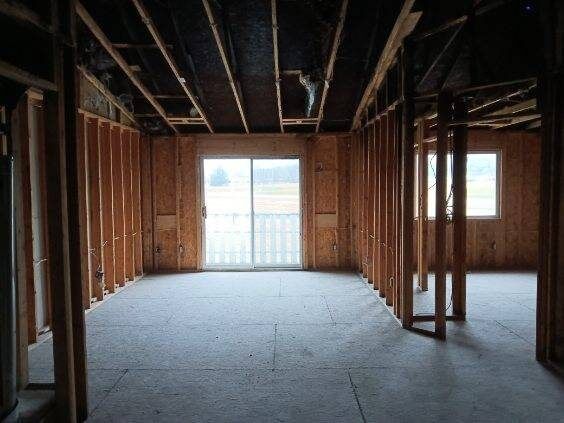
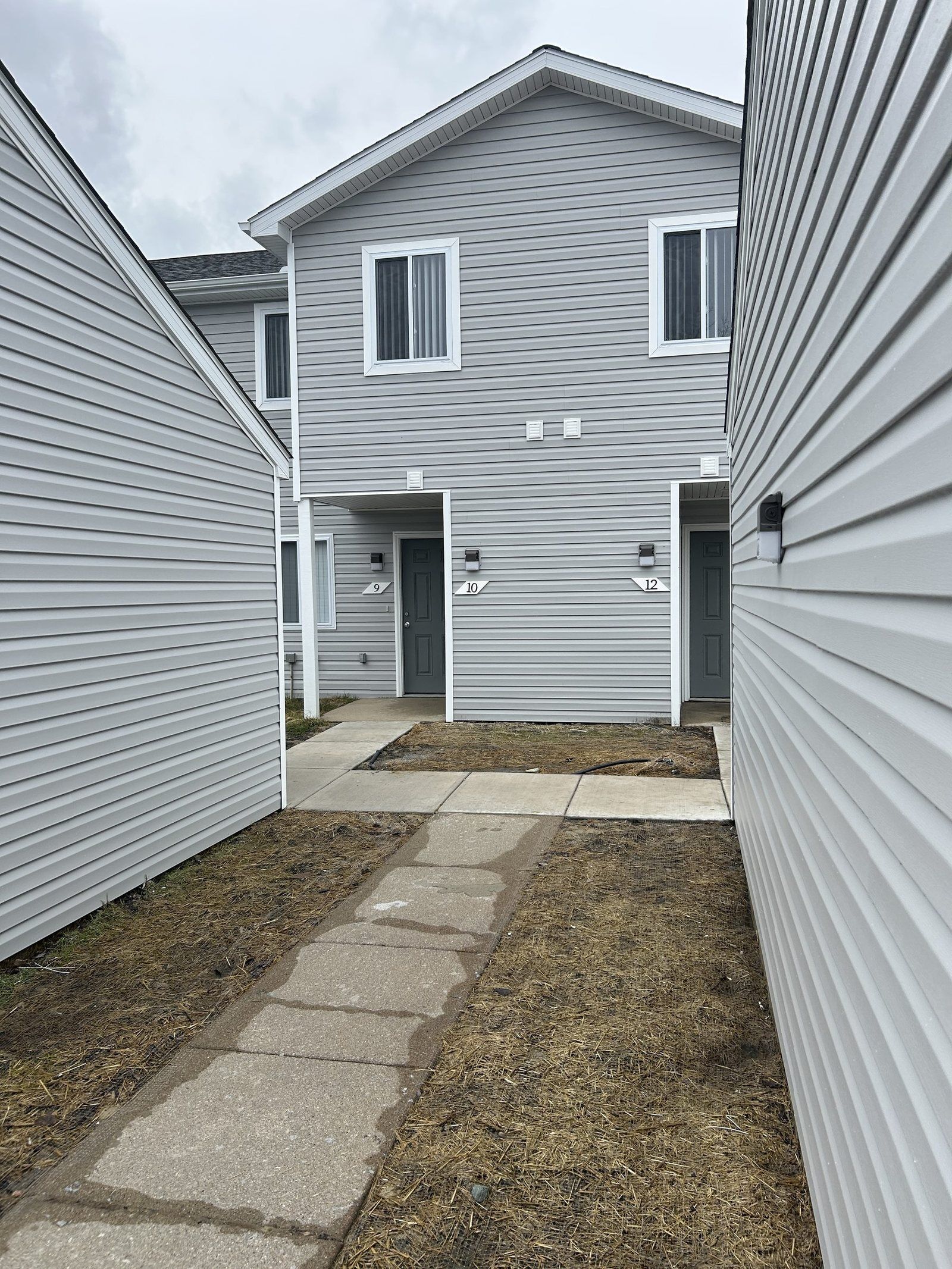
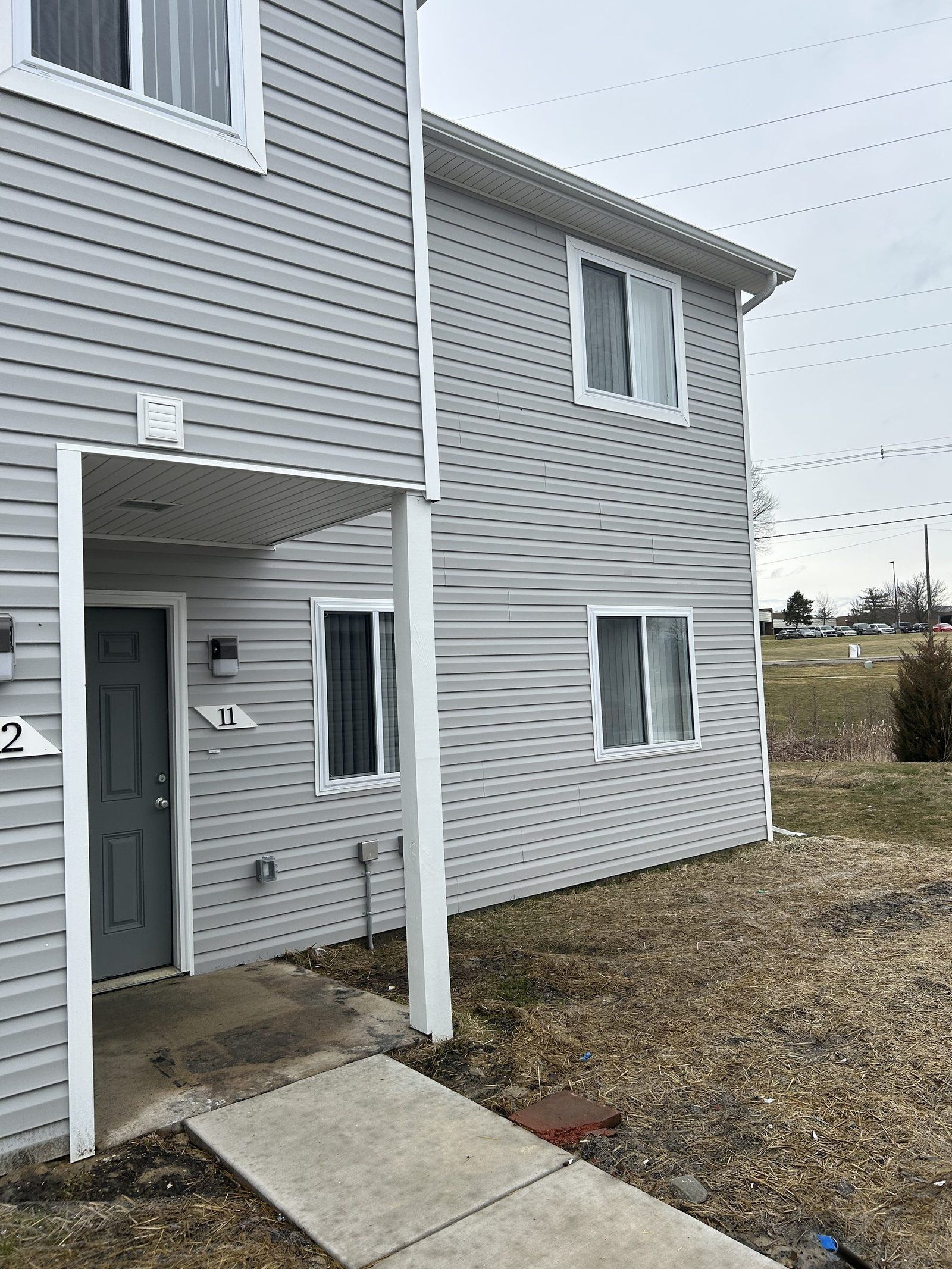
Oakbrooke — Multi-Unit Residential Fire Loss
A fire in a multi-unit building is a property manager’s worst version of this problem, because the units that did not burn still cannot be occupied — and every day of that is lost rent as well as displaced residents.
This one went the whole distance: board-up and securing, selective demolition back to sound framing, structural repair, and then the full rebuild — insulation, drywall, finishes, and an exterior envelope rebuilt from the sheathing out. The last two photographs are the same building as the first two.
Scope of work
- Emergency board-up and site securing
- Contents handling and inventory
- Selective demolition to sound framing
- Structural repair and framing
- Insulation, drywall and interior finishes
- Siding and exterior envelope rebuilt
- Kitchens, trim and unit turnover
- One licensed Michigan builder throughout
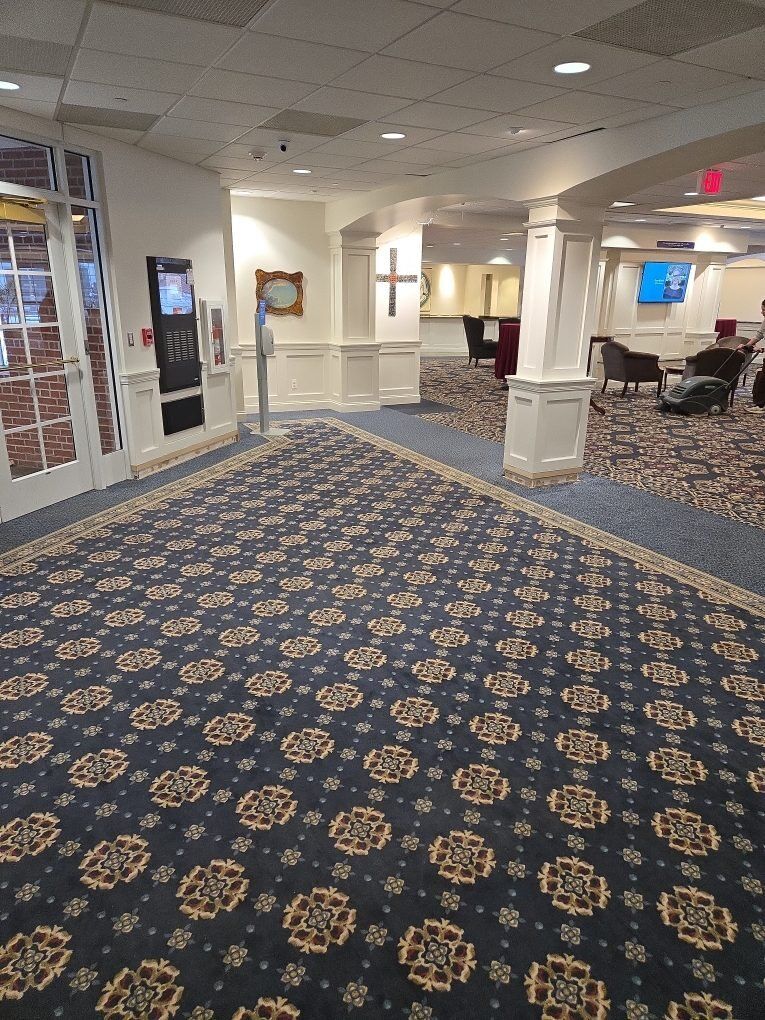
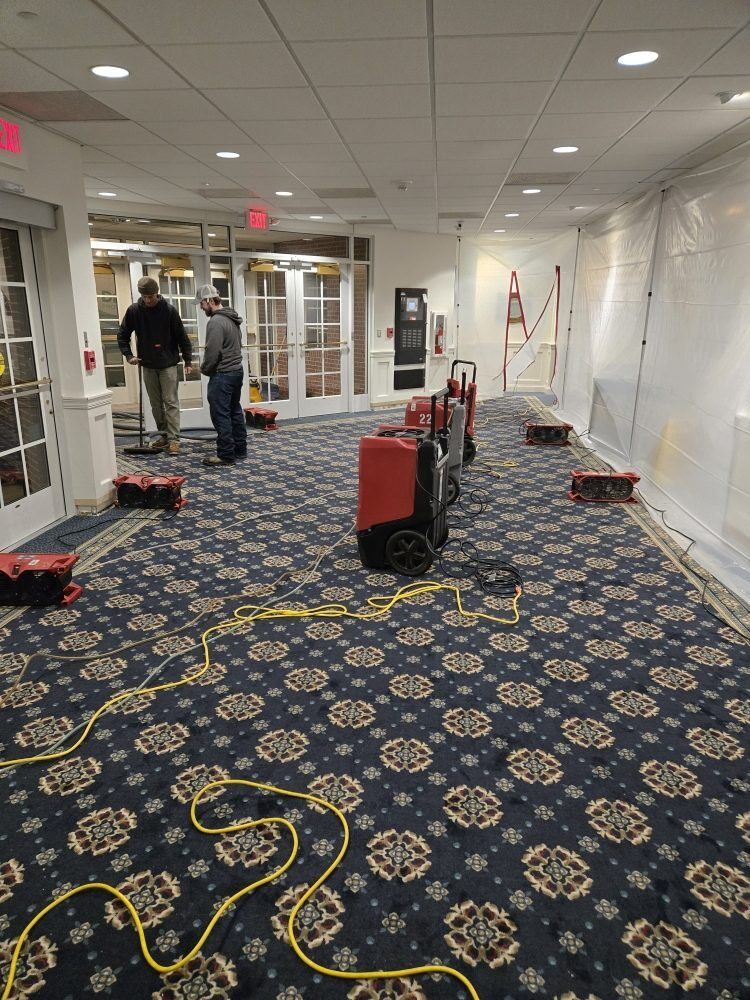
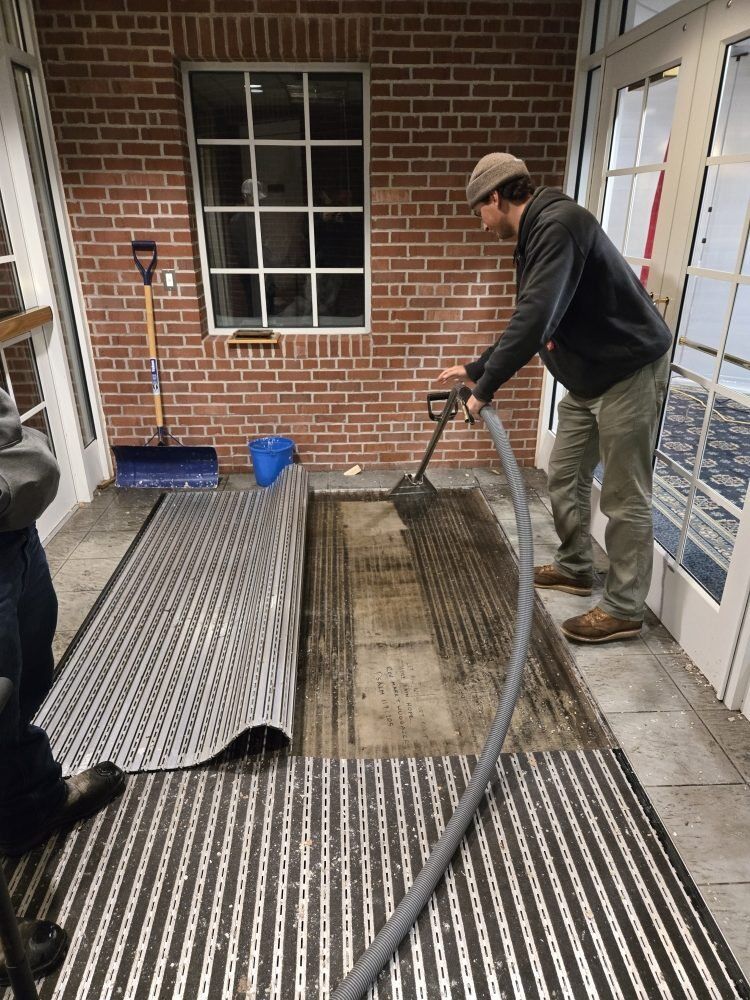
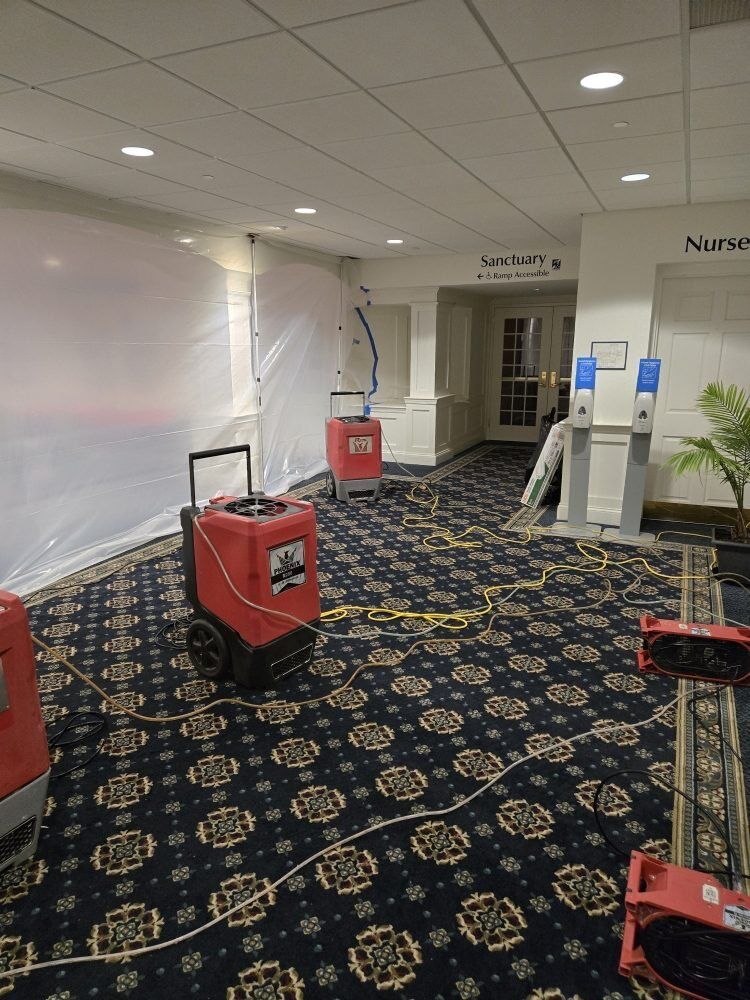
Church Of The Redeemer — Water Loss In An Occupied Building
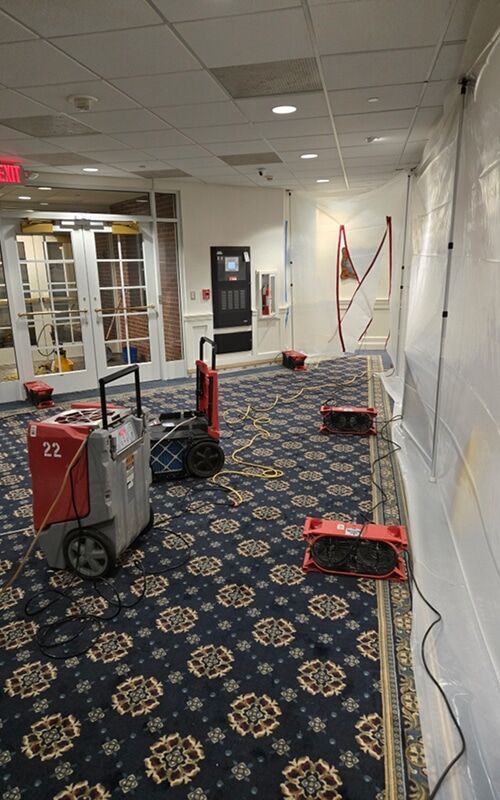
An occupied institutional building cannot simply close while it dries. A church, a school or a medical office has a calendar that does not move around a restoration schedule, which makes containment the whole job rather than a detail of it.
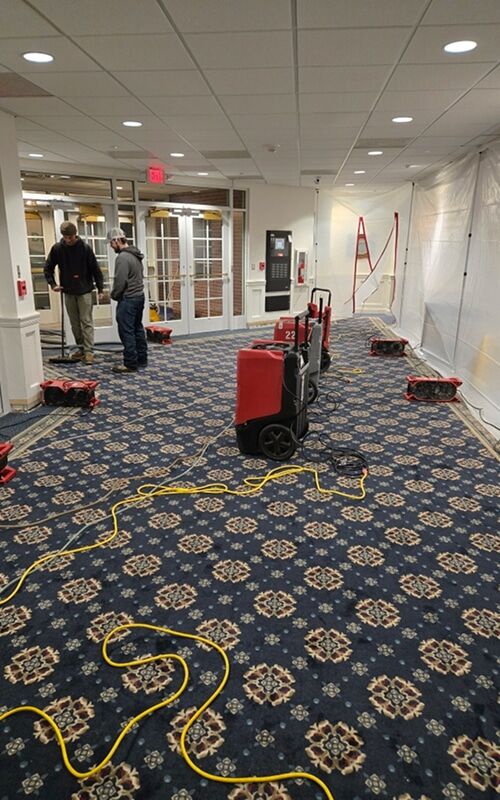
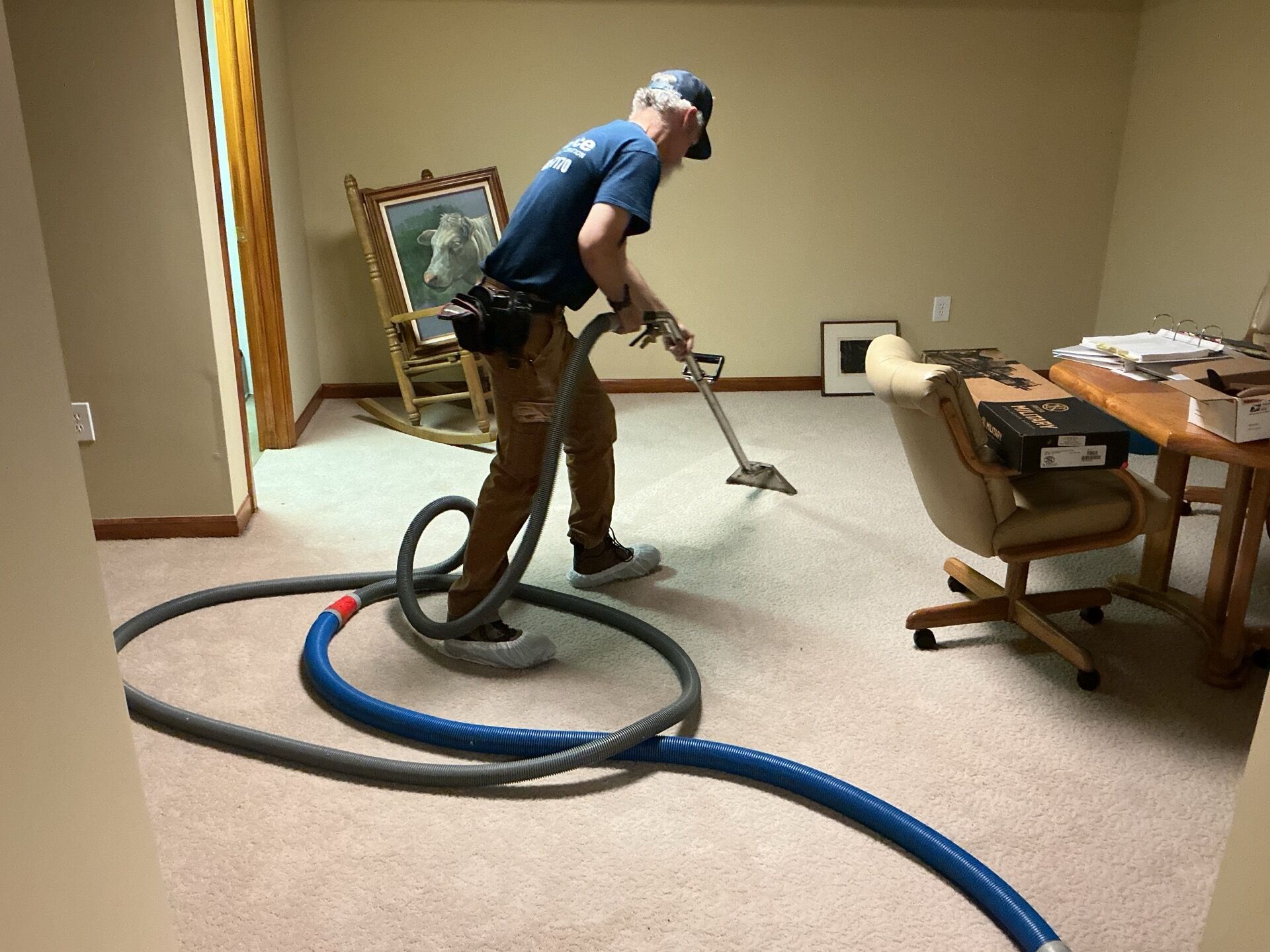
Work was isolated behind sealed barriers so the rest of the building stayed usable, with extraction, air movement and dehumidification running inside the contained area, and saturated carpet lifted and removed rather than dried in place where it could not be saved.
Scope of work
- Water extraction across finished floor areas
- Sealed containment of the affected area
- Air movement and dehumidification
- Saturated carpet lifted and removed
- Daily moisture monitoring and logging
- Work scheduled around building use
Commercial Work Across Metro Detroit
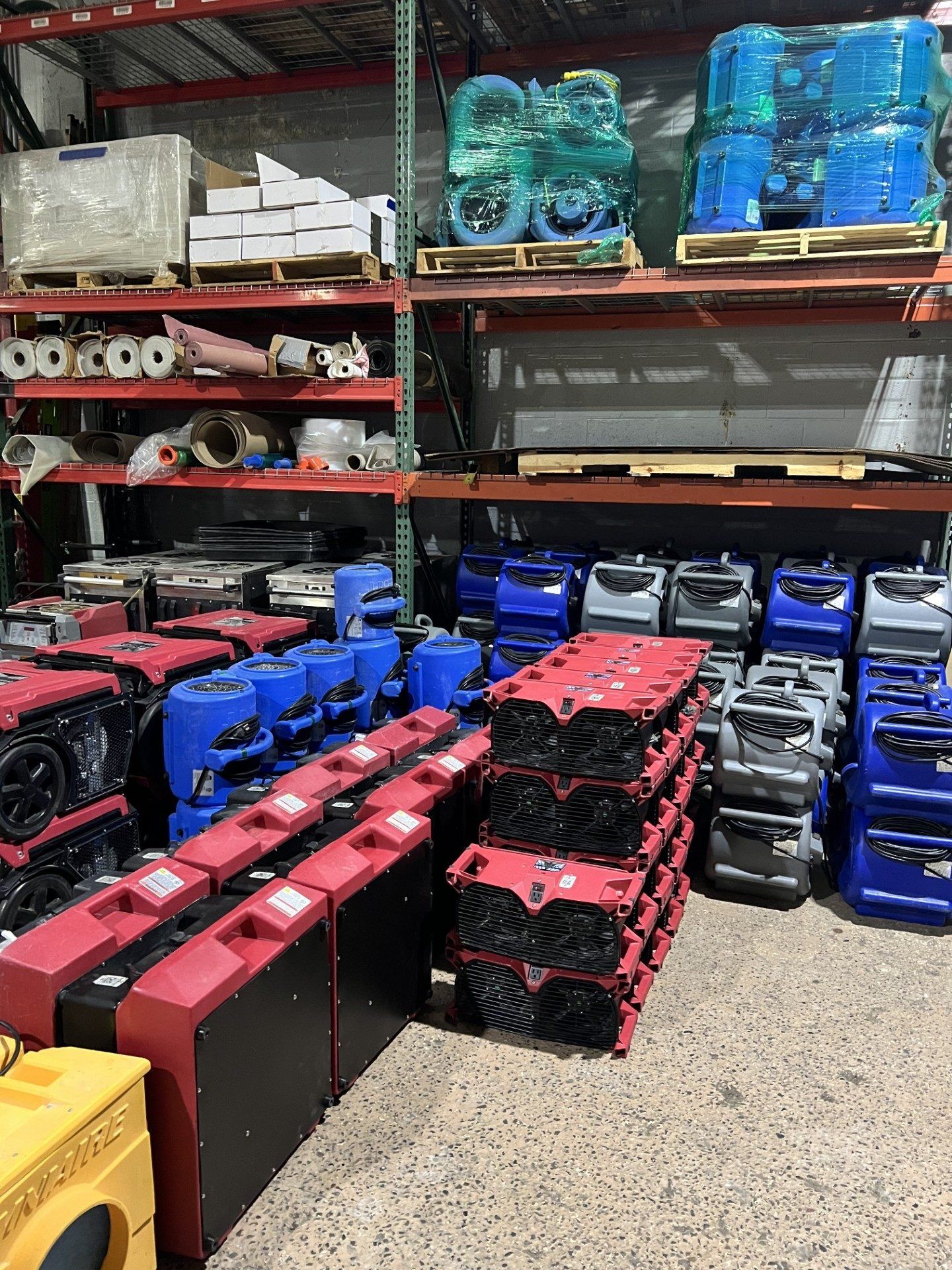
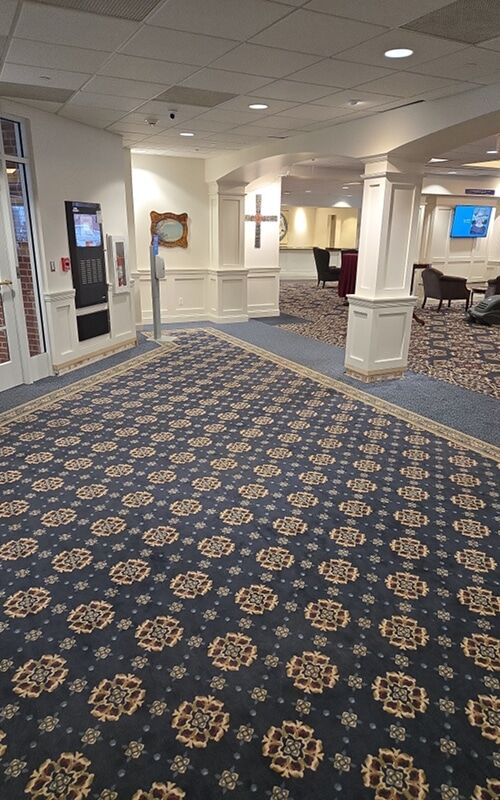
Commercial and large-loss projects handled by DriForce crews.
Six Kinds Of Building, Six Different Constraints
What makes commercial work different is rarely the damage. It is what the building has to keep doing while we work.
- Office buildings and suitesUsually multi-tenant, which means notifications, access coordination and containment that lets unaffected suites keep working. Most of the difficulty is logistical rather than technical, and it is solved by planning it at hour one.
- Retail and restaurantsThe most downtime-sensitive properties we handle. Health department requirements, stock and equipment losses, and a strong argument for overnight work — a restaurant closed through a weekend loses more than the restoration costs.
- Warehouses and light manufacturingLarge volumes of air to dry, racked inventory that has to be assessed and moved, and production continuity as the real objective. Often needs desiccant drying and temporary power rather than standard residential equipment.
- Medical, dental and veterinaryContamination control, sensitive equipment and patient scheduling all constrain the work. Containment and air management are not optional here, and neither is working around a clinical calendar.
- Multifamily and apartment buildingsA loss in one unit is frequently a loss in three. Water travels between units and into common areas, and the coordination between the association, the owner and individual residents is usually the hardest part of the job.
- Hotels, churches and municipal buildingsOccupancy that cannot simply be paused, public access to manage, and often older construction with materials that need testing before anything is disturbed. Phased work is almost always the answer.
Everything Else Worth Knowing Before A Commercial Loss
Staying Open While The Work Happens
The default assumption after a commercial loss is that the affected space closes until it is finished. Frequently it does not have to.
What makes partial operation possible is containment — sealed barriers and controlled air that isolate the work from the rest of the building, so the damaged area is genuinely separate rather than simply taped off. Combined with protected access routes and work scheduled outside your hours, a surprising amount of a building can keep trading.
What usually prevents it is not the damage but safety and code: if the loss has affected life-safety systems, power, egress or structural elements, those govern and the area closes until they are resolved. We will tell you which situation you are in on the first visit rather than after the equipment is set.
Sprinklered Buildings And The Winterizing Trap
If your building is sprinklered, the usual cold-weather advice is exactly backwards, and this catches people every winter.
A standard property policy generally requires you to maintain heat and keep the water supply on in a sprinklered building. Shutting the water off to protect the pipes can forfeit coverage for the loss you were trying to prevent. Fire code also requires wet sprinkler piping to be kept above freezing — a minimum of 40°F — and a system found to contain ice is treated as impaired, meaning the building has lost its fire protection whether or not anything has leaked.
Sprinkler piping also runs through exactly the places that freeze: unheated attics, concealed spaces, loading docks and stairwells. If you manage a sprinklered property, a pre-winter walk of those areas is worth more than any insurance you can buy. See our frozen and burst pipes page for the detail.
Documenting Business Interruption From Day One
Business income claims settle low for one reason above all others: nobody started keeping the record until weeks in, and by then it is reconstruction rather than documentation.
From the first day, somebody should be logging: hours or days closed and which areas; payroll paid to staff who could not work normally; orders, bookings or covers lost with the supporting data; and every extra expense incurred to keep operating — temporary space, rented equipment, overtime, expedited shipping. Extra expense is often its own coverage and is routinely left unclaimed.
Pull your prior-year figures for the same period early, too. That comparison is what a carrier will want, and gathering it while your accountant is not also dealing with a crisis is considerably easier.
Vacant And Seasonal Commercial Space
Empty commercial space is where the worst winter losses happen, for the obvious reason: a pipe that fails in an occupied building is found in minutes, and one that fails in a vacant unit runs until someone happens to walk in.
It is also where coverage is most likely to fail you. Commercial policies commonly contain vacancy provisions that exclude or reduce water damage, sprinkler leakage, vandalism and glass breakage once a building has been substantially unoccupied beyond a stated period. The definitions of “vacant” and “unoccupied” are not the same and both matter.
If you are carrying empty space through a Michigan winter, two things are worth doing: read the vacancy clause on that specific policy rather than assuming, and arrange a documented walk-through schedule so a failure is found in days rather than months. We can build a freeze response plan for a portfolio before the season rather than meeting you at 3am in January.
Commercial Restoration, Answered
Everything Here Is Verifiable
Most restoration companies tell you they are certified. This is what we actually hold, and where you can check it yourself.
- Applied Structural Drying Technician (ASD)
- Applied Microbial Remediation Technician (AMRT)
- Water Damage Restoration Technician (WRT)
- Fire & Smoke Damage Restoration Technician (FSRT)
- Odor Control Technician (OCT)
- Trauma & Crime Scene Technician (TCST)
- Health & Safety Technician (HST)
We also hold the IICRC Mold Removal Specialist designation. All of it is listed publicly in the IICRC Global Locator under our legal entity, Absolute Water Removal, LLC dba DriForce Property Restoration — search it before you call us, not after.
dba DriForce Property Restoration
Commercial Guides
Keeping a building operating through a loss, and what property teams need to plan for.
Commercial Services & Nearby Communities
Whatever caused the loss, the same crews handle it at commercial scale — and respond to every community we serve, day or night.
Commercial losses come from the same causes as residential ones and cost more when they do. We handle water damage, fire and smoke damage, mold remediation, storm damage, hazardous materials cleanup, frozen and burst pipes, contents and document recovery and reconstruction. For losses at industrial, institutional or multi-building scale, see large loss restoration. We work regularly with property managers, facility directors, risk managers and insurance adjusters — each of those pages covers what that role needs from us on a commercial loss. Crews dispatch 24/7 from our Troy office for Oakland, Macomb and Wayne counties and our Port Huron office for St. Clair County and the Blue Water Area.
Every Hour Offline Costs You. Let’s Move.
A person will answer. Tell us the building type, what is affected and whether you need to stay operational — those three answers decide the whole response, and getting them at hour one is what keeps a commercial loss from becoming a commercial shutdown.