

24/7 Emergency Response · Oakland County & the Blue Water Area
Property Repairs & ReconstructionAcross Michigan
Most restoration companies dry your building and hand you to a general contractor, and that handoff is where claims stall. We are IICRC-certified and a licensed Michigan builder, so the mitigation and the rebuild are one scope, one file and one company.
What you get
- Licensed Michigan builder, not a referral partner
- Permits pulled and inspections managed
- Written workmanship warranty

Reconstruction & Property Repairs · Metro Detroit & the Blue Water Area
One Builder, Cleanup Through Rebuild.Property Repairs & Reconstruction In Troy, MI, Oakland County & Beyond
Most restoration companies dry your building and hand you to a general contractor. That handoff is where claims stall. We are IICRC-certified and a licensed Michigan builder, so the mitigation and the rebuild are one scope, one file, and one company accountable for the finished result.
- Mitigation and reconstruction on one scope
- Permits pulled, built to current Michigan code
- Texture, trim and color matched to what was there
 Trusted across Metro Detroit
Licensed MI Builder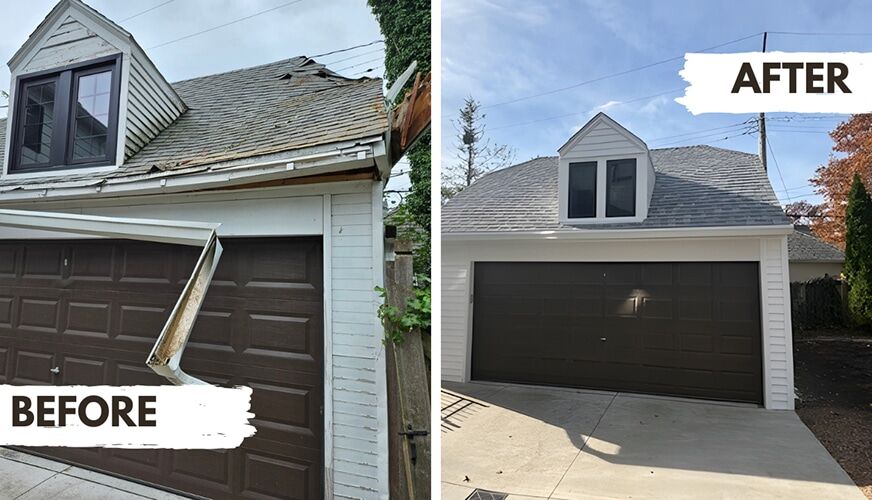
Six Things To Settle Before Anyone Picks Up A Hammer
- 1Confirm the drying is signed off, in writingReconstruction over material that is still wet is the single most expensive mistake in this business. Ask for the final moisture readings, not a verbal assurance. A rebuild closed over damp framing becomes a mold claim in six months, and by then nobody wants to own it.
- 2Get the scope in writing before you agree to anythingA line-item scope tells you what is included, what is not, and what happens if something is found behind a wall. Verbal scopes are where “that was extra” comes from. It is also the document your adjuster approves against.
- 3Understand what pre-loss condition actually meansIt means restoring what was there, to the standard it was at — not an upgrade. If you want to upgrade materials during the rebuild, that is entirely reasonable and often the right moment, but it should be priced separately and agreed up front rather than discovered on the final invoice.
- 4Ask who is pulling the permitsA rebuild of any size needs permits and inspections, and the answer should never be that none are required. Permits are what make the work documented and compliant, and an unpermitted rebuild is a problem waiting for you at resale.
- 5Decide what happens to what was salvagedContents, fixtures and materials that were removed and stored need a plan before the finish work starts, not after. Reinstalling salvaged trim or flooring is often worth doing and needs to be sequenced deliberately.
- 6Call us — a person answersWhether we did the mitigation or not. If another company dried the building and then disappeared, that is a common call and we can pick it up from there.
Tell Us About Your Rebuild
Whether the loss just happened or the drying finished weeks ago and nothing has moved since, tell us where things stand. Prefer to type it? Send the details and we respond the same day.
The Handoff Is Where Claims Go To Die
Mitigation and reconstruction are different licenses, and most companies only hold one. So the drying crew finishes, issues its invoice, and hands you a list of contractors. Now you are the project manager on a rebuild you did not ask for, coordinating between a company that has left and one that was not there for the part that matters.
The claim suffers first. A rebuild scope written by someone who never saw the building wet misses things — what was behind that wall, how far the water actually traveled, why that section of subfloor came out. Those become supplements, supplements become delays, and delays are what turn a six-week rebuild into a six-month one.
We hold both. IICRC-certified for the mitigation, licensed Michigan residential builder for the reconstruction, with one scope covering the whole loss and the same people who documented the damage doing the repair. There is no handoff, because there is nobody to hand off to.
How A Reconstruction Actually Runs
A rebuild is a sequence with dependencies. Skipping ahead is what produces the jobs that have to be partly undone.
1Verify dry before anything closes
Final moisture readings documented against a drying goal, not a guess. Nothing gets closed up over material that has not reached it, because everything after this step hides the one before it.
2Write the scope, line by line
Every item of work priced and described in the format your carrier works in, including what is behind the walls we already opened. This is the document your adjuster approves and the one you hold us to.
3Permits and inspections
Pulled before work starts and scheduled through completion, built to current Michigan code. A rebuild that is not permitted is a problem you inherit at resale.
4Structure, then systems, then surfaces
Framing and subfloor first, then any electrical, plumbing and HVAC affected, then insulation and drywall. Each stage inspected before the next covers it up.
5Finishes matched to what was there
Drywall texture matched — smooth, orange-peel, knockdown or skip-trowel — flooring and trim blended into the existing runs, and paint color-matched, so the repaired area does not announce itself.
6Walkthrough, punch list, warranty
We walk it with you, write down everything you are not happy with, and finish that list before we ask for final payment. The work is backed by a written workmanship warranty and we are still here afterwards.
Reconstruction Claims: Where The Money Gets Stuck
The rebuild is usually the larger half of a claim and the slower half to settle. Most of the delay is documentation, not disagreement.
Michigan also requires residential builders to be licensed. Ask for the license number of anyone quoting your reconstruction, and check it. It takes two minutes and it is the single best protection available to you.Michigan DIFS consumer guidance. DIFS Consumer Services: 877-999-6442.
Straight Answers About Cost and Coverage
On a covered loss your deductible is generally all you pay out of pocket, and we settle the covered work directly with your carrier. Where you choose to upgrade materials beyond pre-loss condition, that difference is quoted separately and agreed before it is built.
What actually drives the timeline is scope and approvals, not crew size. A single room is usually a matter of weeks; a multi-room or full-floor rebuild runs longer; a major structural rebuild longer still. We give you an honest schedule at the start and tell you when it changes rather than letting you notice.
We will take over a stalled rebuild. If another company handled the mitigation and the reconstruction never started, or started and stopped, that is a call we take regularly. Bring whatever documentation exists and we will tell you what it is missing. The inspection and the scope come with no obligation.
For adjusters, agents & property managers: reconstruction scoped and documented the way it needs to be approved — line-item estimates in carrier-ready format, supplements supported with photographs and measurements, permit and inspection records, and one contractor accountable from mitigation through final walkthrough. Call (888) 838-7170 or use our contact page and reference your claim number.
What Our Customers Say
4.9192 Google Reviews
“We woke up on a Monday morning to a totally flooded basement, malfunctioned hot water tank — not only did he calm me down, he had a team onsite within the hour.”
Kathy · Google Review
“The only restoration company that picked up the phone at around 11:30pm when we found our basement flooded. Casey and Harold did great job. Impressed!”
Agnes · Google Review
“Dri-Force did an outstanding job restoring my basement post-flood. Excellent communication. Excellent planning. Quick. Clean. Responsive to everything we asked.”
Jack · Google Review
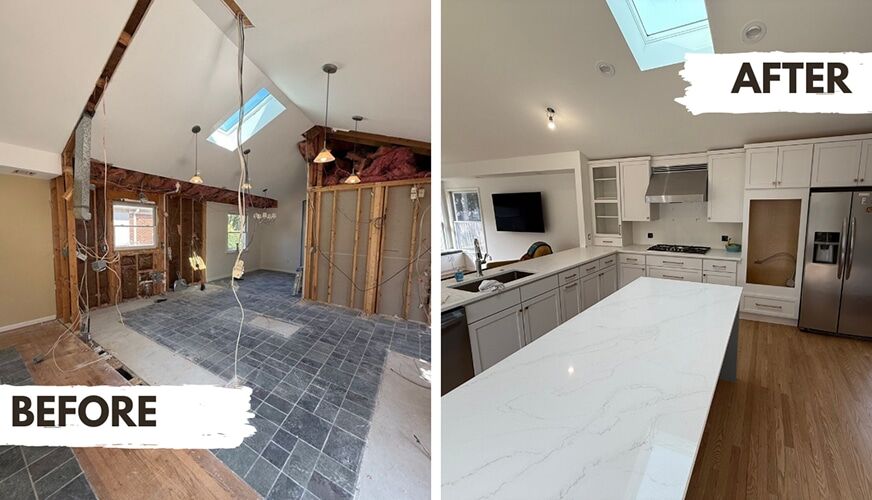
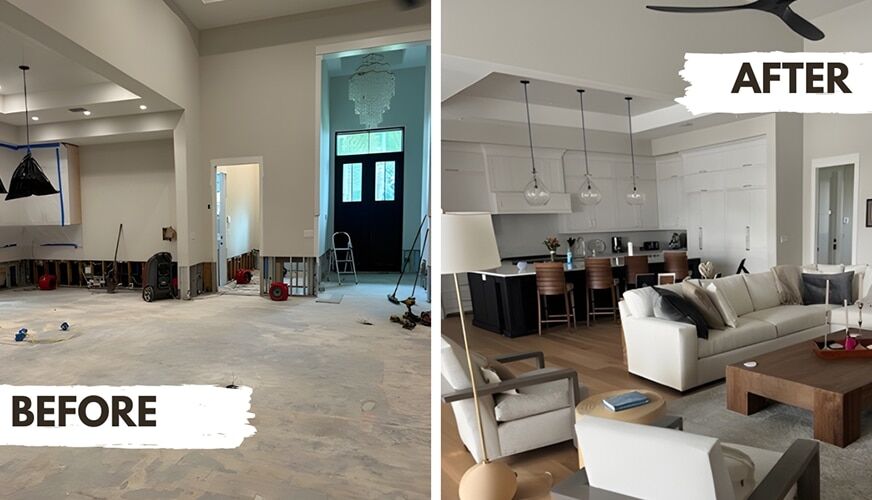
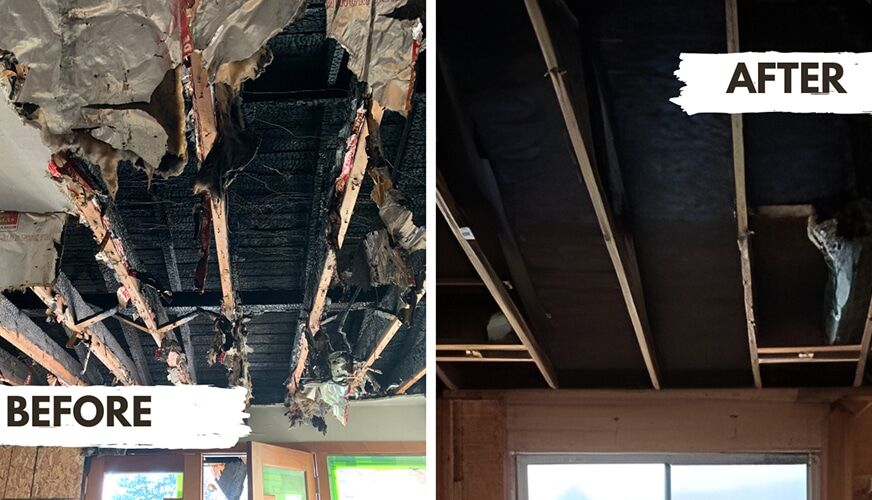
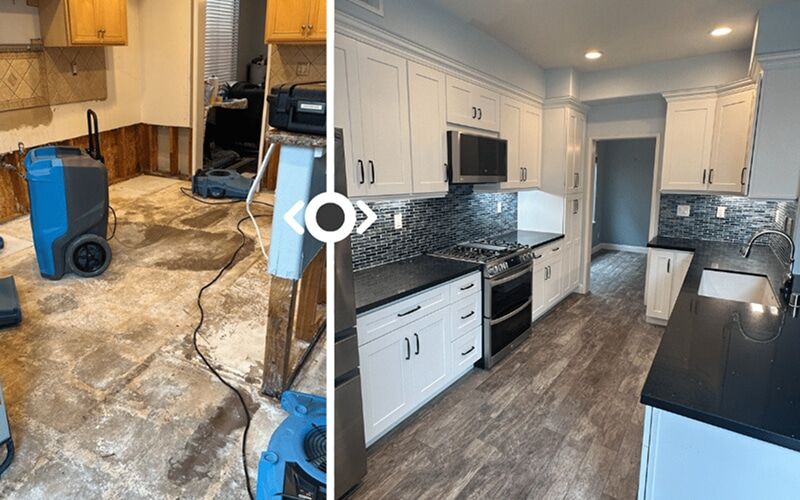
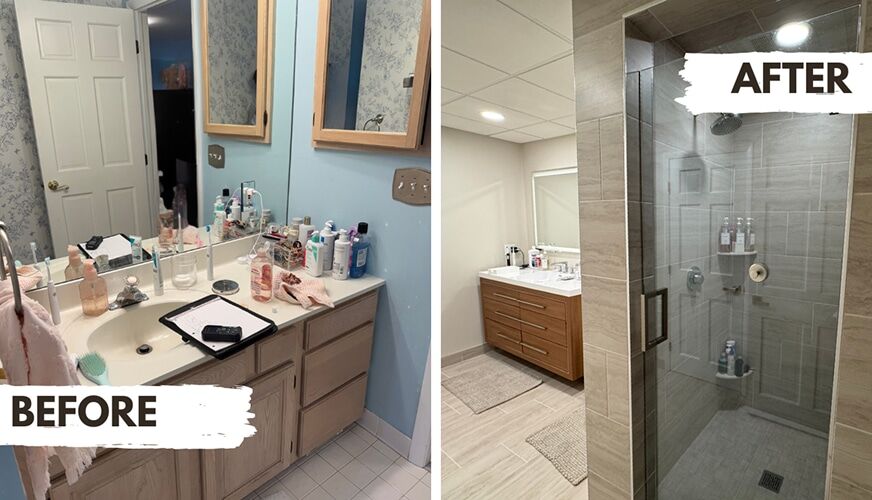
Before And After, On Our Own Work
Reconstruction completed by DriForce crews across Metro Detroit and the Blue Water Area.
Six Kinds Of Reconstruction, One Licensed Builder
Whatever the loss removed, the same crews put it back — and the same company is accountable for how it turns out.
- Structural framing and subfloorRafters, joists, studs and subfloor replaced where water, fire or impact compromised them. Structural work is where a builder’s license stops being a formality and starts being the thing that matters.
- Drywall, insulation and ceilingsThe largest part of most rebuilds. Insulation replaced rather than dried where it was saturated, board hung and finished, and texture matched to the existing surfaces so the repair does not read as a patch.
- Flooring, tile and trimHardwood, laminate, tile and carpet, blended into the runs that stayed. Salvaged trim reinstalled where it is worth doing, matched where it is not.
- Kitchens and bathroomsThe rooms that take the longest and cost the most, because they combine cabinetry, counters, tile, plumbing and electrical. Sequenced carefully so trades are not waiting on each other.
- Electrical, plumbing and HVAC affected by the lossWiring soaked above a ceiling, supply lines opened to reach a break, ductwork contaminated by smoke. Coordinated with licensed trades and inspected before anything closes.
- Exterior, siding and roof repairsWhere the loss came from outside, the envelope is repaired as part of the same claim — siding, soffit, fascia and roofing — so the building is sealed before the interior is finished.
Everything Else Worth Knowing Before A Rebuild
Checking A Michigan Builder’s License, And Why You Should
Michigan licenses residential builders, and the license is verifiable online through the state’s Department of Licensing and Regulatory Affairs. Ask anyone quoting your reconstruction for their license number and check it. It takes two minutes.
This matters more after a loss than at any other time, because insurance work attracts people who follow storms and disappear afterwards. A written workmanship warranty is worth exactly as much as the company’s likelihood of still existing when you need it.
Two other things worth asking for before you sign: proof of liability insurance and workers’ compensation coverage, and a written scope rather than a single-figure quote. Any legitimate contractor will hand over all three without hesitating.
Why Texture Matching Is Harder Than It Sounds
A repair announces itself through texture more than through color. Michigan homes carry four common drywall finishes — smooth, orange-peel, knockdown and skip-trowel — and each one is applied differently, with variations between the builder who did the original and the person repairing it decades later.
Getting it right means matching the spray pattern, the thinning of the compound and the knockdown timing, then feathering the transition far enough out that the eye cannot find the edge. Getting it wrong produces a patch that is invisible until light hits the wall from the side, at which point it is permanent.
Paint has the same problem in a different form. A color match from a chip is rarely a match to a wall that has aged and faded, which is why we often paint to a break — a corner or a trim line — rather than stopping the new paint in the middle of a surface.
What To Do When A Rebuild Has Stalled
This is one of the more common calls we take: the mitigation was done months ago, the building has been open ever since, and the rebuild has either never started or started and stopped.
Gather three things before you call anyone. The mitigation documentation — moisture logs, photographs, the drying certificate if there is one. The insurance paperwork — the adjuster’s estimate, any supplements, and what has actually been paid so far against what was approved. And whatever contract exists with the contractor who stopped.
The usual reason for a stall is that the approved amount does not cover the work as scoped and nobody has written the supplement that would fix it. That is a documentation problem, and it is solvable. Check your policy for any deadline to complete repairs, because those exist and they do expire.
Upgrading During A Rebuild: When It Makes Sense
A covered claim restores pre-loss condition — what was there, to the standard it was at. It does not fund an upgrade. But a rebuild is genuinely the cheapest moment you will ever get to change something, because the walls are already open and the crew is already there.
The upgrades that pay for themselves at this moment are the ones that are expensive to do later: insulation and air sealing while the cavity is open, electrical capacity while the wall is accessible, moving a wall or a doorway while the framing is exposed.
The rule is simply that it gets priced separately and agreed in writing before it is built, so there is never a question about which part of the invoice is the claim and which part is yours. Any contractor who blurs that line is doing you no favors.
Property Repairs, Answered
Related Services & Nearby Communities
Reconstruction is the second half of a loss. The same certified crews handle the first half — in every community we serve, day or night.
A rebuild follows a loss, and we handle both ends. We also handle water damage of every cause, fire and smoke damage, roofing, contents restoration, and insurance and payment options. Crews dispatch 24/7 from our Troy office for Oakland, Macomb and Wayne counties and our Port Huron office for St. Clair County and the Blue Water Area.
Let’s Put Your Property Back Together
A person will answer. Whether the loss just happened or a rebuild has been sitting half-finished for months, tell us where things stand and we will tell you what it would take to finish it — and what documentation is missing if the claim is the thing that is stuck.