


24/7 Emergency Response · Oakland County & the Blue Water Area
Contents RestorationAcross Michigan
After a fire, flood or mold loss it is not only the building that is damaged, it is everything in it. We inventory, pack out, clean, store and return your belongings, and document what cannot be saved so your carrier settles it properly.
What you get
- Photographed inventory before anything moves
- Secure, climate-appropriate storage
- One team for the building and the contents

Contents Cleaning & Restoration · Metro Detroit & the Blue Water Area
Your Belongings Can Usually Be Saved.Contents Restoration In Troy, MI, Oakland County & Beyond
After a fire, a flood or a mold loss it is not only the building that is damaged — it is everything in it. We inventory, pack out, clean, store and return your belongings, and we document what cannot be saved so your carrier settles it properly rather than by guesswork.
- Every item photographed and logged before it moves
- Document and photograph recovery most restorers do not offer
- Non-salvageable items documented, never quietly discarded
 Trusted across Metro Detroit
Inventoried First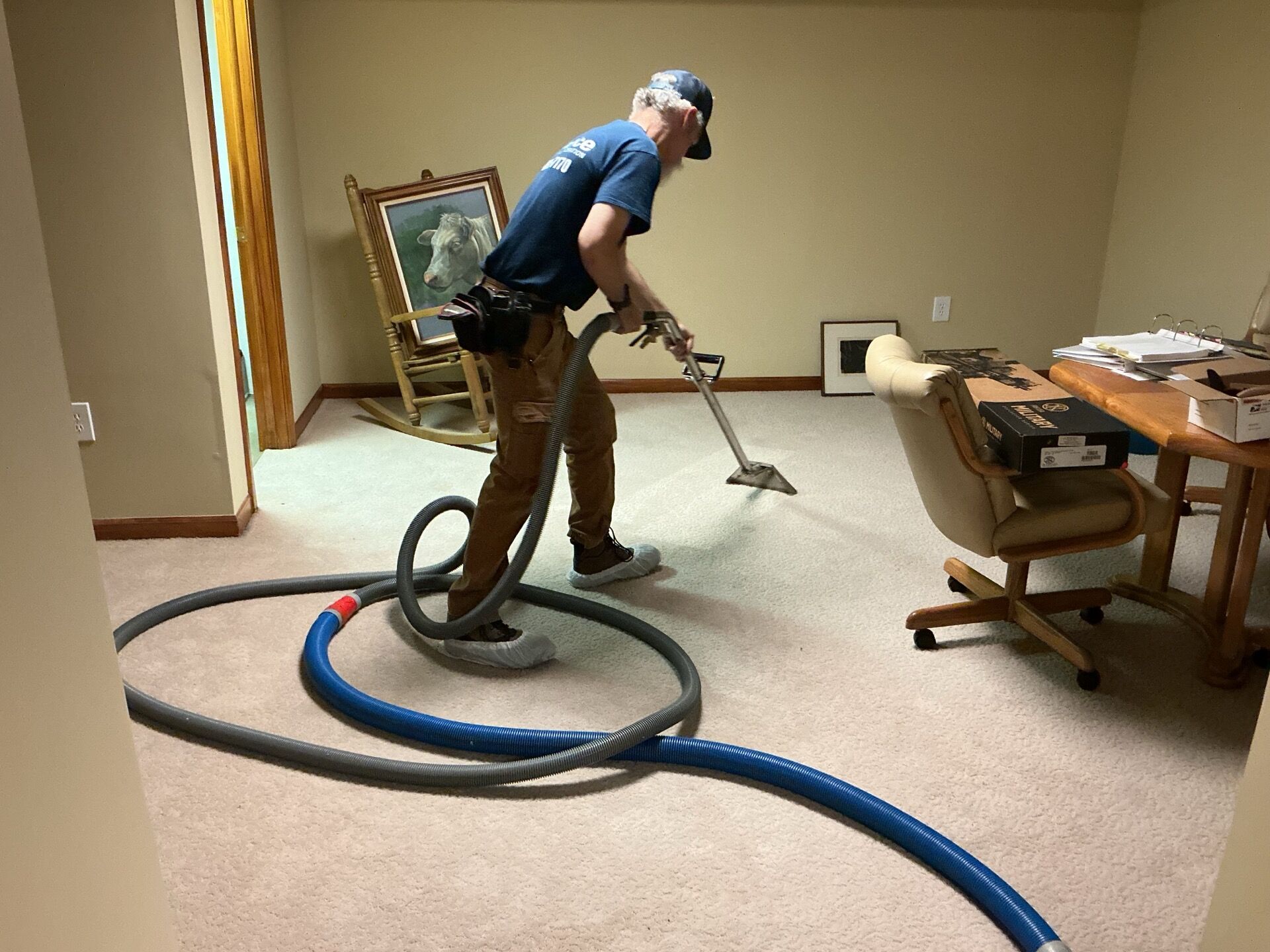
Six Things To Do Before You Touch Your Belongings
- 1Do not throw anything away yetThis is the costly one. An item thrown out before it is photographed and logged is an item your carrier has no obligation to pay for. Even things that are obviously destroyed need to be recorded first — that record is what converts them into a settlement rather than a loss.
- 2Do not wipe soot off anythingSoot is acidic and abrasive. Wiping it dry grinds it into the finish and turns a cleanable item into a permanently etched one. That applies to appliances, electronics, painted surfaces, metal and stone. Leave it and let it be cleaned properly.
- 3Do not turn on anything that got wet or smokyPowering up a device with soot or moisture inside is how a recoverable item becomes scrap. Smoke residue is conductive and corrosive on circuit boards. Leave it off, unplugged, and tell us it exists.
- 4Separate wet paper and photographs, but do not try to dry themDocuments and photographs are the most time-sensitive and the most recoverable category, and they are ruined by well-meant drying. Do not lay them out, do not use a hairdryer, and do not peel stuck photographs apart. If they are already soaked, keeping them cold slows the damage until they can be handled properly.
- 5Photograph rooms before anyone starts moving thingsWide shots of each affected room, from the doorway, before any of it is touched. Placement is evidence: it shows what was where and how far the damage reached.
- 6Call us — a person answersTell us what kind of loss it was and roughly what is affected. The clock matters most for documents, photographs and electronics, and those are the things we will ask about first.
Tell Us What Happened
A real person answers 24/7. If documents, photographs or electronics are involved, mention them first — those are the most time-sensitive things in the building. Prefer to type it? Send the details and we respond the same day.
What Your Policy Pays For Contents Is Not What Most People Assume
Most homeowners policies settle personal property at actual cash value first — depreciated value, not what the item costs today. The difference between that and replacement cost is usually recoverable, but only if you actually replace the item and submit the receipt within the time your policy allows. A great many families never claim that second payment because nobody told them it existed.
Which makes the inventory the most valuable document in the whole loss. Age, condition, make and model determine the depreciation applied to every single line. A vague inventory gets depreciated aggressively; a specific, photographed one does not, because there is nothing left to assume.
It also changes the restore-versus-replace question. Restoring an item is frequently cheaper than replacing it, which is good for your carrier — but it is also usually better for you, because the things worth arguing over are rarely the ones that are easy to buy again.
How Your Belongings Come Home
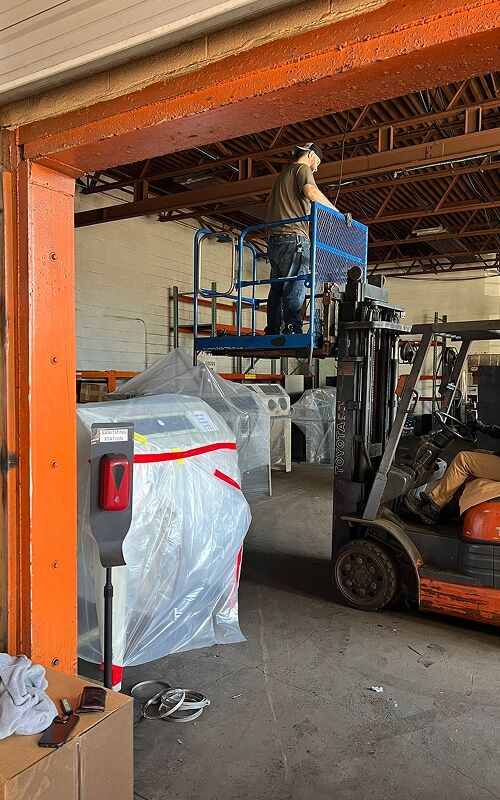
Six steps, one inventory, one point of contact — so you always know where your things are and what is being done to save them.
1Inventory, before anything moves
Every item photographed and logged where it sits, room by room. This happens first because placement and condition are both evidence, and neither survives a pack-out.
2Pack out and label by room
Salvageable items packed, labeled and moved out of the damaged environment so they stop absorbing smoke, moisture and odor while the building work goes on around them.
3Clean by material, not by batch
Soot, water and mold each need a different method, and so does each surface. Ultrasonic cleaning for hard non-porous items, appropriate textile processes for soft goods, specialist handling for electronics, documents and photographs.
4Deodorize at the source
Smoke odor lives in porous material, not on it. Treatment targets what absorbed it rather than masking the room, because an item that smells fine in a warehouse and wrong again in your house was never actually finished.
5Store securely until the house is ready
Climate-appropriate storage, with the inventory tracked the whole time, so you can ask where something is and get an answer rather than a shrug.
6Pack back and reconcile
Items returned and placed back, checked against the same inventory they left on. Anything non-salvageable is on that list too, documented for your claim.
Contents Claims: Where The Money Actually Is
Personal property is its own coverage, with its own limit and its own rules. It is also the part of a claim most often under-settled, almost always because the documentation was thin rather than because the carrier was difficult.
Keep your own copy of the inventory, whoever does the work. It is your proof of loss, you may need it after the contractor is long finished, and you should never be in a position where the only record of what you owned belongs to somebody else.Michigan DIFS consumer guidance. DIFS Consumer Services: 877-999-6442.
Straight Answers About Cost and Coverage
Contents work is normally paid under the personal property portion of your policy, which is separate from the money that repairs the building. On a covered claim your deductible is generally all you pay out of pocket, and we settle the covered work directly with your carrier.
What actually drives the number is volume and material mix, not the size of the house. A room of soft goods and paper takes far more processing than a room of hard furniture, and smoke-affected contents take more than water-affected ones because soot has to be removed from every surface rather than dried out of it.
We will tell you when a pack-out is not worth it. Sometimes the honest answer is that replacement serves you better, and we would rather say so than move everything you own twice. Where the work is worth doing, you get a documented, line-item scope in writing before it begins, and the inspection and the scope come with no obligation.
For adjusters, agents & property managers: contents losses documented the way they need to be settled — photographed room-by-room inventory taken before anything moves, salvage and non-salvage lists with condition notes, storage tracking, and line-item scopes in carrier-ready format. Call (888) 838-7170 or use our contact page and reference your claim number.
What Our Customers Say
4.9184 Google Reviews
“We woke up on a Monday morning to a totally flooded basement, malfunctioned hot water tank — not only did he calm me down, he had a team onsite within the hour.”
Kathy · Google Review
“The only restoration company that picked up the phone at around 11:30pm when we found our basement flooded. Casey and Harold did great job. Impressed!”
Agnes · Google Review
“Dri-Force did an outstanding job restoring my basement post-flood. Excellent communication. Excellent planning. Quick. Clean. Responsive to everything we asked.”
Jack · Google Review
Six Categories, Six Different Methods
Almost nothing is written off on sight. What decides the outcome is the material, the type of loss, and how quickly it is reached.
- Documents and photographsThe most recoverable category and the one most often given up on. Wet paper and photographs can be stabilized and recovered, but they degrade fast and they are ruined by amateur drying. This is a service most regional restorers do not offer at all — we do.
- ElectronicsFrequently saved if reached early. Smoke residue is both corrosive and conductive, so the damage continues long after the fire is out and gets worse the moment power is applied. Left off and cleaned promptly, recovery odds are good.
- Textiles, clothing and soft goodsClothing, bedding, curtains and upholstery hold odor deep in the fibers, which is why they smell fine warm and wrong again later if they were only surface-treated. Processed by fabric type rather than batched together.
- Hard furniture and woodWood tolerates a great deal more than people expect. Soot removal, cleaning and refinishing recover pieces that look beyond help, and older furniture is usually better built than anything you would replace it with.
- Kitchenware, china and metalHard non-porous items clean up well, including most things that look permanently tarnished or etched. Anything that held food and was exposed to contamination is assessed separately and honestly.
- Art, heirlooms and irreplaceable itemsHandled individually and slowly, and flagged to you before anything is attempted. Where an item needs a specialist conservator rather than a restoration crew, we will tell you that instead of experimenting on it.
Everything Else Worth Knowing About Your Belongings
Why The Inventory Decides The Settlement
In a contents claim, the burden of proving what you owned sits with you. Your carrier is not required to guess generously, and an adjuster working from a vague list has no choice but to apply standard assumptions about age and condition — which means depreciation.
A specific inventory removes the guesswork. Make, model, age and condition, with a photograph attached, leaves nothing to assume. That is the entire mechanism by which a well-documented contents claim settles higher than a poorly documented one for exactly the same belongings.
One piece of advice that costs nothing and is worth a great deal: before any loss ever happens, walk through your home filming on your phone, opening closets and drawers as you go, and store it somewhere that is not in the house. Ten minutes of video is the best contents documentation most people will ever have.
Actual Cash Value, Replacement Cost, And The Money Left On The Table
This is the part of a contents claim that costs families the most, and it is almost never explained at the time.
Most policies with replacement cost coverage on contents still pay actual cash value first — the depreciated value of each item. The held-back difference, called recoverable depreciation, is paid only after you actually replace the item and submit proof, and only within the window your policy specifies. Miss the window and that money stays with the carrier.
So two things are worth doing. Check whether your contents coverage is replacement cost or actual cash value — if it is ACV only, there is no second payment coming and you should plan accordingly. And if it is replacement cost, find out the deadline on the first day, not the last.
Smoke And Soot: Why Speed Matters More Here Than Anywhere
Soot is not dust. It is acidic, abrasive and chemically active, and it keeps working on whatever it has settled on. Metal corrodes, plastics yellow, finishes etch, and on electronics the residue is both corrosive and conductive. An item that would have cleaned up in week one can be permanently marked by week three.
This is also why the most damaging thing a homeowner can do is wipe. Dry-wiping soot grinds the particles into the surface and converts a cleanable item into a scratched one. If you do nothing else, do not wipe.
On water losses the clock is different but just as real: materials need to be dried within roughly 24 to 48 hours to prevent mold growth. That window is the EPA’s drying deadline rather than a measured growth rate, but the practical instruction is the same — get wet contents out and into processing rather than leaving them in the building.
Pack-Out Or Leave It In Place?
Not every loss needs a pack-out, and we will say so. Moving everything a family owns twice is disruptive and it is not free, so it should be done because it helps rather than because it is the default.
A pack-out usually makes sense when the building work is extensive enough that contents would be damaged further by staying, when smoke odor means items need to leave the environment to stop absorbing it, or when there is simply nowhere safe to stage things on site.
In-place cleaning often makes more sense when damage is confined to one area, when the repair is short, or when the household includes people for whom the disruption of a full pack-out is itself the bigger problem. The right answer is a conversation, not a policy.
Contents Restoration, Answered
Related Services & Nearby Communities
Contents work is never the whole loss. The same certified crews handle the damage that caused it and the rebuild that follows — in every community we serve, day or night.
Belongings are damaged by the same events that damage the building. We also handle fire and smoke damage, water damage of every cause, mold remediation, and rebuild and property repairs. Crews dispatch 24/7 from our Troy office for Oakland, Macomb and Wayne counties and our Port Huron office for St. Clair County and the Blue Water Area.
Before You Throw Anything Away, Call Us
A person will answer. If documents, photographs or electronics are involved, say so first — those are the most time-sensitive things in the building and the ones most often given up on too early. If the honest answer is that a pack-out will not help you, we will tell you that instead.