

Many homeowners expect to experience allergy symptoms like a runny nose and watery eyes once spring comes around. However, the unpleasant symptoms you’re experiencing might not actually be due to ragweed pollen, grass pollen, or other allergens.
It might be due to mold in your attic, a serious issue you shouldn’t take lightly. DriForce Property Restoration can help you determine whether the issue is due to spring allergies or attic mold.
Causes of Attic Mold in Homes
Attic mold typically develops when excess moisture becomes trapped in your attic due to issues such as roof leaks, inadequate insulation, or poor ventilation. Over time, all this trapped moisture creates the perfect environment for mold growth, which can begin within 24 to 48 hours.
One common myth is that mold only grows during the spring and summer, when temperatures and outdoor humidity are high. However, that’s not necessarily the case.
Some types of mold can grow even during the fall and winter. Often, attics can remain damp year-round, so mold could continue to spread unnoticed long after the initial problem begins.
How Hidden Mold Impacts Indoor Air Quality
When mold is hidden in areas like the attic, its spores can travel through your home’s ventilation system. This means it impacts the air in your attic and throughout your entire house.
Even with a new HVAC system and high-MERV filters, these spores can still often bypass filtration or settle in the ductwork. This allows them to continue circulating throughout your entire space.
Why Spring Allergy Symptoms and Attic Mold Effects Can Resemble Each Other
Spring allergies and exposure to attic mold can cause very similar symptoms, making it hard to tell the difference between the two. This could mean you’re trying to manage what you believe are allergies caused by outdoor conditions when it’s actually a problem stemming from your attic.
Because of the similarities, persistent or long-term symptoms that don’t improve once the standard allergy season is over may be a sign of a mold issue.
What Happens in Attics During Spring?
During spring, attics often experience rising temperatures and increased humidity as the season changes and outdoor temperatures warm. Moisture can easily build up, especially if there’s poor ventilation.
Attic materials that retain moisture include:
- Cardboard boxes
- Wood framing
- Insulation
The longer the items hold onto the moisture, the higher the chances of a mold issue.
Warning Signs Your “Seasonal Allergies” Could Actually Be Mold
It’s crucial to recognize the warning signs that the symptoms you believe are seasonal allergies might actually signal a mold issue. For example, you might experience itchy or watery eyes, congestion, and coughing.
This can be particularly concerning if you already have respiratory problems, such as asthma. However, these symptoms usually aren’t for one or even a few days. They can stretch for long periods, in some cases without much relief.
Typically, they’re particularly bad while you’re in the attic or right after you leave. One of the biggest indicators is that you feel terrible indoors but better outdoors. This could mean that the problem is within your home.
Additionally, the symptoms might occur long after the typical allergy season ends. For instance, if you usually experience bad allergies in spring, you might continue to feel horrible long into summer.
Persistent fatigue and headaches aren’t typically seasonal allergy symptoms, so they could indicate mold exposure, especially when accompanied by other symptoms.
Health Risks Associated With Household Mold Exposure
You should never dismiss your symptoms if they’re different from what you normally experience. This is the case whether they’re more severe than usual or last longer, as it may be a sign of household mold.
You may continue to experience worsening symptoms, or they may increase in severity. For instance, you might develop infections, especially if you already have certain health conditions.
It’s crucial to see a medical professional immediately and to contact our team so we can assess your home.
Preventing Mold Growth During Allergy Season
The best way to prevent mold growth in your attic during allergy season is to get your indoor humidity levels under control. Ideally, the humidity levels should be between 30% and 50%.
Installing a dehumidifier can be a simple, effective way to balance the levels without manual intervention. It’s also vital to make sure your attic has proper ventilation.
Additionally, monitor your attic, especially after a severe storm. This is particularly important if you don’t go into your attic often.
Check for any signs of leaks, such as water spots on the ceiling, pooling water on the floor, or discoloration on the walls. If you spot any of these problems, address the issue immediately.
DIY vs. Professional Attic Mold Removal
Some homeowners might attempt to remove mold on their own if they suspect or confirm there’s a problem. However, this approach could be incredibly risky, expensive, and dangerous to your health.
Without proper containment and protective equipment, disturbing mold can release the spores into the air. This could cause the problem to become widespread if it hasn’t done so already.
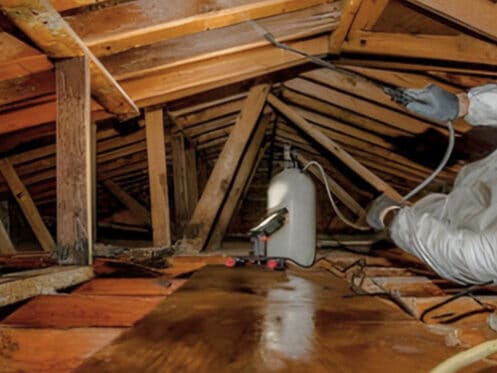
Our professional team has extensive experience in addressing mold problems properly at the source so they don’t worsen. We can also provide recommendations for solutions that could prevent the issue from recurring.
Contact DriForce Property Restoration Today for an Assessment
Don’t take chances if you suspect you have mold problems at your home. If we find mold during an inspection, we’ll create a personalized plan tailored to your attic, home, health, and budget.
It’s essential to start the mold remediation process as quickly as possible to prevent it from worsening and becoming more costly to fix.
Contact our residential restoration specialists at DriForce Property Restoration in Troy, MI, today.