
Standard homeowners insurance does not cover basement flooding caused by external water—groundwater, storm runoff, or overwhelmed storm drains—and most Bloomfield Hills homeowners don’t discover this until they’re standing in four inches of water at midnight. That said, exceptions exist, and some basement flooding scenarios are covered—so what happens next depends entirely on how the water got in.
Our team at DriForce provides water damage restoration across Southeast Michigan, and we file documentation for insurance claims every week. We’ve seen what adjusters accept, what they push back on, and what homeowners wish they’d known before touching a single wet floorboard. This guide walks you through all of it—coverage rules, documentation steps, adjuster expectations, and the specific scenarios most common to Bloomfield Hills homes.
Bloomfield Hills sits on a high water table, bordered by inland lakes and fed by heavy spring snowmelt from the surrounding Oakland County watershed. That geology creates real, recurring flood exposure—even for homes that have never filed a claim before. Understanding your policy now, before water enters your basement, is the move that saves thousands.
The Hard Truth: Standard Homeowners Insurance Doesn’t Cover Basement Flooding (Here’s Why)
In insurance language, a “flood” is any water that originates outside your home’s plumbing system and enters through the ground, foundation, storm drains, or surface runoff. Under this definition, most basement flooding events—groundwater seeping through a block foundation after heavy rain, storm drains backing up into a sump pit, spring melt saturating soil until water pushes through your basement floor—are excluded from standard HO-3 homeowners policies.
Insurers exclude flood damage because the risk is catastrophic and geographically concentrated. When a major rainfall event hits Oakland County, hundreds of claims arrive simultaneously. Risk pooling breaks down at that scale, which is why flood coverage exists as a separate product entirely.
The dollar gap is real. A 2-inch waterline in a finished Bloomfield Hills basement—saturated drywall, flooring, insulation, mechanicals—typically costs between $15,000 and $35,000 to remediate and restore when you account for structural drying, mold remediation if drying is delayed, and reconstruction. Homeowners routinely assume their “water damage” coverage handles this. It doesn’t.
Why Your “Water Damage” Coverage Has a Flood Clause Exception
Look at your declarations page and your policy endorsements. The exclusion language typically reads something like: “We do not cover loss caused by flood, surface water, waves, tidal water, overflow of a body of water, or spray from any of these.” It may also exclude water that backs up through sewers or drains unless you’ve purchased a specific endorsement. The critical word is origin—where the water came from determines coverage, not how wet your basement is.
Bloomfield Hills’ aging storm drain infrastructure compounds this. During heavy rain events, municipal systems can back up, and that water pushing through your floor drain is still classified as “flood” in most policy definitions—even though it never touched a river.
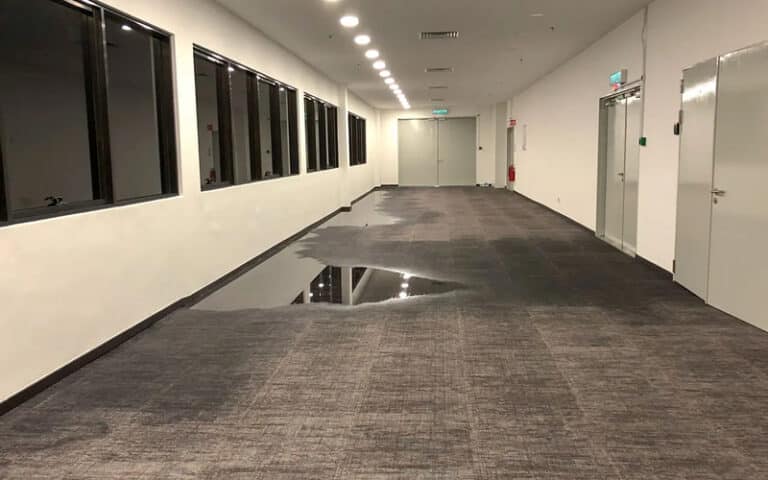
When Your Homeowners Policy Might Actually Cover Basement Flooding (Don’t Assume It Doesn’t)
Coverage exists for water that originates inside your home’s systems and escapes suddenly and accidentally. If water in your basement came from one of these sources, you likely have a covered claim—and your insurer needs to hear from you promptly.
Covered internal sources typically include: a burst or frozen pipe, a failed water heater, a malfunctioning HVAC condensate line, a washing machine supply line that ruptures, or an overflowing bathtub. The key qualifiers are sudden and accidental—a slow leak you ignored for six months is not covered, but a pipe that burst overnight while you were asleep generally is. For a full breakdown on burst pipe scenarios, see our guide to frozen and burst pipes in Michigan.
Roof leaks are covered if the damage traces to a storm event—wind, hail, a fallen branch—but not if the leak results from deferred maintenance or a roof that was already deteriorated.
Sump Pump Failure: The Coverage Gray Zone Bloomfield Hills Homeowners Miss
Sump pump failure is where most Oakland County homeowners run into trouble, because the coverage answer is genuinely ambiguous—and it depends on language that varies by carrier. Some policies cover sudden mechanical failure of a sump pump (the motor burns out, the float switch sticks) as an equipment breakdown. Others exclude any water intrusion that enters through the foundation regardless of why the pump didn’t stop it.
The distinction that matters most: a pump that mechanically failed during a storm is treated differently than a pump that simply couldn’t handle the volume of groundwater entering the pit. The first may be covered under your existing policy or a water backup endorsement. The second is almost always classified as a flood event and excluded. Our article on sump pump failure in Michigan walks through the warning signs to watch before the next rain event.
Call your agent now—before the next heavy rain—and ask specifically: “Does my policy cover water damage from sudden sump pump mechanical failure?” The answer will tell you whether you need an endorsement.
Sewage Backup Endorsements: A $50/Year Add-On That Covers a $25,000 Problem
Sewage backup is a separate coverage category from flooding, and it’s one most Michigan homeowners don’t realize they’re missing. When a municipal sewer line surcharges during heavy rain and pushes sewage backward through your floor drain, the resulting damage—contaminated water, destroyed flooring, biohazard cleanup—is excluded from base policies unless you’ve added a water/sewer backup endorsement.
In Michigan, this endorsement typically costs $50–$100 per year and provides $5,000–$15,000 in coverage limits. Given that sewage and black water cleanup for a flooded basement routinely runs $10,000–$25,000 when you account for Category 3 water extraction, antimicrobial treatment, and structural restoration, the math is straightforward. If you don’t have this endorsement, call your agent this week.
Separate Flood Insurance: Your Real Protection Against Basement Flooding in Southeast Michigan
If your basement flooding risk comes from external water—and in Bloomfield Hills, it often does—the only policy that actually covers it is standalone flood insurance. This comes from two sources: the federal National Flood Insurance Program (NFIP) or private flood carriers.
The NFIP, administered through FEMA, provides up to $250,000 in structural coverage and $100,000 for contents. Premiums in Michigan typically range from $400–$1,200 per year depending on your home’s elevation, claims history, and flood zone designation. You can check your property’s zone designation at the FEMA Flood Map Service Center.
An important point for Bloomfield Hills specifically: your home may not appear in a high-risk FEMA flood zone, but roughly 20% of all NFIP flood claims come from properties outside mapped high-risk areas. Oakland County’s development density, impervious surface coverage, and localized drainage patterns create flood vulnerability that FEMA maps don’t always capture at the neighborhood level.
NFIP vs. Private Flood Insurance: Which Makes Sense for Your Bloomfield Hills Home?
The NFIP offers broad availability and government backing, but coverage caps are fixed and basement contents coverage is notably limited—most personal property stored in a basement is excluded even under an NFIP policy. Private flood insurers can offer higher limits, replacement cost coverage, and faster claims processing, but premiums vary significantly by carrier and your property’s specific risk profile.
The practical advice: get quotes from both. And remember the 30-day mandatory waiting period for NFIP policies—you cannot purchase coverage the week before a major storm system moves through. This is the decision to make in October, not April.
How to Document Basement Flooding for Your Insurance Claim (Step-by-Step)
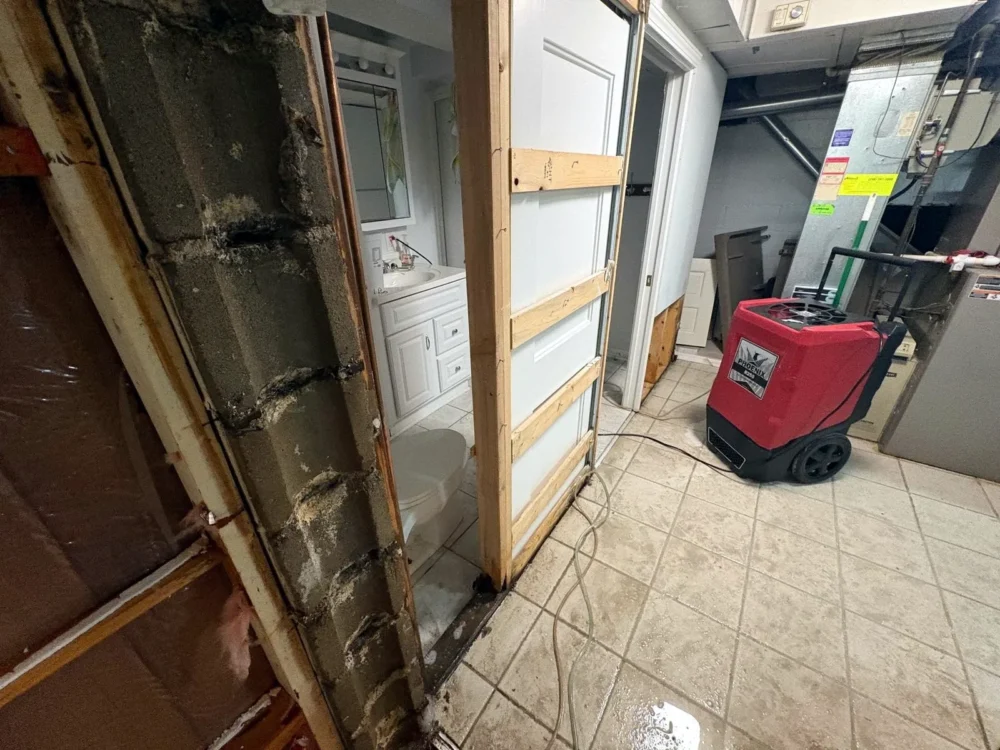
Documentation is where claims are won or lost. Adjusters evaluate coverage based on what they can verify—and what they can verify depends entirely on what you captured before any cleanup began. This is the section most homeowners skip, and it’s the one that costs them the most.
Before You Touch Anything: Photographic Evidence That Insurers Actually Use
Before you move a single piece of furniture or run a single shop vac, stop and document. Take photos and video of everything—water lines on foundation walls, saturated drywall, affected flooring, personal property sitting in water, and your sump pump if it’s involved. Make sure your phone’s timestamp is enabled. Film a 60-second continuous walkthrough video while narrating what you’re seeing: “Water came through the northeast wall, waterline is approximately 4 inches, this is the sump pit, pump appears non-functional.” That narration becomes part of your claim record.
Photograph the source specifically. If water is seeping through a foundation crack, get a close-up. If a pipe burst, capture the break location and the water trail. If your sump pump failed, photograph the unit and note the date and time it was discovered non-operational. Adjusters are trained to identify the origin of water intrusion—your photos should tell that story before they arrive.
For a complete walkthrough of what to do in the first hours after water enters your home, read our flooded basement first steps guide.
The Documentation Checklist That Prevents Insurance Company Denials
Beyond photos, adjusters need a documented inventory of damaged property. List every affected item with an approximate purchase date and estimated value—this is what contents coverage pays against. Photograph receipts, warranty documents, and serial number labels on appliances, HVAC components, and electronics before anything is moved.
Save weather documentation. A screenshot from Weather.gov or the National Weather Service showing rainfall totals and timing for your ZIP code on the date of loss is genuinely useful—it corroborates your timeline and helps establish that the event was sudden rather than a slow, unnoticed accumulation. Note the exact date and time you first observed water. If you called DriForce or another restoration company immediately, document that too—it signals to the adjuster that you acted to mitigate further damage, which is a policy requirement in virtually every HO-3 policy.
If your carrier requires contractor estimates before authorizing repairs, get those in writing before cleanup begins. Some insurers will request a written scope of loss from your restoration contractor as part of the claim file.
Why You Should Call DriForce Before You Call Your Insurance Agent
This is counterintuitive for most homeowners, but it’s the sequence that protects your claim. Standing water causes structural damage that compounds every hour—mold growth begins within 24 to 48 hours in a wet Michigan basement, and drywall that’s wet today can be a total loss by Wednesday. Calling DriForce first means we extract water, deploy industrial dehumidifiers running at 200+ pints per day, and use thermal imaging cameras to find moisture behind walls that looks dry to the naked eye—all before hidden damage multiplies your repair costs.
We also provide detailed written scope-of-work reports that meet insurance documentation standards. When we respond to a flooding basement in a residential home, our technicians photograph moisture readings at every affected surface, log equipment placement and drying progression daily, and produce a complete damage narrative your adjuster can use to evaluate the claim. That documentation often makes the difference between a clean approval and a protracted dispute. We work directly with all major insurance carriers—Allstate, State Farm, Liberty Mutual, Auto-Owners, AAA, Travelers, and more—and offer direct billing so you’re not out of pocket waiting for reimbursement.
For anything involving potential mold growth from delayed or incomplete drying, see our related resource on mold insurance coverage in Michigan—because secondary mold damage is a separate coverage question that trips up a lot of homeowners.
What Your Insurance Adjuster Will Actually Look For During a Basement Flooding Inspection
Adjusters are trained investigators. Their job is to determine the origin of water, whether it qualifies under the policy, and whether the homeowner met their duty to mitigate. Understanding what they’re looking for helps you prepare—and helps you avoid the most common mistakes that lead to partial or denied claims.
Timeline scrutiny is the first thing. How long between the water event and your call to the insurer? A gap of more than 24–48 hours raises questions about whether damage was pre-existing or whether you failed to mitigate. Document the moment you discovered water with a timestamped photo, and report to your carrier the same day.
Source identification is the second. The adjuster must confirm whether water came from a covered source (internal plumbing failure) or an excluded source (groundwater, surface flood). This is why your photos of the water’s origin point matter more than photos of the resulting damage.
Maintenance records will come up if sump pump failure is involved. An adjuster may ask whether your pump was professionally serviced. A pump that was installed in 2008 and never inspected tells a different story than one serviced annually. Keep records of any plumbing, sump pump, or foundation work—they support a covered claim by showing you maintained the property.
Questions the Adjuster Will Ask—And Why Your Answers Matter
“When did you first notice water?” — Establishes your discovery timeline. Answer precisely.
“What were the weather conditions?” — Helps them confirm or rule out an external flood source.
“Have you had sump pump problems before?” — A history of pump issues suggests a chronic maintenance problem, which reduces coverage likelihood for sudden-failure claims.
“Who installed or services your sump pump?” — Professional installation and service records support a covered sudden-failure claim.
“Have you had previous water damage in this area?” — A prior claim on record signals potential chronic infiltration, which affects how the current loss is evaluated.
Your answers need to be accurate and consistent with your documentation. Adjusters cross-reference your statement against weather records, your claims history, and the physical evidence in the space. A IICRC-certified restoration company’s documentation—moisture logs, equipment records, thermal imaging—adds credibility to your account of events that no smartphone photo alone can match.
Common Basement Flooding Scenarios in Bloomfield Hills—And What’s Actually Covered
Here are the situations our team sees most frequently in Oakland County, with honest coverage verdicts based on standard Michigan homeowners policies.
Scenario 1: Spring Melt and Heavy Rain Overwhelm Your Sump Pump
Groundwater rises, saturates the soil, and seeps through your foundation walls or floor. Your sump pump runs continuously but can’t keep up with the volume. Result: 3–6 inches of water in your basement.
Coverage verdict: Typically NOT covered. This is groundwater intrusion—classified as flooding under standard policy exclusions. Even if your pump ran, the water source was external. Your only coverage here is a separate flood insurance policy or, if the pump itself mechanically failed, potentially a water backup endorsement.
Scenario 2: Your Sump Pump Stops Working During a Storm
A power outage or mechanical failure—float switch sticks, motor burns out—takes your pump offline during a heavy rain event. Water enters the pit and overflows before power is restored.
Coverage verdict: Possibly covered, with the right endorsement. If your policy includes water backup or equipment breakdown coverage, sudden pump failure may qualify. The key is documenting the failure itself—photograph the pump, note the time power was lost or the time you discovered the malfunction, and preserve the failed unit for inspection. Do not replace the pump before the adjuster sees it.
Scenario 3: A Pipe Bursts Behind Your Basement Drywall
A supply line or drain fitting fails—common in Southeast Michigan during the freeze-thaw cycles of October and November—and water fills the wall cavity before you notice it on the floor.
Coverage verdict: Covered under standard HO-3. Sudden and accidental discharge from plumbing is a covered peril. This is one of the scenarios where calling DriForce immediately matters most—our IICRC Water Damage Restoration certified technicians use thermal imaging to find water trapped behind walls before it migrates and causes structural damage that doubles your claim value. The 24-hour water damage repair guide outlines exactly what needs to happen in the first day.
Scenario 4: Sewage Backs Up Through the Floor Drain
During a heavy rain event, the municipal sewer surcharges and sewage pushes backward into your basement through the floor drain. Category 3 contaminated water requires full biohazard protocols.
Coverage verdict: Covered only if you purchased a water/sewer backup endorsement. Without it, sewage backup is excluded. With it, you typically have $5,000–$15,000 in coverage for cleanup and remediation. This is also the scenario the American Red Cross Home Water Safety guidelines flag as a significant health hazard—do not enter a basement with sewage backup without proper protective equipment.
What We See in the Field
When our IICRC-certified technicians respond to a flooding basement in a residential home, one of the most consistent surprises for homeowners is what the moisture meter finds behind walls that look perfectly dry. Drywall wicks water vertically—we routinely see moisture readings at 18–24 inches above the visible waterline on basement walls. That hidden saturation is where mold colonies establish first in metro-Detroit basements, typically within 36–48 hours in October conditions when humidity levels are already elevated and heat isn’t consistently running yet. By the time a homeowner notices discoloration or odor, remediation costs have compounded significantly. The contents restoration process for a basement office or storage area is far less expensive when items are extracted and documented before secondary damage sets in.
Michigan’s annual insurance policy renewal cycle runs heavily in the fall—which makes right now the right time to read your declarations page, call your agent about endorsements you may be missing, and make sure your home is documented before the next event. Post-mitigation reconstruction goes faster, cheaper, and with fewer disputes when the groundwork—documentation, rapid extraction, and professional drying—is done correctly from the first hour.
Is your basement still damp days after the water receded—or are you starting to notice a musty smell along the foundation wall? That’s secondary moisture damage in progress, and it doesn’t wait for business hours.
Call DriForce at (888) 838-7170 now. We answer 24/7, and our IICRC-certified technicians are on site within 60 minutes for emergency response throughout Oakland, Wayne, Macomb, and St. Clair counties. We work with all major insurance carriers and bill them directly—so you can focus on your home, not your paperwork. IICRC certified. BBB A+ rated. 16+ years restoring Southeast Michigan.
