

Every January cold snap, DriForce Property Restoration crews spend their nights the same way: extracting water from Metro Detroit homes where a frozen pipe let go. A burst supply line can push hundreds of gallons an hour into a house, and the freeze that caused it usually gave warnings for days. This is the complete Michigan guide: how to keep pipes from freezing, how to recognize and safely thaw a frozen line before it bursts, exactly what to do in the first minutes after a burst, and how the restoration and insurance process plays out.
Why Michigan Winters Burst Pipes
Water expands roughly 9% when it freezes, and in a sealed pipe that expansion has nowhere to go — pressure builds between the ice blockage and the closed faucet until something gives. The classic victims are the pipes our climate punishes: supply lines in exterior walls and unheated crawlspaces, garage ceilings below bathrooms, kitchen sink lines on outside walls, and the copper runs in homes where the thermostat drops overnight. The highest-risk window is the sustained deep freeze — single digits for more than a day or two — and the second-highest is the thaw right after it, when ice plugs melt and reveal the splits they caused. A vacant or vacation-empty house in a cold snap is the single riskiest scenario we see.
Prevention: One Afternoon in the Fall
- Insulate the vulnerable runs — foam sleeves on lines in crawlspaces, garages, and exterior walls cost a few dollars a foot and are the highest-ROI freeze protection there is.
- Seal the cold-air leaks near pipes: rim-joist gaps, dryer-vent gaps, crawlspace vents, and the holes where lines enter the house.
- Disconnect hoses and shut off exterior spigots before the first hard freeze; an attached hose traps water in the sillcock and splits it inside the wall.
- Hold the thermostat at 65°F or higher, day and night — the overnight setback that saves a few dollars is what lets exterior-wall lines dip below freezing.
- In a deep freeze: open cabinet doors under sinks on exterior walls, and let the most vulnerable faucet run at a pencil-lead trickle overnight — moving water resists freezing and the drip relieves pressure.
- Leaving town? Keep the heat at 60°F+, shut the main water valve, and open faucets to drain the lines — or have someone check the house daily. Most catastrophic winter losses we work were empty houses.
- Know your main shutoff now. Find it today — typically basement-side where the line enters — and make sure every adult in the house can turn it.
Frozen but Not Burst: How to Thaw a Pipe Safely
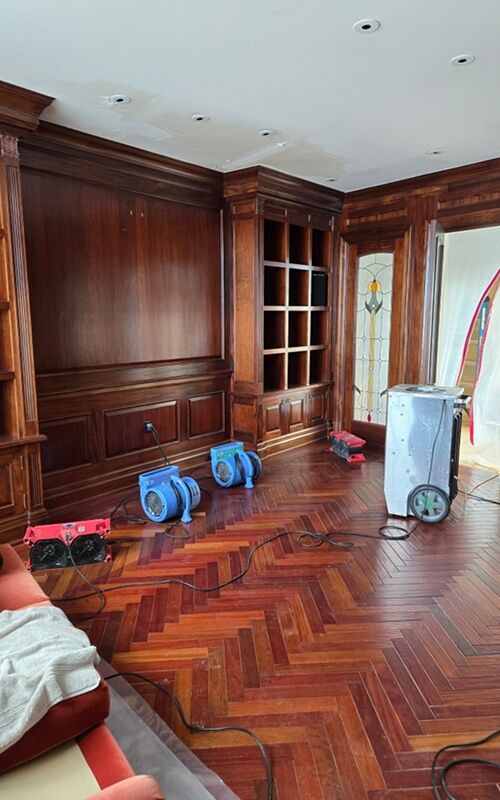
The warning signs: one faucet drops to a trickle or nothing in a cold snap, frost on an exposed line, or a toilet that will not refill. If you catch it here, you can often prevent the burst. Open the affected faucet first — it relieves pressure and gives melting ice somewhere to go. Then warm the suspect section gently: a hair dryer, a heat lamp, towels soaked in hot water, or a space heater in the room (never left unattended). Work from the faucet back toward the frozen section. Never use a torch or open flame — it turns a freeze problem into a fire and can boil water inside the pipe. If you cannot find the frozen section, cannot access it, or the line runs inside a finished wall, shut the main and get a plumber ahead of the thaw — because if the pipe already split, the flood starts the moment the ice melts.
It Burst: The First Ten Minutes
- Shut the main water valve. This is the whole game — every minute it stays open is more water into the structure.
- Kill power to the affected area if water is anywhere near outlets or the panel is safely reachable.
- Open faucets to drain the remaining pressure out of the system.
- Photograph everything — the break if visible, the water, each affected room — before anything is moved. Your claim is built on this record.
- Call for extraction now. DriForce Property Restoration answers 24/7 and crews leave Troy or Port Huron with extraction and drying equipment already loaded — on-site within 60 minutes. Water that gets pumped out tonight is drywall that stays on the wall next week. If the water reached your lower level, our flooded basement first-steps guide covers that scenario minute by minute.
What Restoration Looks Like After a Burst
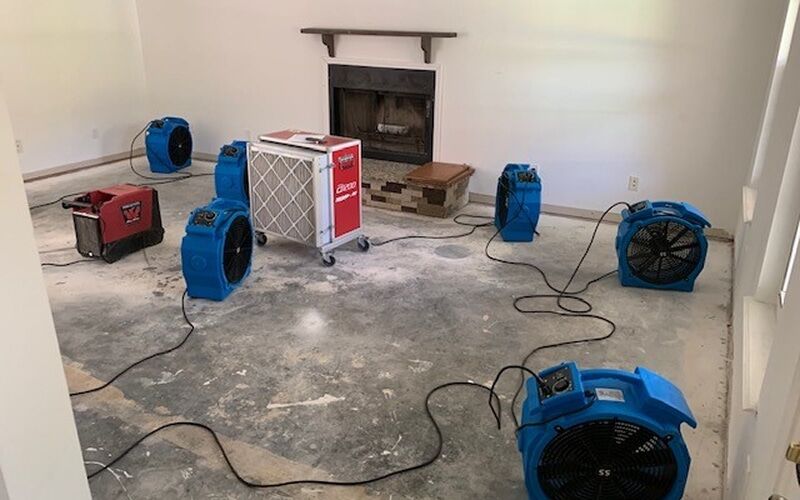
A burst-pipe loss is the cleanest water category (supply water, not sewage), which works in your favor — but it travels fast and hides well, soaking insulation, wicking up drywall, and pooling under flooring two rooms away from the break. Professional water damage restoration runs extraction, targeted removal of what cannot be saved, commercial structural drying, and daily moisture readings logged per room until the structure reaches documented dry standard. The hidden-moisture discipline is the entire point: the losses that turn into mold jobs months later are the ones that got a fans-and-hope dry-out. Catch it fast and dry it right, and a burst pipe is a bad week — not a bad winter.
Commercial Buildings and Vacant Properties: The Highest Stakes
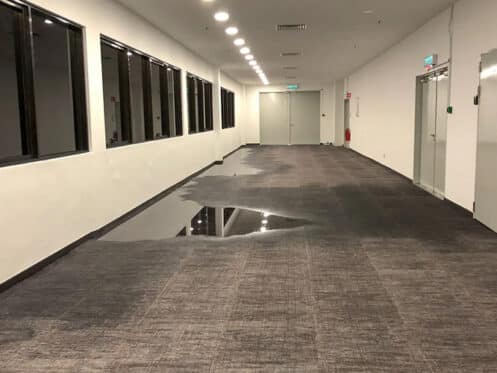
The worst freeze losses we work are not houses — they are commercial buildings and vacant properties, where a burst line can run for hours or days before anyone notices. Sprinkler lines in unheated warehouse corners, restroom supply lines in office buildings set to weekend-setback temperatures, and unoccupied units in multi-tenant buildings are the repeat offenders, and the water finds elevator shafts, electrical rooms, and the tenants below. For property managers, the winter checklist is the same discipline scaled up: heat minimums enforced in every unit and mechanical space, vulnerable runs insulated, shutoffs mapped and labeled, and a freeze-response plan that names who gets called at 2 a.m. Our commercial restoration team works these losses as one documented project — per-unit moisture mapping, business-interruption urgency, and direct coordination with each carrier — from Troy office corridors to Warren industrial space. If your building sits empty for any stretch this winter, the main valve and a 60°F thermostat are the cheapest insurance you can buy.
The Good News About Insurance
Unlike sump overflow or sewer backup, a burst pipe is usually a covered loss on standard Michigan homeowners policies — it is the textbook “sudden and accidental” water event. Two caveats decide contested claims. First, maintained heat: if the house was left unheated or winterized improperly, carriers can deny under the freezing exclusion — another reason the 60°F vacation rule matters. Second, documentation: the break, the spread, and day-one moisture mapping are what your adjuster approves against, and that package is part of every DriForce Property Restoration loss. Gradual damage from a slow winter leak is a different, harder story — which is one more argument for the fall prevention afternoon.
Frequently Asked Questions
Pipe Burst Right Now? Call DriForce Property Restoration
Call DriForce Property Restoration at (888) 838-7170 or request service online — 24/7 winter emergency response, on-site within 60 minutes, with the loss documented for your insurance claim from hour one.