
Here is the coverage gap that surprises more Metro Detroit homeowners than any other: standard homeowners insurance excludes water that backs up through sewers and drains. The fix is a specific endorsement most people have never been offered — one line on a declarations page that decides whether a flooded basement is an insurance claim or a personal check. DriForce Property Restoration cleans up the aftermath either way — but the insured cleanups go very differently than the uninsured ones, and the difference often comes down to a line item that costs less than a dinner out.
What Does the Water Backup Endorsement Actually Cover?
The endorsement (often called water backup or sewer backup coverage) pays for damage when water or sewage backs up through drains, sewers, or a failed sump pump. It typically covers the Category 3 cleanup, damaged flooring and drywall, and contents — up to the endorsement limit you choose, commonly between $5,000 and $25,000. Crucially, it fills the exact gap your base policy leaves open: a standard homeowners policy will pay for a pipe that bursts inside your walls, but not for water that comes up through the floor drain, toilet, or sump pit. That single direction of water flow is the line between a covered loss and a bill you pay yourself.
Why Metro Detroit Basements Are the Highest-Risk in Michigan
This is not a generic risk — it is a Metro Detroit one. Many older communities across Wayne, Oakland, and Macomb counties still run on aging combined sewer systems that carry both stormwater and sewage in the same pipes. During the heavy spring and summer rains the region is known for, those pipes surcharge, and the path of least resistance is back up the lateral into finished basements. Add the fact that Michigan basements are so often finished living space — carpet, drywall, furniture, mechanicals — and a single backup event turns into a five-figure loss with alarming speed. If you own a below-grade basement anywhere in the metro sewer footprint, you are carrying this exposure whether you have insured it or not.
What Does It Cost?
Typically a modest annual add-on — often in the tens of dollars per year for base limits — which is why agents call it the best value line in a homeowners policy. If your home has a basement in a metro sewer system, the math is not close: one backup event can consume a full limit. Ask your agent for quotes at multiple limits and price the difference; moving from a $5,000 limit to $25,000 usually costs a fraction of what the extra coverage is worth on a finished basement. Review the limit against what it would actually cost to gut and rebuild your lower level — flooring, drywall, trim, a furnace or water heater that sat in contaminated water, plus the furniture and electronics a finished basement holds — not against a number that merely sounds large. Most homeowners who do that math once call their agent the same afternoon.
What If the Backup Came From the Municipal Sewer?
Michigan law provides a separate path when a government sewer system causes the backup: MCL 691.1416-1419 allows claims against the responsible agency — but generally requires written notice within 45 days of discovering the damage. Miss the window and the claim can die regardless of merit. We document the source point on every sewage loss partly for this reason: the evidence has to exist before the deadline does. Keep in mind this municipal path has strict proof requirements and is not a substitute for your own endorsement — treat it as a possible second avenue, not the plan.
Sump Pump Failure Counts Too
Most backup endorsements also cover overflow from a failed sump pump — one of Metro Detroit’s most common basement flood causes. Sump pumps fail in the worst possible moment, during the same heavy storms that overwhelm the sewers, and often because the power goes out at the same time. If your water damage risk lives in a basement below grade, the endorsement plus a battery-backup (or water-powered) sump is the two-part protection plan: the pump buys you time, and the endorsement covers you when time runs out. Crews serving Macomb County and all of Metro Detroit respond 24/7.
Insured vs. Uninsured: How the Same Backup Plays Out
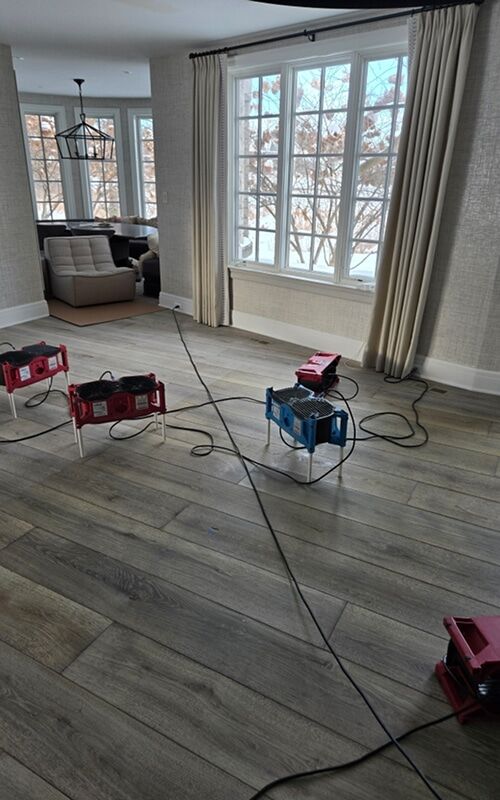
Two identical basements, two very different mornings. The insured homeowner calls us, we open a claim against the endorsement, document the Category 3 source and every affected surface, and the covered cleanup and rebuild proceed against the policy limit. The uninsured homeowner faces the same contaminated water, the same ruined drywall and flooring, and the same required sanitation — but writes the check personally. The work we do is identical; the endorsement simply decides who pays for it. That is why we raise it with every basement owner we meet, ideally long before a storm rather than during the cleanup.
Before the Next Storm: The Two-Part Basement Plan
The homeowners who never call us with a five-figure sewage loss tend to do two things, not one. First, they carry the water-backup endorsement at a limit that actually matches what their finished basement is worth — not the token default. Second, they harden the basement physically: a battery-backup or water-powered sump pump that keeps running when the storm takes the power out, a backwater valve on the sewer lateral where code and the municipality allow it, and elevated storage so anything valuable is off the floor. The endorsement is the financial backstop; the equipment is what keeps the water out in the first place. Neither replaces the other, and together they turn the region’s single most common catastrophic basement loss into, at worst, an inconvenience. If you are not sure which protections your home already has, an insurance review and a quick basement walk-through cost nothing and routinely save homeowners thousands.
Sump Pumps, Basements, and the Endorsement: How the Pieces Fit
It helps to see how the three most common basement disasters map to this one endorsement. Scenario one: the storm knocks out power, the sump pump stops, and groundwater rises through the pit. That overflow is excluded on a standard policy — the backup endorsement is what covers it, which is why our sump pump failure guide calls the endorsement half of the two-part protection plan. Scenario two: heavy rain surcharges the municipal sewer and water rises through the floor drain. Same answer — excluded without the endorsement, covered with it, and possibly a second path through the municipal notice statute above. Scenario three: a supply pipe bursts and floods the same basement. Different story entirely — that is the sudden-and-accidental event your base policy already covers, no endorsement required. Three floods that look identical standing in the water, three completely different coverage outcomes — decided entirely by the path the water took. If any of them happens tonight, our flooded basement first-steps guide walks you through the first hour minute by minute; the coverage sorting comes after, and we document the source on every loss so it sorts correctly.
Frequently Asked Questions
Schedule Sewage Backup Cleanup in Metro Detroit with DriForce Property Restoration
Call DriForce Property Restoration at (888) 838-7170 or request service online — crews dispatch 24/7 with a 60-minute response commitment across Metro Detroit.