The fire trucks are gone, and you are standing in front of your house trying to figure out what happens now. Take a breath — the next two days have a clear order of operations, and you do not have to figure any of it out alone. DriForce Property Restoration restores fire-damaged homes across Metro Detroit and the Blue Water Area — board-up through the final coat of paint, as one licensed Michigan builder — and this is the guide we walk every fire family through: the first 48 hours step by step, what professional restoration actually involves, and how the insurance side really works.
The First 48 Hours After a House Fire
- Do not go back inside until the fire department clears the structure. Hidden hot spots, weakened framing, and compromised electrical are all invisible from the doorway. The house that “looks fine” is exactly the one that needs the all-clear first.
- Call your insurance company and open the claim. Fire is the classic covered peril on a homeowners policy — the sooner the claim opens, the sooner living-expense coverage and the restoration approval process start moving.
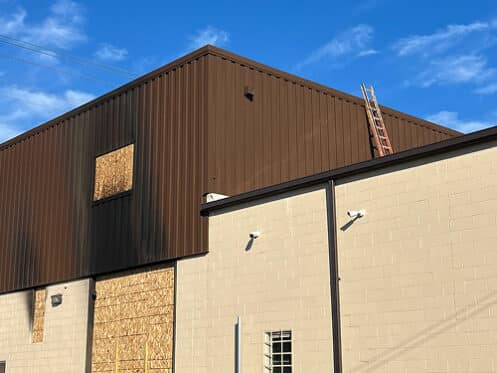
- Get the property secured the same day. Broken windows, burned-through roof sections, and forced doors are open invitations to weather and theft — and an unsecured property can jeopardize coverage. Emergency board-up and roof tarping is the first crew on-site: DriForce Property Restoration dispatches 24/7 with a 60-minute response.
- Photograph everything before anything is moved or discarded — every room, the exterior, and damaged belongings. Your claim is decided on this record.
- Resist the urge to start cleaning. Soot is acidic and oily; scrubbing it with household cleaners grinds it deeper into walls, fabric, and finishes, often turning restorable surfaces into replacements. Wiping one test spot for the adjuster is plenty — leave the rest for containment-and-chemistry cleaning.
- Gather the essentials for two weeks out: medications, documents, chargers, clothing — retrieved with crew help if entry is restricted. If the home is not livable, your policy’s loss-of-use coverage typically pays for temporary housing; keep every receipt.
Why Speed Matters More After a Fire Than Almost Any Loss
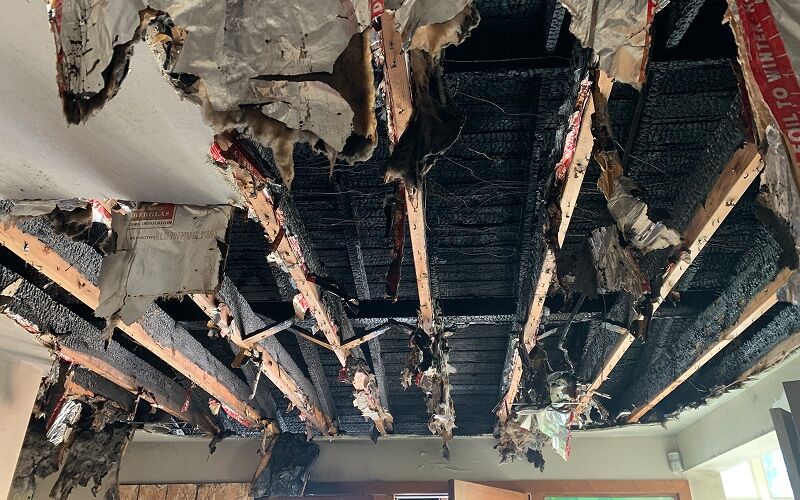
Fire damage keeps damaging after the flames are out, on three fronts at once. Soot is acidic — within days it permanently etches metal, discolors countertops and grout, and yellows painted walls; what wipes off on day two is a refinish job by week two. Firefighting water soaks structure exactly like a burst pipe — hundreds of gallons into floors and walls that now need professional extraction and drying on the same 24–48-hour mold clock as any water loss (our water damage repair guide covers that half of the battle). And smoke odor penetrates deeper the longer it sits — into drywall, insulation, ductwork, and framing where surface cleaning can never reach it. Every one of those clocks starts the moment the fire is out, which is why restoration that begins the same week costs dramatically less than restoration that begins next month.
What Professional Fire Restoration Actually Involves
Real fire restoration is a sequence, and knowing it keeps you in control of your own project:
- Assessment and documentation — a room-by-room scope of burn, smoke, soot, and water damage, in the format your adjuster approves against.
- Emergency stabilization — board-up, tarping, and structural shoring where needed.
- Water first — extraction and structural drying of everything the hoses soaked, before mold can compound the loss.
- Soot and smoke cleaning — the chemistry phase: different soot types (dry, wet/protein, synthetic) each need different cleaning agents and methods, applied under containment with HEPA air scrubbing so contamination never migrates to clean rooms.
- Odor elimination — thermal fogging, ozone or hydroxyl treatment, and duct cleaning to neutralize odor at its source rather than mask it. (Our guide to the three odor technologies explains what each does and when we use it.)
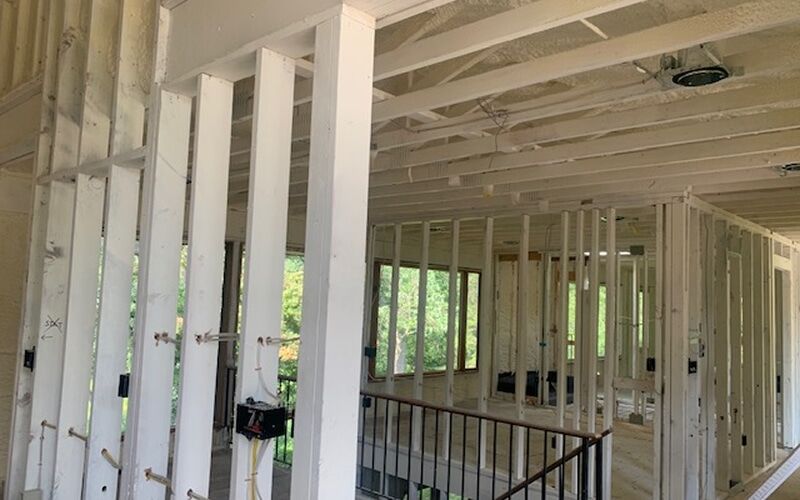
- Reconstruction — and this is where DriForce Property Restoration is genuinely different: as a licensed Michigan builder, the same company that cleaned your smoke damage rebuilds your rooms. No handoff to a second contractor, no gap between mitigation and rebuild, one accountable team from the 2 a.m. board-up to the final walkthrough. The complete service is detailed on our fire damage restoration page.
What Can Be Saved After a Fire?
More than most families fear, if treatment starts quickly. Hard furniture, many textiles, and most room contents away from the burn area typically restore with professional cleaning and odor treatment; electronics need evaluation before they are ever powered on (soot is conductive); and documents and photos have specialty recovery paths. The honest losses are melted synthetics, food and medications exposed to heat or smoke, and porous items soaked in protein smoke. We inventory, pack out, clean, and store restorable contents — and document every non-restorable item room by room so your claim captures all of it. The triage rule: do not throw anything away until it is documented, and do not pay to restore what documentation would have replaced.
Kitchen Fires: The Loss We See Most
The majority of house fires we restore start in the kitchen — a grease flare, an unattended pan, a toaster or appliance failure — and they punch far above their size. Even a fire contained to one countertop coats the entire cooking area in protein smoke, one of the hardest residues to clean and deodorize, and drives smoke through the whole floor via the range hood and open doorways. Two things worth knowing before it ever happens: water makes a grease fire explosively worse (smother it with a lid or use a Class K/ABC extinguisher), and a “small” kitchen fire still deserves a professional smoke assessment, because protein residue you cannot see today becomes an odor and staining problem that surfaces for months. If it already happened, the 48-hour playbook above applies exactly the same — just at kitchen scale.
The Insurance Side: What to Expect
Fire is the loss homeowners policies were originally built for, so coverage disputes are rarer than with water — the friction is in process and completeness. Three things protect you: documentation (the photo record plus a professional scope, which we build on every loss); loss-of-use coverage (your policy typically pays for comparable temporary housing while the home is unlivable — use it, and keep receipts); and scope completeness (smoke and water damage two rooms away belong in the claim just as much as the burned kitchen — adjusters approve what is documented, not what is remembered). We coordinate directly with your carrier on their systems and timelines, and in most covered fires your out-of-pocket is your deductible.
Serving Fire Families Across Metro Detroit
Fire calls come from everywhere in our footprint — and the response is the same wherever you are: crews from our Troy and Port Huron offices, on-site within 60 minutes, day or night. We regularly handle fire and smoke losses in Troy, Canton, Ferndale, Grosse Pointe, and Warren — from single-room kitchen fires to whole-home losses and commercial buildings. One call starts everything: securing, mitigation, insurance documentation, and the rebuild plan.
Frequently Asked Questions
House Fire? DriForce Property Restoration Handles Everything From Here
Call DriForce Property Restoration at (888) 838-7170 or request service online — 24/7 board-up and fire restoration, on-site within 60 minutes, one licensed Michigan builder from securing through rebuild.