

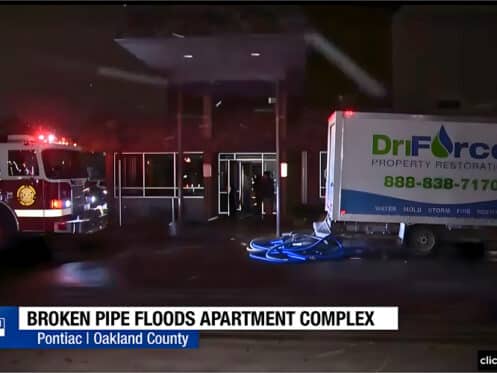
Every heavy Michigan rain, the same story plays out across Metro Detroit: the storm knocks out power, the sump pump goes quiet, and a finished basement starts taking on water. DriForce Property Restoration pumps out and dries those basements every month — and most of those losses announced themselves weeks earlier, through warning signs the pump was giving off. This guide consolidates everything we tell homeowners about sump pump failure: the signs to catch early, why pumps fail, exactly what to do when yours quits, and how to make sure one failure never happens twice.
The Warning Signs of a Failing Sump Pump
A sump pump rarely dies without warning. Catch any of these and you are days or weeks — not minutes — from a flooded basement:
- Unusual noise — grinding, rattling, or thudding means worn bearings or a damaged impeller. A healthy pump hums.
- Frequent cycling on and off — short-cycling points to a stuck float switch, a wrong-sized basin, or a failing check valve, and it burns the motor out fast.
- Water pooling around the pit — the one job the pump has is keeping that area dry. Standing water next to the pump is the clearest sign it is losing the fight.
- Runs constantly, even in dry weather — a pump that never shuts off is fighting a switch problem or a drainage problem, and either way it is wearing itself out.
- Musty odor or new dampness — persistent basement humidity or a moldy smell often means the pump is no longer keeping up between rains. If you can see or smell mold, our mold remediation team should look before it spreads.
- Visible rust or corrosion — corrosion on the housing or float assembly seizes moving parts exactly when they are needed most.
- Motor fails to start when you test it — the test is simple: pour a bucket of water into the pit. If the float rises and nothing happens, you have found the problem on your schedule instead of the storm’s.
Why Sump Pumps Fail
Power outages are the number-one cause — and they arrive at the worst possible moment. The same storm dumping water into the ground around your foundation is the one that takes the power lines down, which means a pump with no backup power fails precisely when the water table is rising fastest. It is the single most common story behind the flooded basements we extract across Oakland, Macomb, and St. Clair counties.
The rest of the failure list, in the order we see it: float switch malfunctions (the switch jams against the basin wall or tangles in its own cord); clogged discharge lines (debris, or a frozen discharge outlet in a Michigan February); pump burnout from short-cycling or running dry; an undersized or badly installed system that never matched the home’s water volume; and plain old age — a typical sump pump lasts about 7 to 10 years, and most homeowners have no idea how old theirs is because it came with the house.
Your Sump Pump Just Failed: Do These Five Things
If the pump is down and water is coming in, work this list in order:
- Kill power to the flooded area if you can do it safely. Water and live outlets share that basement. If the breaker panel is dry and reachable, cut power to the affected circuits; if reaching it means standing in water, do not — wait for professionals.
- Check the simple fixes — from dry ground. A tripped breaker or GFCI, an unplugged cord, or a float switch visibly jammed against the basin are 60-second fixes that restart many “failed” pumps.
- Look at the discharge line. If the pump hums but no water leaves, the discharge pipe or its outside outlet is likely blocked or frozen. Clearing the outlet can bring the system back.
- Move what you can, photograph what you cannot. Get valuables and anything electrical above the waterline, then photograph every affected area and the pump itself — that record is what your insurance claim is built on.
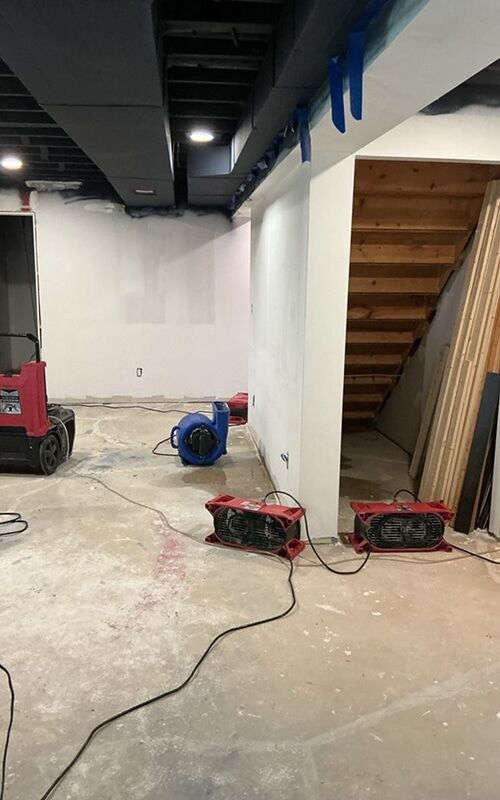
- Call for professional extraction sooner, not later. Water that sits is water that wicks — up drywall, into framing, under flooring. DriForce Property Restoration crews leave our Troy and Port Huron offices with extraction and drying equipment already on the truck and are on-site within 60 minutes across Metro Detroit, day or night.
What Happens in the First 24–48 Hours
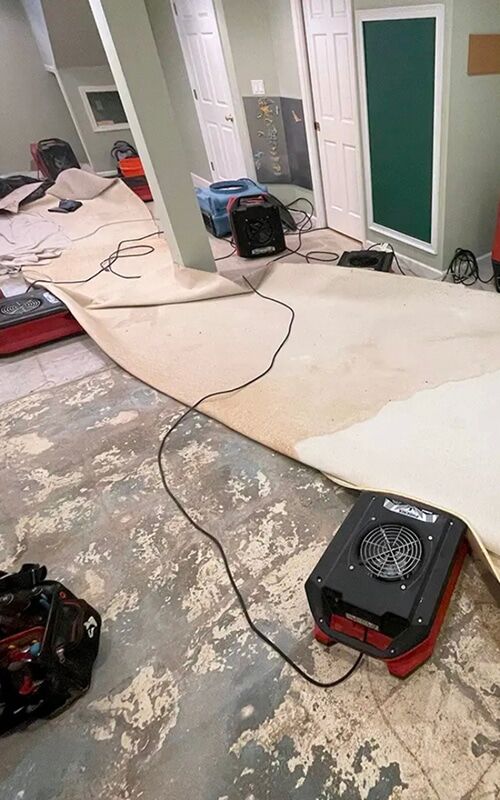
The difference between a two-day dry-out and a two-month reconstruction is almost entirely response speed — and in a finished Michigan basement, with carpet, drywall, and stored belongings soaking up every hour of delay, the clock runs faster than most homeowners expect. Professional water damage restoration after a sump failure follows a documented sequence: extract the standing water, remove what cannot be saved, then run commercial air movers and dehumidifiers until daily moisture readings show the structure has actually reached dry standard — the readings decide, not the calendar. Mold needs roughly 24 to 48 hours of sustained moisture to establish, which is exactly the window professional drying is designed to close.
One important distinction: if the water entering your basement came up through a floor drain along with the sump failure — common when municipal sewers surcharge during the same storm — that is Category 3 (contaminated) water, and it changes the job. Porous materials that soaked it up must be removed, and the area sanitized under containment. That scenario is covered in detail in our guide to sewage backup cleanup.
Never Twice: The Two-Part Protection Plan
The homeowners who never call us a second time do two things. First, they add backup power or a backup pump: a battery-backup sump keeps pumping through the outage that kills the primary, and a water-powered backup (which runs on municipal water pressure, no electricity at all) can run indefinitely — either one directly answers the number-one failure cause. Second, they put the pump on a maintenance rhythm: pour-test the float quarterly, clear the pit and inlet screen of debris, check the discharge outlet before winter freeze-up and spring thaw, and replace the unit proactively once it passes the 7-to-10-year mark. A $200 battery backup and ten minutes of testing a season are the cheapest insurance a Michigan basement can buy.
Will Insurance Pay for This?
Here is the part that surprises people: standard Michigan homeowners policies exclude water that overflows from a failed sump pump unless you carry a specific water-backup endorsement — the same inexpensive add-on that covers sewer and drain backups. If your policy has that endorsement, the cleanup, damaged flooring and drywall, and contents are typically covered up to the endorsement limit; if it does not, the identical loss comes out of pocket. Check your declarations page for a “water backup” line, and ask your agent about limits before the next storm season. Either way, we document every sump-failure loss — source, spread, moisture readings — so that whatever coverage exists can actually be used.
Frequently Asked Questions
Basement Taking On Water? Call DriForce Property Restoration Now
Call DriForce Property Restoration at (888) 838-7170 or request service online — crews dispatch 24/7 with a 60-minute response commitment across Metro Detroit and the Blue Water Area.