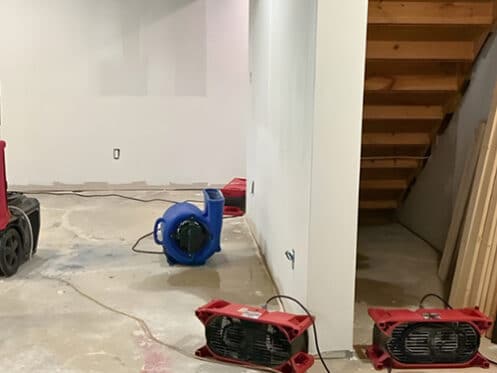
A basement doesn’t need to flood to have water damage. During a humid Michigan summer, damp air can enter the basement and collect on cool walls, floors, pipes, and windows.
Drywall, wood, flooring, boxes, and furniture can also soak up moisture from the air. This can lead to mold damage, wood rot, bad smells, and damaged items.
The “Golden 50%” target can help. Keep your basement humidity at or below 50% when possible.
What Is Considered a Dry Basement?
A dry basement has no leaks, standing water, condensation, or damp materials. It should have:
- Humidity between 30% and 50%
- No water on pipes, windows, walls, or floors
- No musty smells
- Dry walls, floors, wood, and insulation
- No plumbing leaks or foundation seepage
- Good drainage and moisture control
A basement can look dry while moisture hides behind walls or under floors. A humidity monitor can measure the humidity in the air. A moisture meter can find wet materials you can’t see.
Why Are Basements So Humid in August?
Warm summer air holds a lot of moisture. When it enters a cool basement, water can form on cold surfaces or soak into wood, drywall, boxes, and fabric.
Common sources of basement humidity in the summer include:
- Open windows and doors
- Cracks in the foundation
- Moisture coming through concrete
- Poor airflow
- Condensation on cold pipes
- Plumbing leaks
- Foundation seepage
- A dryer that doesn’t vent outside
- Damp items stored in the basement
Opening the windows can make the basement damper on a humid day. Warm, wet air enters the cool space, creating more condensation.
What Is Secondary Water Damage?
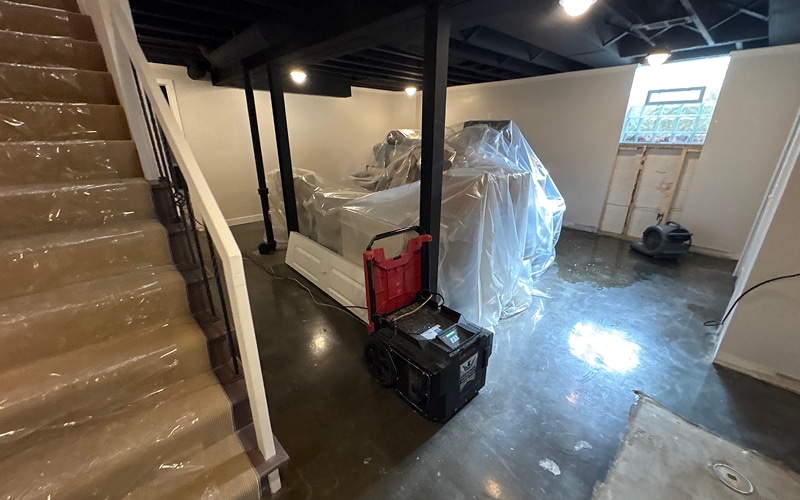
Primary water damage occurs during a flood, a broken pipe, an appliance overflow, or a foundation leak. It may leave wet carpet, soaked drywall, or standing water.
Secondary water damage happens after the visible water is gone. Moisture can stay behind walls, under floors, or inside insulation. Humid air can keep these areas wet.
Moisture may also soak into boxes, wood, drywall, and fabric without a major leak. These items can swell, bend, smell musty, or grow mold.
Past water damage can raise the risk. A wall may feel dry even when the wood behind it is still wet. Mold and wood rot can grow if the area doesn’t fully dry.
How Can High Humidity Damage a Basement?
You may have high humidity if you notice musty smells, stains, wet spots, peeling paint, bent wood, and soft drywall. High humidity can damage the basement and anything stored inside. Issues may include:
Mold on Stored Contents and Business Property
Boxes, papers, books, clothing, furniture, and inventory can soak up moisture. Mold may grow on these items or between tightly packed boxes.
Homeowners could lose photos, clothing, decorations, and furniture. Businesses may lose records, products, supplies, or equipment. Moisture can also cause rust and damage electronics.
Keep items off the floor and leave room around shelves for airflow. Plastic bins are better than cardboard boxes, but they won’t fix high humidity.
Mold on Drywall, Flooring, and Insulation
Moisture can soften and stain drywall. It can also peel paint, bubble wallpaper, bend flooring, and leave carpet damp and musty.
Damage may hide behind walls or under floors. Professional mold remediation can find hidden mold and remove materials that can’t be saved.
Wood Rot and Structural Deterioration
Framing, floor joists, subfloors, trim, shelves, and furniture can soak up moisture. The wood may swell, bend, weaken, or rot.
Wood rot is a sign of a lasting moisture problem. Painting over the damage won’t fix it. The moisture source must be stopped before the wood is repaired.
What Is the Golden 50% Humidity Level?
The Golden 50% target means keeping basement humidity at or below 50%. A level between 30% and 50% is a good goal.
Humidity can change during the day. Check it at different times and after heavy rain. Also look behind furniture, shelves, and boxes. The air may have a normal reading even when one area is still wet.
How Do You Keep Basement Humidity at 50% or Lower?
Use a digital hygrometer in the basement. Large basements may need more than one.
Run a dehumidifier and set it between 45% and 50%. Clean the filter and empty the tank as needed. Keep the windows closed when it’s humid outside.
You can also:
- Point downspouts away from the building
- Keep gutters clear
- Slope the ground away from the foundation
- Insulate pipes that collect condensation
- Leave space around furniture and boxes
- Vent the dryer outside
- Fix leaks and foundation cracks
- Dry wet items before storing them
These steps can help prevent mold and moisture damage, but some problems need professional attention. DriForce Property Restoration provides complete residential restoration services for homeowners and commercial restoration services for businesses dealing with basement water and mold damage.
Choosing a Dehumidifier That Can Actually Keep Up
Dehumidifiers are rated in pints of water removed per day, and undersizing is the most common reason a basement stays damp with the machine running. For a typical Metro Detroit basement, a 35- to 50-pint unit handles moderately damp space; a basement that feels wet, smells musty, or shows condensation calls for a 50-pint-plus unit — and truly large or persistently wet basements may need two. Three details matter more than brand: an Energy Star rating (the unit may run all summer, and certified models use roughly 15% less energy), a continuous-drain option so you are not emptying a tank twice a day in July, and a built-in humidistat you set once at 45-50% and leave alone. Position the unit away from walls with airflow on all sides, and expect the first week to read high — it is pulling months of stored moisture out of concrete and wood, not just the air.
What Are the Warning Signs of Hidden Basement Water Damage?
Signs of hidden moisture include:
- Humidity above 50%
- Water on pipes, windows, walls, or floors
- A musty smell
- Visible mold
- Peeling paint or wallpaper
- Bent floors, shelves, trim, or doors
- Soft or stained drywall
- Rust on metal items
- Damp boxes or papers
- Moisture that keeps returning
Don’t paint over stains or hide odors. Find and fix the cause of the moisture.
When Is Professional Mold Damage Restoration Necessary?
Call a professional if mold covers a large area, keeps returning, or grows inside walls. You may also need help after major water damage or if mold reaches your HVAC system.
Commercial buildings may need the work contained to keep mold from spreading. A clear cleanup plan can protect people, equipment, and business operations.
What Happens During Mold Damage Restoration?
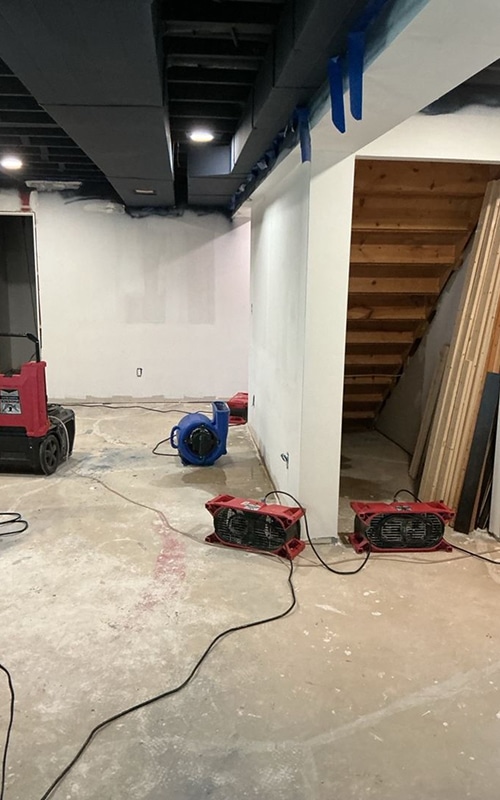
DriForce Property Restoration checks the basement, measures moisture, and finds the cause. We also look for hidden mold and water damage.
We contain the area to keep mold from spreading. Materials that can’t be saved are removed. Other surfaces and items are cleaned, and the basement is fully dried.
Cleaning visible mold isn’t enough if the basement is still damp. The leak or humidity problem must also be fixed.
Frequently Asked Questions
Protect Your Basement From Humidity Damage
No standing water doesn’t necessarily mean no water damage. August humidity can cause mold, wood rot, odors, and damaged materials in a basement that looks dry. Watch for musty smells, stains, and damp items, and don’t hesitate to seek professional service.
Contact DriForce Property Restoration to schedule mold damage restoration for your basement.